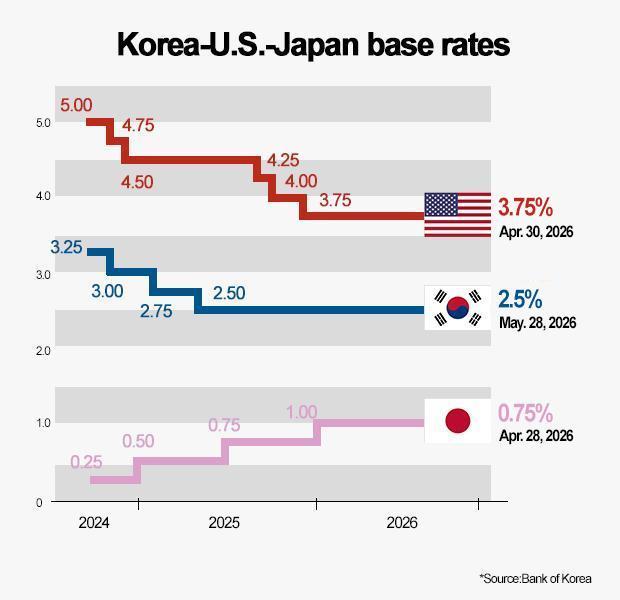
SEOUL, May 28 (AJP) - After sitting on the benchmark at 2.50 percent for a full year, the Bank of Korea on Thursday issued the strongest-yet signal of a shift towards hikes of between 25 to 75 basis points, splashing cold waters on chip-blind stock frenzy.
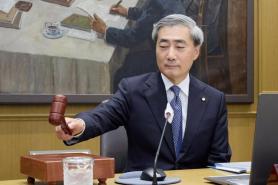
New Governor Shin Hyun-song, presiding over his first rate-setting meeting and media briefing, could hardly have been blunter about the direction ahead.
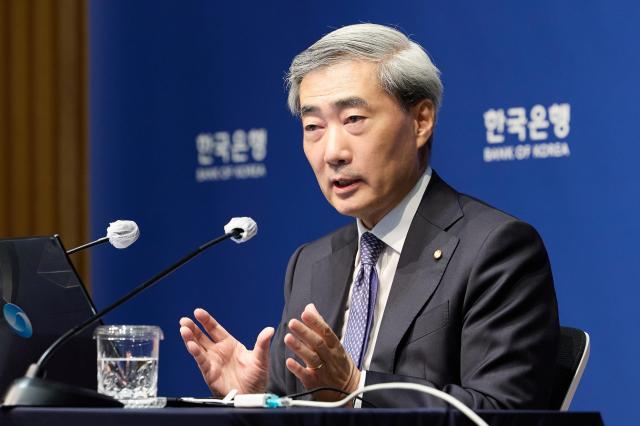
"All the signs — price pressure, the growth trajectory, the exchange rate and the real estate market — point in one clear direction," Shin said, adding that the case for the rate path was so "exceptionally clear" that there could be little conflict in policymaking.
Shin framed the policy debate around three questions — “when,” “how fast,” and “how far” rates may rise, pointing to the latest dot plot as guidance for the second-half policy path.
"The BOK will manage all the factors feeding into prices by raising the base rate," he said.
On the same day, the Bank of Korea sharply revised up both its growth and inflation forecasts for this year, reflecting stronger-than-expected chip demand and the prolonged Gulf crisis.
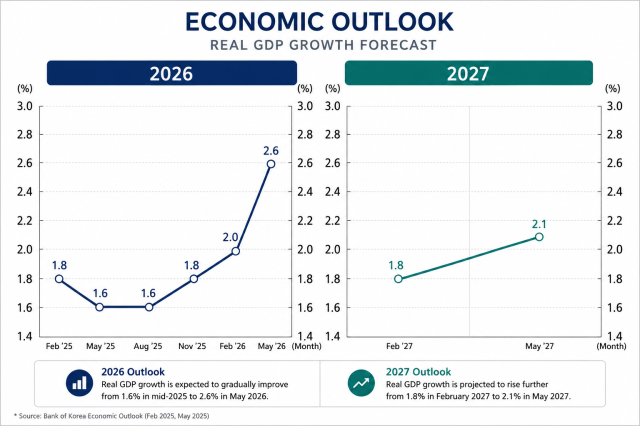
Shin said the upgraded growth outlook reflected not only stronger semiconductor exports but also an exceptional improvement in Korea’s terms of trade, noting that first-quarter gross domestic income surged 12.3 percent from a year earlier.
Policymakers, however, deemed it premature to judge the full scope of inflationary shocks.
“Everyone broadly shared the same recognition about inflation, growth and financial stability risks,” Shin said. “The differences were more strategic — about timing rather than direction.”
According to the central bank’s updated six-month rate outlook, or “dot plot,” released after the Monetary Policy Board meeting, 10 of the 21 projected policy-rate dots submitted by the seven board members pointed to a benchmark rate of 3.00 percent within six months. Seven projected 2.75 percent, two indicated 3.25 percent and only two suggested rates would remain at 2.50 percent.
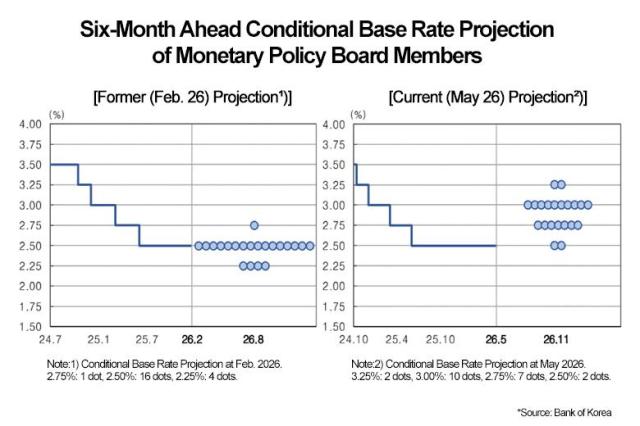
The distribution implies the board’s strongest consensus now leans toward two additional quarter-point hikes — or 50 basis points in total — over the next six months.
The smaller cluster at 3.25 percent suggests some policymakers see room for a third hike should inflation and financial imbalances worsen.
The latest projections marked a dramatic reversal from February, when 16 of the 21 dots pointed to rates remaining unchanged at 2.50 percent and four suggested a cut to 2.25 percent.
Internally, the earnings and stock-market boom spilling over into wage and bonus increases was also adding to inflationary pressure, according to the BOK chief.
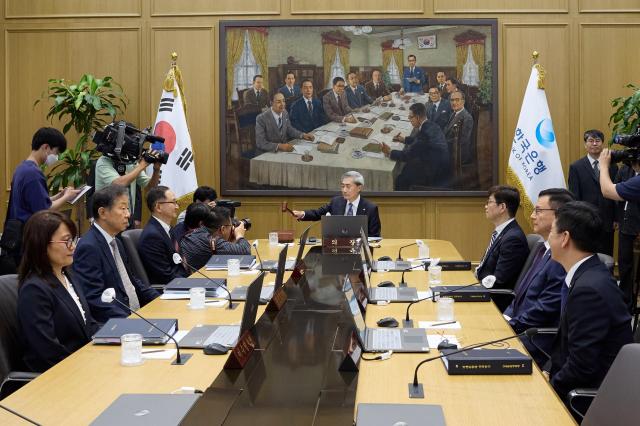
Apart from inflationary risks, the won’s persistent weakness also remains a concern for authorities, Shin said, vowing to respond firmly to excessive one-sided market moves.
“We will not tolerate disorderly herd behavior in the exchange rate,” he said, adding that offshore non-deliverable forward (NDF) trading could at times amplify volatility in the domestic market.
The clearest signal yet of a monetary-policy shift was enough to shake capital markets that had been fixated on the chip rally.
Bond yields jumped after the central bank’s hawkish guidance. The three-year government bond yield rose 4.1 basis points to 3.752 percent, while the 10-year yield climbed 2.9 basis points to 4.131 percent by midday.
Stocks tumbled, with the KOSPI retreating nearly 3 percent and the KOSDAQ falling more than 4.6 percent. The won weakened 5.1 won to 1,507.10 against the U.S. dollar.

Copyright ⓒ Aju Press All rights reserved.