
Current indicators for inbound tourism show a clear upward trend. According to the Ministry of Culture, Sports and Tourism, the number of visitors in the second half of 2025 is projected to increase by 17% compared to the second half of 2024, with a 22% rise in the first half of this year compared to the same period last year, setting new records for inbound tourism. In fact, the number of foreign visitors in the first quarter of this year surpassed 5 million, marking a 23% increase from the previous year. Additionally, arrivals at regional airports have surged by 50%, providing numerical evidence of revitalized local tourism. Foreign credit card spending in South Korea has also risen, injecting vitality into the domestic economy.
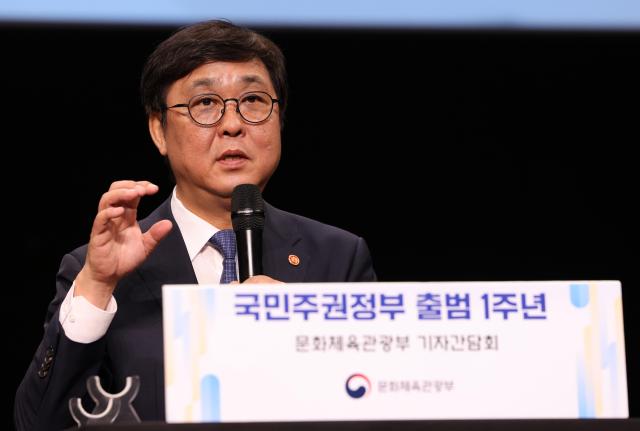
Choi Hwi-young, Minister of Culture, Sports and Tourism, reaffirmed the commitment to achieving the 30 million foreign tourist target during a press conference on May 28, identifying "regional tourism" as a core challenge. Over 80% of inbound tourists are still concentrated in the capital region, leading to issues of high costs and inconvenience for travelers due to overwhelming demand in limited areas.
Minister Choi emphasized, "While there is accommodation capacity in the provinces, there is insufficient product development and connectivity in transportation and content. Accelerating regional tourism and effectively linking content, transportation, and lodging is essential for establishing a stable upward trend."
To address this, the Ministry is promoting the "5 Mega Tourism Zones and 3 Special Self-Governing Provinces" initiative, which aims to restructure the tourism landscape from a capital-centric model to five super-regional zones and three special autonomous provinces. This large-scale regional tourism redesign project focuses on breaking down administrative boundaries based on actual tourist journeys, moving away from the previous infrastructure development driven by local government leaders and standardized regional festivals.
A comprehensive reform to address persistent issues in domestic tourism has also begun. On May 20, the Ministry held a meeting with the Korea Tourism Organization and 13 regional tourism organizations to discuss revitalizing local tourism. This initiative is part of the "Tourism Saemaul Movement," which President Lee emphasized during a cabinet meeting on April 14, calling for maximizing the impact of the tourism industry on local economic revitalization, similar to Japan's regional revitalization system.
During that meeting, President Lee urged for an innovative movement involving both small business owners and administrative agencies to improve the quality of life and address major obstacles to domestic tourism, such as inflated prices, disrespect towards foreigners, and unfriendliness. In response, the Ministry and national tourism organizations are launching a campaign to create a joint slogan and expand cooperation from local governments to administrative units at the town and village levels. They also plan to establish a community-driven public-private partnership model through initiatives like tourism cooperatives and village enterprises, aiming to institutionalize this as a regular local innovation movement.
Experts suggest that for the government's policy drive to yield tangible results, tourism must be viewed as a solid regional industry ecosystem. Yoon Hye-jin, a professor of tourism development management at Kyonggi University, stated in a recent interview, "Future regional tourism should evolve beyond merely attracting visitors for photos to creating a flow of capital that fosters a positive economic cycle. When local residents profit from the tourism industry, quality jobs are created, which can lead to an increase in the local commuting population. This is the most desirable positive cycle."
She added, "To ensure tourism becomes a definitive growth engine for regions, we need to cultivate skilled professionals with planning capabilities in the tourism industry. Additionally, a clear career roadmap must be established to help these professionals settle in their regions. If we continue to rely solely on short-term project budgets or focus on seasonal businesses, we cannot break the cycle of talent draining to the capital region."
Overcoming these structural limitations and sustaining large-scale policies like the 5 Mega Tourism Zones and the Tourism Saemaul Movement will ultimately require a robust administrative command and a supportive legal framework. The government elevated the "National Tourism Strategy Meeting," a control tower for tourism policy, to be chaired by the president in April to secure strong momentum for tourism initiatives that had previously been fragmented across various ministries.
With the establishment of this presidential control tower, discussions on legislative reforms and regulatory innovations that had stalled due to inter-ministerial disagreements have gained momentum. The government and the National Assembly have begun discussions to comprehensively revise tourism-related laws, such as the Tourism Basic Act and the Tourism Promotion Act, which have not seen significant changes since their enactment in the 1970s. This effort aims to keep pace with rapidly changing global trends and digital environments while ensuring that domestic small and medium-sized tourism ventures have legal protections to compete effectively. Key policy initiatives include bold regulatory exceptions for small-scale and decentralized development and a fast track for new service regulations.
In addition to macro-level improvements, addressing persistent local challenges is also a pressing task. Limitations in accommodation infrastructure and exploitative practices by some operators during large-scale mega-events have been identified as major factors undermining the credibility of this national strategic industry. Following controversies over accommodation issues during the BTS concert in Busan, Minister Choi acknowledged the fundamental problem of insufficient accommodation infrastructure to host foreign tourists, proposing a two-track strategy that includes long-term infrastructure expansion and utilizing temple stays and corporate training facilities as "buffer infrastructure" to manage short-term demand.
The Ministry has also declared a zero-tolerance policy against unreasonable pricing practices, such as forced cancellations followed by price hikes, labeling them as "disregarding consumers." The Ministry, local governments, and tourism and accommodation associations will work closely to enforce this policy rigorously.
* This article has been translated by AI.
Copyright ⓒ Aju Press All rights reserved.