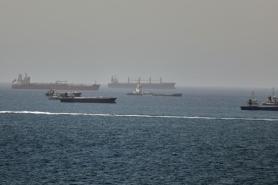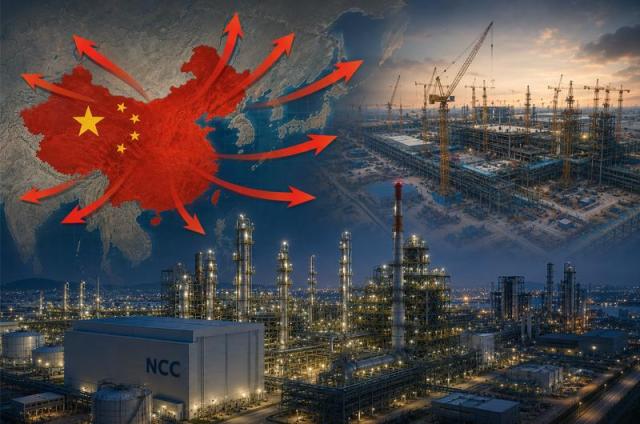
Chinese overcapacity has been swamping Asia with cheap basic chemicals, with or without disruption from the Middle East and stranded shipments at the Strait of Hormuz chokepoint.
S&P Global expects new capacity in Asia and the Middle East to add about 6 million tons of ethylene in 2026 alone, enough to overshadow Korea's rationalization drive. It sees global supply outpacing demand through 2027, when capacity additions are expected to peak.
That imbalance had already pushed margins to the floor before any geopolitical shock.
The ethylene spread — the gap between ethylene and naphtha prices that gauges industry profitability — collapsed to about $55 a ton in February, before the Gulf crisis, far below the $250 to $300 break-even range producers say they need to avoid losses, according to government commodity-price data.
Then came the war premium, masking the rot.
As the conflict choked off feedstock supply, the spread swung from negative territory and briefly breached $500, Hana Securities analyst Yoon Jae-sung said, flipping LG Chem's and Hanwha Solutions' chemical units back into the black on cheaply stocked naphtha.
The reprieve proved fleeting. By early July, the spread had slid back to about $96 a ton as ethylene prices cooled and the lagging effect that had cushioned first-quarter earnings gave way to what Yoon called a reverse-lagging phase.
"In June and July, petrochemical firms will enter a reverse-lagging phase and slip into an earnings downturn," Yoon said, noting that companies had stopped scrambling to stock up as ceasefire prospects emerged, leaving product prices and spreads on a clear downward path.
Against that backdrop, the industry's own remedy remains only half-administered.
Under an August 2025 voluntary pact, ten naphtha-cracker operators agreed to trim 2.7 million to 3.7 million tons of capacity, or about 18 to 25 percent of the nation's 14.7 million-ton base, in exchange for state financial and regulatory support.
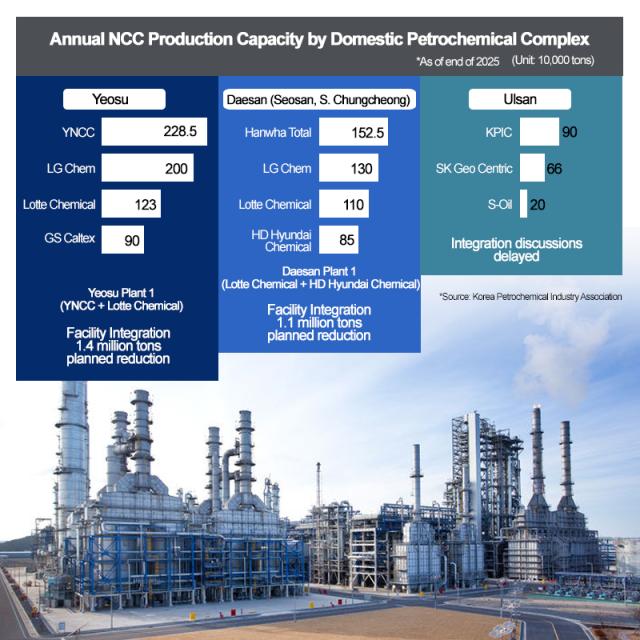
Looming over the unfinished cuts is S-Oil's Shaheen Project, a 9.26 trillion won ($5.98 billion) complex in Ulsan and the largest petrochemical project in the country's history. Once running, it will churn out about 1.8 million tons of ethylene a year, alongside propylene, butadiene and benzene.
The project is advancing on schedule. As of late April, its engineering, procurement and construction progress stood at 96.9 percent, with mechanical completion targeted for the end of June, S-Oil said in materials accompanying its first-quarter results.
"Major facilities including the steam cracker and the TC2C heating furnace have been installed, and feeder piping to customers is set to be completed in the first half," the company said, adding that trial runs and commercial-operation preparations would be completed by year-end.
For an industry still struggling to take supply off the table, the timing is fraught.
Analysts warn that if geopolitical premiums evaporate and China presses ahead with expansion, Korean producers could be pulled straight back into the oversupply and margin squeeze they have spent two years trying to escape — just as Shaheen's volumes arrive.

Copyright ⓒ Aju Press All rights reserved.