
The DP won 12 of 16 metropolitan mayoral and gubernatorial races in the June 3 local elections, a sharp reversal from its crushing defeat in the 2022 vote, when it lost 12 governorships and mayoralties to the conservative People Power Party (PPP).
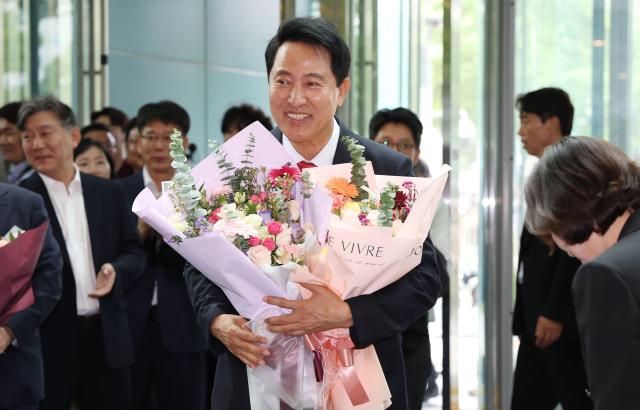
But the ruling party failed to capture Seoul, the country's biggest political battleground, where conservative incumbent Oh Se-hoon won reelection over DP candidate Chong Won-o after a tight race.
The result dimmed what initially appeared to be a sweeping victory for the liberals and suggested voters were seeking checks and balances rather than giving the government a free hand.
The DP also faced unexpectedly close contests in several regions, including Gangwon, South Chungcheong and Ulsan, where the ruling camp had been widely expected to cruise to easy victories.
Results from 14 parliamentary by-elections held alongside the local elections carried a stronger political warning for the ruling bloc.
Before the vote, 13 of the 14 seats had been held by DP lawmakers. But the party won only nine seats, reducing its parliamentary strength by four seats, while the PPP captured four constituencies and an independent candidate won one.
The elections were widely viewed as the first nationwide referendum on Lee’s administration since he took office a year ago following the ouster of former President Yoon Suk Yeol.
Lee entered the elections with approval ratings above 60 percent, and many in the ruling camp had expected a decisive victory.
Instead, the outcome indicated that voters broadly supported Lee's governing agenda while also signaling discomfort with what critics described as the DP's increasingly unilateral style of governance, backed by its legislative majority.
Political observers said the results reflected growing concerns over hard-line legislative pushes led by pro-Lee lawmakers and perceptions that the ruling bloc had become complacent after consolidating control of both the executive and legislative branches.
The DP's nomination process also became a source of controversy during the campaign. Critics accused party leader Jung Chung-rae and the party leadership of forcing through contentious nominations in races including the North Jeolla governorship and a parliamentary by-election in Pyeongtaek.
The internal disputes diverted senior party officials from nationwide campaigning and may have contributed to Democratic losses in Seoul and several closely fought races in the country's southeastern conservative strongholds, analysts said.
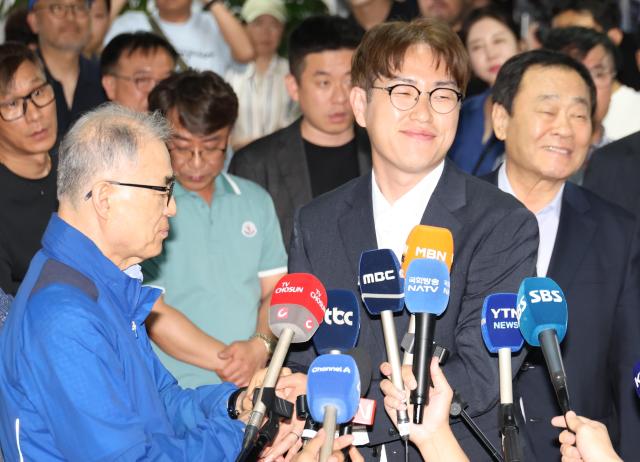
PPP lawmakers pointed to the Lee Jae Myung government as the cause.
Rep. Kang Seung-gyu said, "Elections are a judgment." "The biggest reason" the Democratic Party lost in key battlegrounds is that "citizens judged the Lee Jae Myung government," he added.
"The public evaluated and judged the Lee government for pushing ahead with unreasonable laws with arrogance and self-righteousness and for pursuing the prosecution cancellation special counsel."
Rep. Kim Gunn made similar remarks. "Seoul citizens felt it was wrong for the government and ruling party to push ahead with the prosecution cancellation special counsel and to exercise excessive public power in matters that should be morally condemned, such as the Starbucks incident," Kim said.
"It was also effective that Oh clearly showed an effort to break with our party's past mistakes," he added.
The "prosecution cancellation special counsel" mentioned by the two lawmakers refers to the special counsel bill on fabricated indictments proposed by the DP last month. The bill calls for a special counsel investigation into whether charges brought against President Lee before he was elected president and while he was standing trial were fabricated.
The bill includes a provision allowing the special counsel to make a "decision on whether to maintain the prosecution" (Article 8, Clause 7) after receiving the cases from prosecutors. This means the special counsel could cancel the prosecution in Lee's cases.
DP Rep. Kim Sung-hoi also said that Mayor Oh Se-hoon's acknowledgment that the Dec. 3 martial law declaration constituted insurrection and his apology over it were reasons he won the Seoul mayoral election.
"Moderate conservative voters were highly dissatisfied with the Jang Dong-hyuk leadership system, but they went to the polls hoping that 'normal conservatives' would win," he said. "'Normal conservatives' refers to conservatives such as Mayor Oh Se-hoon and Rep. Han Dong-hoon who oppose insurrection," he explained.
Three-term DP Rep. Eo Gi-gu said, "From the public's perspective, our Democratic Party appeared arrogant and conceited."
"You win elections only when you are humble, desperate and earnest," he said. "I think only looking toward the president and complacently assuming we would win were also reasons for our defeats in places such as Seoul," he added.
Rep. Kim Young-bae said, "In Seoul, we failed to manage the issues properly," adding that "we failed to ease public anxiety over the real estate market."
He pointed to the lack of strategy from the party leadership as a cause of the defeats in Pyeongtaek and Busan's Buk district.
"As seen in the Ulsan mayoral race, the central party also wavered over the issue of forming a unified candidacy with other progressive parties," he said.
"Overall, the DP acted arrogantly, as if it had already won every election," he added.
Copyright ⓒ Aju Press All rights reserved.
