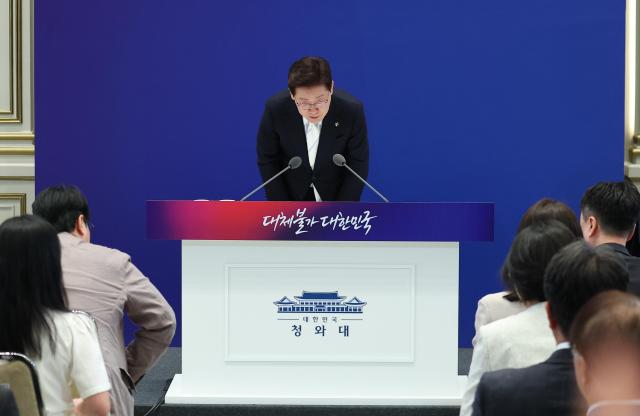
SEOUL, June 11 (AJP) - The honeymoon period had been unprecedentedly longer for South Korean President Lee Jae Myung compared with past leaders, but it eventually came to an end.
Just before departing for a European tour on Wednesday, Lee took time for a moment of self-reflection.
In a post on X, he apologized to the public and pledged to "work harder" with greater modesty and openness after a string of polls showed his approval ratings falling sharply in the aftermath of the June 3 local elections.
The remarks echoed the contrite tone Lee adopted days earlier during a news conference marking the first anniversary of his inauguration, when he described the ruling party's disappointing local election performance as "a warning from the people."
Lee's approval rating, which had remained comfortably above 60 percent throughout much of his first year in office, has fallen rapidly since the local elections exposed growing voter fatigue with the ruling camp and signaled a revival of the conservative opposition.
A survey conducted by the Korea Society Opinion Institute on Monday and Tuesday and released Wednesday showed Lee's approval rating falling 9.4 percentage points from late May to 50.4 percent. Negative assessments rose 10.5 percentage points to 45.7 percent, narrowing the gap between approval and disapproval to within the survey's margin of error for the first time since he took office.
Support for the governing Democratic Party slid in tandem, dropping 4.7 percentage points to 38.6 percent, while the opposition People Power Party climbed 6.5 points to 38.1 percent.
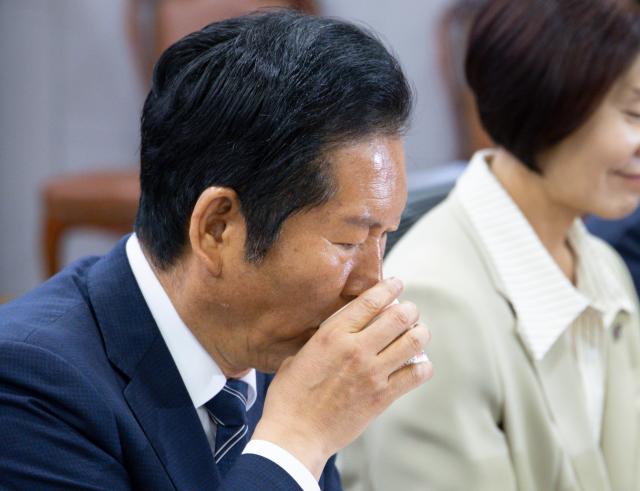
The decline was particularly pronounced among younger voters and in the southeastern industrial belt. Disapproval reached 62.3 percent among voters in their 20s and 59.9 percent among those in their 30s, while negative views also surged in the Busan-Ulsan-South Gyeongsang region.
A separate survey released Wednesday suggested the political momentum may be shifting even more dramatically. The poll, conducted by Cho Won C&I for Straight News from June 6 to June 8, showed support for the PPP at 41.6 percent, edging past the DP at 40.4 percent.
It marked the first time the conservatives outpaced the liberals since Yoon's martial-law stunt and impeachment.
The same survey showed Lee's approval rating dropping 13.3 percentage points to 50.6 percent, while disapproval climbed 12.5 percentage points to 45.5 percent.
Taken together, the polls suggest the June 3 local elections may have served as a watershed moment — one that has shaken what once seemed an iron DP grip on power and clouded the party's once-comfortable path to extending its rule into another term.
Rep. Park Sun-won of the DP told AJP the waning numbers were "deeply distressful."
Lawmakers from both parties cited a combination of factors behind the shift in public opinion, including the ballot paper shortage controversy during the local elections, growing unease over the ruling party's legislative agenda, and the emergence of new conservative leadership figures.
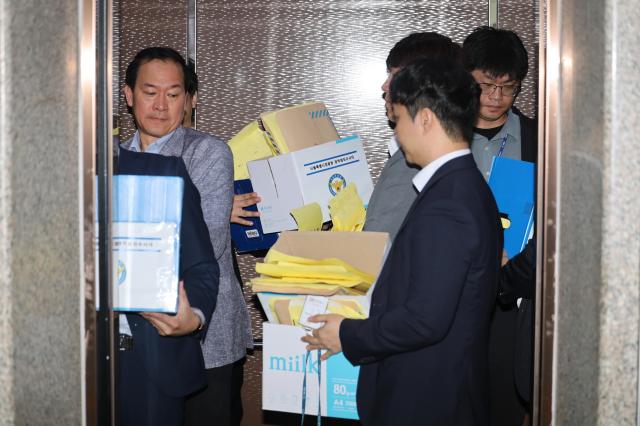
The ballot shortage incident, which forced some polling stations to suspend voting temporarily and left voters waiting for extended periods, sparked nationwide criticism and allegations that citizens' voting rights had been compromised.
"The decisive cause was the infringement of citizens' voting rights resulting from the ballot paper shortage incident," said PPP lawmaker Park Sung-hoon.
Park also cited a range of factors that fueled public resentment toward what he described as the ruling camp's growing arrogance, including its push for the special prosecutor bill on canceled prosecutions, the politicization of the Starbucks controversy and the consolidation of conservative voters during the local elections.
The legislation, championed by the DP, seeks to investigate allegations of politically motivated prosecutions under the previous Yoon administration.
Critics, however, argue that parts of the bill could effectively grant a special prosecutor authority to nullify existing indictments, making it one of the most contentious legislative proposals in recent months.
"Through the local elections, the public warned that the Lee Jae Myung administration and the DP were acting too arrogantly and doing whatever they wanted," said PPP lawmaker Ahn Sang-hoon.
Calling the bill a symbol of overreach, Ahn said voters were bewildered that the ruling party appeared determined to revive the proposal immediately after the election.
Ahn also cited concerns over housing policy and efforts to support the stock market through the National Pension Service, while attributing the PPP's improving fortunes to growing expectations surrounding Seoul Mayor Oh Se-hoon and former Justice Minister Han Dong-hoon.
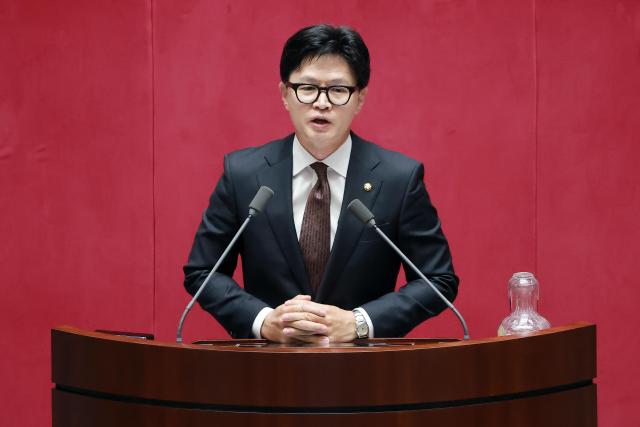
Their victories in the local elections were widely viewed as strengthening the reform-minded wing of the conservative party and broadening its appeal among moderate voters.
PPP lawmaker Woo Jae-jun similarly argued that public expectations for change within the opposition had helped boost the party's support.
"I think expectations that our party will change before the DP have been reflected in the PPP's approval ratings," he said.
Even within the ruling party, some lawmakers acknowledged growing public frustration."The ruling party must be humble and inclusive," a three-term DP lawmaker said on condition of anonymity. "During this local election, we became complacent."
The lawmaker also criticized what he described as excessive enthusiasm for stock market promotion by the government and ruling party, arguing that many ordinary investors had not benefited from recent market gains while foreign capital continued to leave Korean equities.
He added that the party must use its upcoming national convention to reorganize its leadership and reconnect with voters before public dissatisfaction hardens into a more lasting political trend.
Copyright ⓒ Aju Press All rights reserved.