
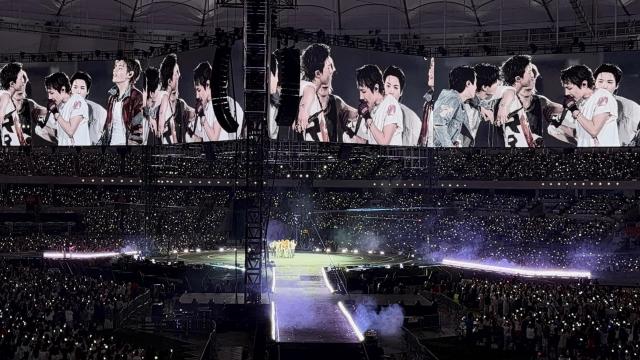
SEOUL, June 14 (AJP) - BTS returned to Busan this weekend not as a group preparing to disappear into military service, but as a global act celebrating its 13th anniversary with 110,000 fans at the midpoint of what is already shaping up to be one of the biggest tours in K-pop history.
The sold-out two-night run at Busan Asiad Main Stadium drew a combined audience of about 110,000 and served as both a homecoming and a milestone for the seven-member group, whose "ARIRANG" world tour marks their first full-group global trek in nearly four years.
The symbolism was difficult to miss.
The concerts were held in the same city where BTS staged its "Yet To Come in Busan" concert in October 2022, one of the group's final major appearances before members began entering mandatory military service. Nearly four years later, BTS returned on June 13 — the exact anniversary of its 2013 debut — with a very different message: the world's most influential K-pop act is fully back.
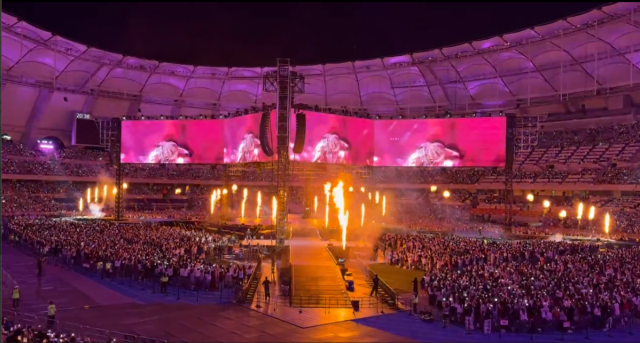
"ARMY enjoying themselves is the greatest birthday gift for us," Jin told the crowd as tens of thousands of fans joined the group in celebrating its 13th anniversary.
For members Jimin and Jung Kook, both Busan natives, the concerts carried additional meaning.
"It makes me so happy to be able to sing and dance with you in my hometown on such a meaningful day," Jimin told fans, while Jung Kook greeted the audience in Busan dialect, drawing one of the loudest cheers of the night.
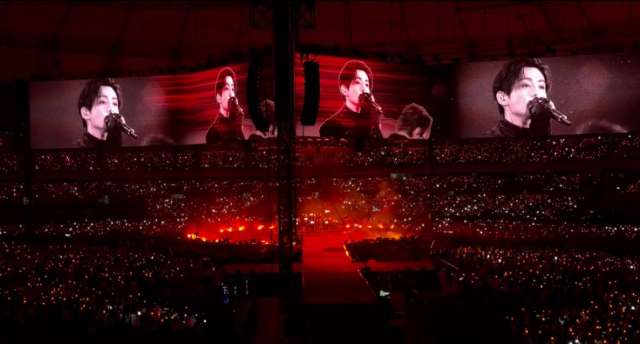
Throughout the nearly three-hour performance, BTS blended songs from its latest album "ARIRANG" with career-defining hits including "FAKE LOVE," "MIC Drop," "Fire," "IDOL," "Butter" and "Dynamite." A Korean-language version of "NORMAL," performed live for the first time, drew a particularly enthusiastic response.
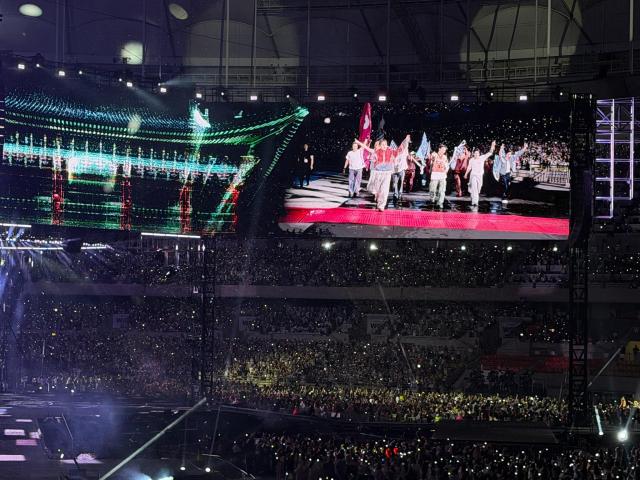
The production reinforced the tour's Korean identity.
Traditional pavilion-inspired stage designs, reinterpretations of Korean masks, dancers creating a giant taegeuk symbol and mass singalongs of the folk song "Arirang" transformed what could have been a conventional stadium show into a broader cultural showcase.
By naming the album and tour after Korea's best-known folk song, BTS has deliberately linked its post-military return to a form of cultural heritage that predates modern Korea itself.
The group's commercial influence was equally visible across Busan.
HYBE expanded the concerts into a citywide festival through "BTS THE CITY ARIRANG BUSAN," featuring drone shows over Gwangan Bridge, media-art exhibitions, pop-up stores and fan events stretching across the city.
Authorities estimated that around 50,000 overseas visitors entered South Korea during the concert period, prompting special immigration measures at airports and ports nationwide. The second night's performance was also broadcast live to approximately 3,800 cinemas in more than 80 countries.
Yet the weekend also exposed growing pains associated with mega-events of this scale.
The first concert on June 12 began more than an hour late after crowd-management problems and delays in merchandise and fan-gift distribution. HYBE later apologized and pledged operational improvements before the second show.
Accommodation issues also generated controversy in the weeks leading up to the concerts. Hundreds of complaints were filed after some lodging operators allegedly canceled reservations and attempted to resell rooms at higher prices, prompting investigations and consumer-protection warnings.
The backlash eventually triggered an unusual civic response. Buddhist temples, churches, universities and local residents collectively opened hundreds of affordable or free accommodations to visiting fans, offering an alternative image of Busan's hospitality.
For many attendees, however, those controversies ultimately became a footnote.
What remained was the sight of 55,000 fans filling a World Cup stadium on BTS' anniversary, singing along to songs that have accompanied the group's rise from a hip-hop idol act in 2013 to a global cultural phenomenon.
"Thirteen years have passed in a flash," RM reflected during the concert. "Wherever we are and whatever form we take, we'll continue trying to show you our honest selves. Please stay with us for a long time."
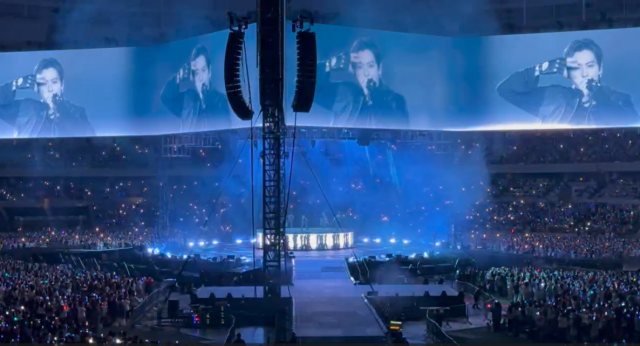
For Busan, the concerts reinforced the city's ability to host one of the world's largest entertainment events. For BTS, they marked another milestone in a career that continues to expand even after military service.
And for the tens of thousands of fans who traveled from around the world, the weekend served as a reminder that BTS remains one of South Korea's most powerful cultural exports — capable of filling stadiums, moving economies and turning an anniversary concert into an international event.

Copyright ⓒ Aju Press All rights reserved.
