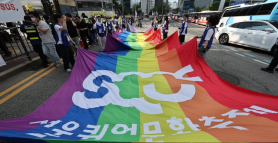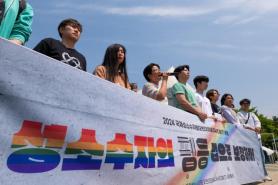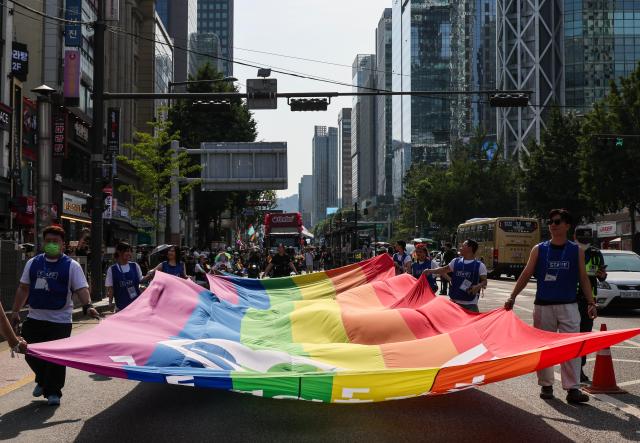
The Seoul Queer Parade, now in its 27th year, is still modest in size compared with some of the world's largest Pride events that attract hundreds of thousands, and in some cases millions, of participants. Yet its growth has been striking.
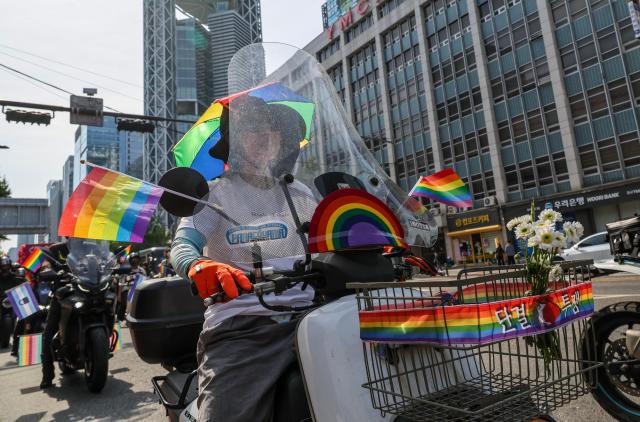
What began as a small gathering of about 2,000 people in 2000 has evolved into an event drawing tens of thousands each year, illustrating both growing visibility for South Korea's LGBTQ community and the persistent social debate surrounding it.
This year's parade took place in central Seoul on Saturday, with organizers estimating attendance at about 50,000 people. Nearby, conservative Christian groups staged separate counterprotests that organizers said drew around 30,000 participants.
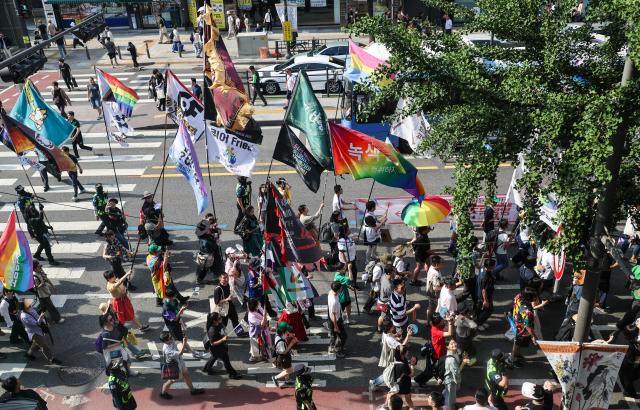
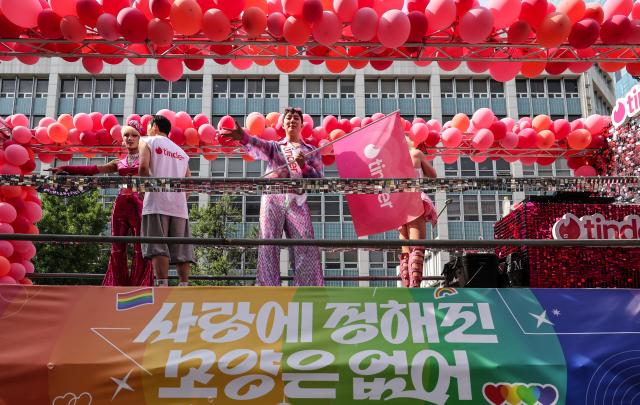
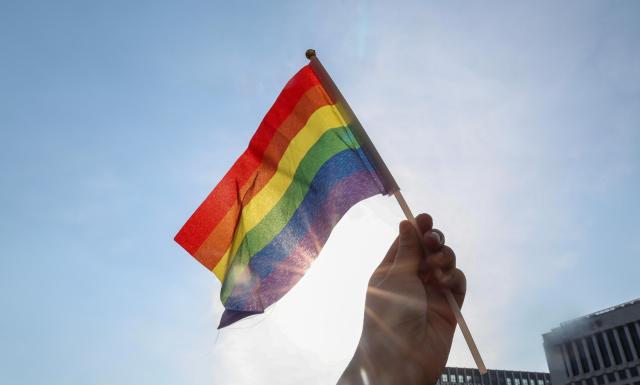
Held under the slogan "Intersection, Connecting Differences," the event brought together LGBTQ community members alongside disability rights advocates, farmers' organizations and military human rights groups. Participants marched through Jongno and Jung districts carrying rainbow flags and banners promoting diversity and inclusion.
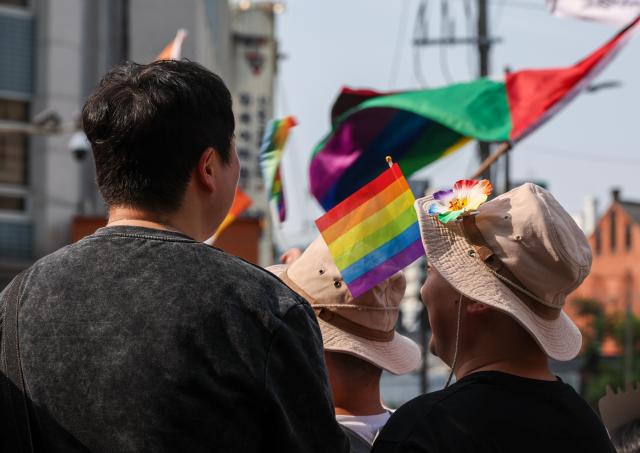
Despite temperatures exceeding 30 degrees Celsius, downtown Seoul was filled with rainbow-colored capes, clothing and flags as participants walked from Jonggak Station past Myeongdong Cathedral and Seoul Plaza to Euljiro 1-ga Station.
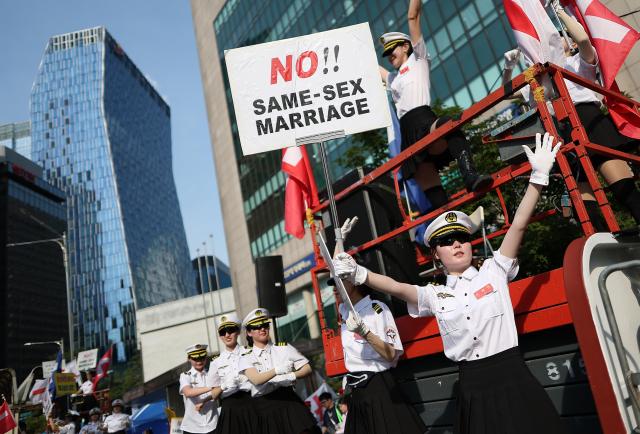
About 600 meters away, conservative Christian group Holy Breakwater held a separate rally opposing homosexuality and anti-discrimination legislation, marching toward Sungnyemun Gate.
The simultaneous gatherings underscored the continuing divide over LGBTQ rights in South Korea, where public acceptance has expanded over the past two decades but remains more conservative than in many Western countries.
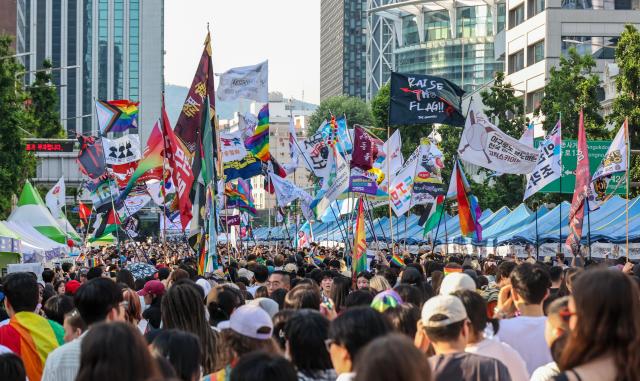
Globally, Pride Month traces its origins to the Stonewall Riots of June 1969 in New York City, a watershed moment that transformed LGBTQ rights into an international civil rights movement. The first Pride march took place in New York in 1970, and June was officially designated as Pride Month in the United States in 2000.
Today, Pride celebrations in cities such as São Paulo, Madrid, New York, Toronto, Sydney and Taipei attract hundreds of thousands to several million participants annually.
While Seoul's event remains considerably smaller, its expansion from roughly 2,000 participants at the turn of the century to 50,000 today reflects a significant cultural shift in a country where discussions surrounding sexuality and identity remain deeply intertwined with broader social and political debates.
Copyright ⓒ Aju Press All rights reserved.