
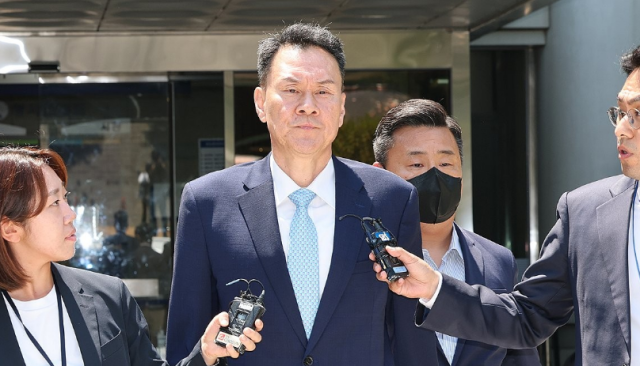
The second comprehensive special prosecutor's team, led by Kwon Chang-young, has faced a setback in its first directly recognized case since its establishment, as it failed to secure the detention of a key suspect. The dismissal of the arrest warrant for Kim Myung-soo, the former Chairman of the Joint Chiefs of Staff, is expected to place significant pressure on the ongoing investigation and prosecution strategy regarding his alleged involvement in important duties related to rebellion during the emergency martial law period.
According to legal sources on June 16, the presiding judge at the Seoul Central District Court, Bodeung-sik, rejected the arrest warrant for Kim on the night of June 15. Judge Bodeung-sik stated, "There is room for dispute regarding the main criminal charges, and the need to guarantee the right to defense exists, with no concerns of flight or evidence destruction."
However, the court approved arrest warrants for Jeong Jin-pal, former Deputy Chairman of the Joint Chiefs of Staff, Lee Jae-sik, former Chief of the Joint Chiefs of Staff's Operational Readiness Inspection, and Kim Heung-jun, former Director of Policy at the Army Headquarters, citing concerns of evidence destruction.
This case marks the first instance of direct recognition by the special prosecutor's office since it began its investigation. The office has been investigating Kim and five others for approximately three months on charges related to important duties in rebellion. The rejection of the warrant for Kim, a focal point of the investigation, is seen as a significant blow to the prosecutor's efforts.
The special prosecutor's office believes that Kim, as the Chairman of the Joint Chiefs of Staff with military command authority during the emergency martial law, was aware of the illegality of the martial law declaration and the deployment of troops to the National Assembly but failed to act against it. During the investigation, it was reported that Kim received multiple warnings from his staff regarding issues with the martial law declaration process and was informed that the military command authority remained with the Joint Chiefs of Staff even after the declaration.
Additionally, the special prosecutor's office suspects that Kim issued fragmentary orders to prioritize martial law operations to the Special Warfare Command and the Defense Security Command and was involved in the formation of the martial law command. It is also believed that he supported the implementation of martial law by ignoring proposals to withdraw troops deployed to the National Assembly.
In contrast, Kim's defense team has categorically denied the allegations, asserting that the Minister of National Defense commanded and controlled the martial law forces upon its declaration, and that Kim was excluded from the decision-making process, thus unable to exercise actual operational command authority. They have also countered claims regarding preparations for a so-called "second martial law," arguing that assessing the availability of troops in rear units was a measure to monitor arbitrary troop deployment by the martial law command, not for additional troop deployment.
Ultimately, the court determined that there is room for dispute regarding the main charges against Kim at this stage. This suggests that the special prosecutor's rationale for alleging involvement in rebellion and Kim's claims of lacking command authority may need to be further contested in the main trial.
Legal experts suggest that the special prosecutor's failure to secure the detention of Kim, a key figure in the case, will necessitate adjustments to their investigative strategy. The limitations on investigations and pressure tactics based on the premise of detention, along with the court's questioning of the special prosecutor's core legal theories, indicate a challenging path ahead. The focus will now shift to gathering additional evidence to substantiate the extent of Kim's command authority and involvement in the martial law.
On the other hand, the special prosecutor's office has secured the detention of Jeong, Lee, and Kim, who are part of the operational line, suggesting that the investigation is not entirely stalled. These individuals are suspected of involvement in preparations for the second martial law even after the National Assembly's resolution to lift the emergency martial law. The special prosecutor's office is examining evidence that Lee ordered the Army's 2nd Rapid Response Division to prepare for deployment and that Kim confirmed the availability of personnel for the Defense Security Command.
The special prosecutor's office is expected to bolster the charges against Kim by conducting further investigations and securing testimonies from those detained. They will analyze the reasons for the court's dismissal of the arrest warrant before deciding whether to reapply for the warrant or proceed with charges while Kim remains free, contesting the allegations in the main trial.
* This article has been translated by AI.
Copyright ⓒ Aju Press All rights reserved.