
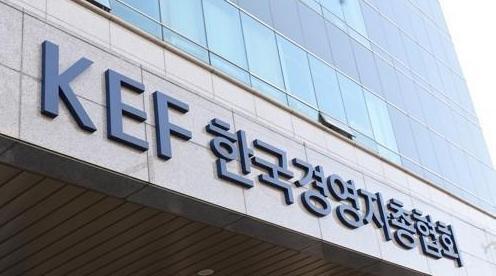
The Korean Employers' Federation (KEF) expressed concerns that the Central Labor Relations Commission's decision to recognize Hanwha Ocean as a user could lead to confusion in the industrial sector.
In a statement released on June 16, the KEF noted, "The Central Labor Relations Commission has decided that Hanwha Ocean must engage in collective bargaining with union members of Wellive, which operates the company cafeteria, regarding industrial safety and other matters. However, this decision does not align with the Ministry of Employment and Labor's revised interpretation guidelines for labor laws."
On June 15, the Central Labor Relations Commission ruled that Hanwha Ocean must enter collective bargaining with union members of Wellive concerning industrial safety issues.
The commission upheld its decision to dismiss Hanwha Ocean's appeal regarding the 'confirmation of the labor union demanding negotiations' against the Metal Workers' Union's Geoje Tongyeong Goseong Shipbuilding Subcontracting Branch. It also recognized the user status of the Wellive union, which Hanwha Ocean had initially reserved judgment on.
The KEF explained, "According to the Ministry of Employment and Labor's revised interpretation guidelines, company cafeterias fall under areas where general directive authority is recognized under subcontracting and delegation contracts, and do not represent structural control by the primary contractor."
Furthermore, the KEF pointed out, "Using the legal obligations of the contractor under the Industrial Safety and Health Act and the Serious Accidents Punishment Act as a basis for recognizing user status creates a contradiction where the more faithfully legal obligations are fulfilled, the greater the burden of bargaining obligations and strike risks become."
It added, "If the scope of collective bargaining partners expands to include indirect support relationships rather than direct production and subcontracting relationships, it could lead to greater confusion across the industry. The Central Labor Relations Commission should avoid judgments that could increase market uncertainty and should base its decisions on interpretation guidelines and strict legal standards to ensure objective and neutral judgments."
* This article has been translated by AI.
Copyright ⓒ Aju Press All rights reserved.