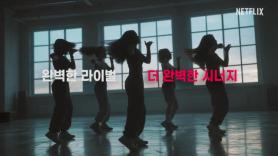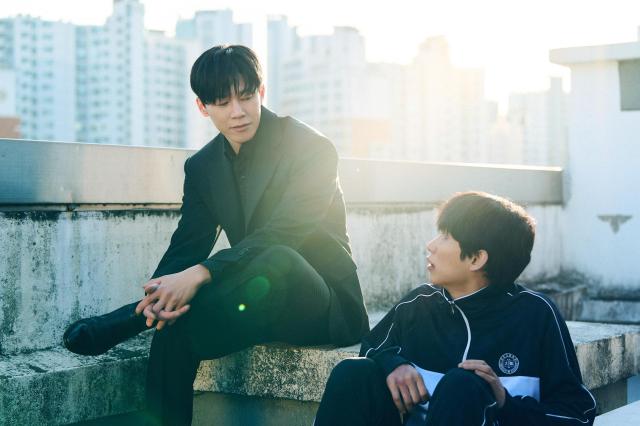
SEOUL, June 16 (AJP) - The latest Netflix K-drama "Teach You a Lesson" is taking the world by storm because, quite literally, classrooms around the world may be in need of a figurative whipping of their own.
Forbes recently called it one of the best dramas of the year despite criticism over excessive violence, racism and some over-exaggerated acting, because it ultimately offers "a hopeful perspective on justice in a corrupt world."
For teachers actually working in schools, that may not be an exaggeration.
Kim Hanna, a middle and high school teacher with 15 years of classroom experience, said "Teach You a Lesson" resonated deeply with many educators because it reflected realities they confront every day.
One scene that particularly stood out to her was when the fictional bureau tasked with restoring school authority declared that it would stand alongside teachers facing malicious complaints.
"The drama points out that malicious complaints are pressuring innocent teachers and depriving them of the opportunity to become the kind of teachers they aspire to be," Kim said.
"The fact that there is someone fighting for teachers is heartwarming."
Kim said most educators enter the profession with a strong sense of mission and a desire to guide students responsibly.
"But in reality, even ordinary disciplinary guidance can lead to malicious complaints or legal action. Many teachers end up feeling powerless, as though they can do nothing, or begin to question their own professional abilities," she said.
Kim identified what she considers the most serious problem in schools today: the growing use of child-abuse allegations against teachers engaged in legitimate educational activities.
According to Kim, a student known for impulsive and violent behavior attempted to assault a classmate.
When the teacher intervened to stop the attack, the student kicked the teacher to the ground, climbed onto the teacher's chest and pulled the teacher's hair.
"The teacher only grabbed the student's wrist to prevent further violence," Kim said.
"Yet the parent later accused the teacher of assaulting the student."
She said the parent subsequently posted messages criticizing the teacher on local online parenting forums and internet communities, damaging the teacher's reputation before filing a child-abuse complaint.
"The unfortunate reality is that incidents like this are not rare in Korean schools," she said.
Article 17, Paragraph 5 of South Korea's Child Welfare Act prohibits emotional abuse.
However, Kim said the provision's ambiguity has created unintended consequences in schools.
"Because the standard is unclear, even legitimate disciplinary guidance can result in child-abuse reports," she said.
K-drama having real power
But the drama has already hit home in South Korea, showing that it can do more than entertain — it can shape public debate and potentially influence policy.
The questions it raises are no longer confined to television screens. How should schools respond when teachers can no longer maintain order? Who should protect both teachers' rights and students' right to learn when existing systems fail?
New education leaders are now trying to answer those questions.
Gyeonggi Province's incoming education superintendent Ahn Min-seok is among the first policymakers attempting to turn that conversation into concrete action by proposing a Gyeonggi-style Educational Rights Protection Bureau within the provincial education office.
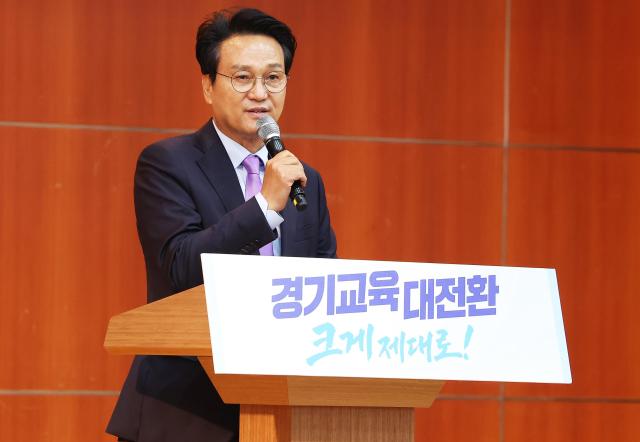
The proposal immediately sparked criticism on social media, with some arguing that a progressive educator advocating such a body was effectively endorsing a return to corporal punishment.
Ahn rejected that interpretation.
"The name comes from the drama 'Teach You a Lesson.' In reality, it cannot operate exactly as it does in the series," Ahn told AJP.
"We cannot solve problems through violence, and I believe children should not be struck even with a flower."
Still, he argued that the current system is no longer capable of addressing problems in schools quickly and effectively.
"The key is to protect both teachers' rights and students' right to learn," he said.
"We need to prevent situations in which a severely disruptive student infringes upon a teacher's authority and undermines the learning rights of other students as well."
Ahn said he has long envisioned a new system in which responsibility no longer falls solely on individual teachers but is instead assumed institutionally by education authorities.
"There is now a need for an institutional body within the education office that can take responsibility for this role," he said.
To begin the process, the Gyeonggi education transition committee will hold a public forum next week titled, "Why and How Should a Gyeonggi-Style Educational Rights Protection Bureau Be Established?"
The forum will gather experts, students, parents and teachers to discuss ways to protect both teachers' rights and students' learning rights.
Ahn also revealed that teachers with military backgrounds, including former members of the Marine Corps and South Korea's special forces, have volunteered to participate.
"Many have sent messages saying, 'I will become Gyeonggi's Na Hwa-jin,'" he said.
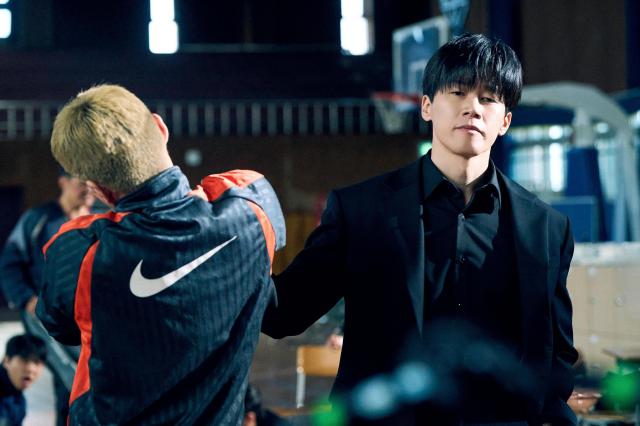
In the series, Na Hwa-jin, played by actor Kim Mu-yeol, is a former Special Forces captain turned inspector for a fictional Educational Rights Protection Bureau, leading a team dispatched to schools engulfed by bullying, corruption and collapsing authority to protect victims and restore order.

"Realistically, we may be able to secure 20 to 30 people capable of fulfilling such a role," Ahn said.
But he repeatedly emphasized that violence would have no place in the system.
"In schools facing serious crises, where teachers can no longer maintain order, these personnel would be deployed not for violent retaliation but for guidance and intervention to restore the educational environment," he said.
"If a former special forces inspector simply enters a classroom, that alone can create a sense of authority."
Ahn said the debate is ultimately about restoring schools' ability to function rather than reviving old disciplinary practices.
"Student rights and teachers' rights should not be viewed as opposing values," he said.
"They are rights that must be respected simultaneously. While protecting students' human rights, we must also institutionally guarantee teachers' legitimate authority to guide and discipline students in educational settings."
As Forbes noted, "Like all films and dramas in this world, one would hope to have some sort of escapism — because in reality, especially those who have been affected by school injustice, there are those who don't have that luxury."
That may explain why "Teach You a Lesson" is resonating far beyond Netflix audiences. For many teachers, students and victims of physical and cyberbullying, the issues depicted in the series are not fiction but everyday reality.
And perhaps that is the drama's greatest achievement: not offering an escape from reality, but forcing society to confront it.
Copyright ⓒ Aju Press All rights reserved.