
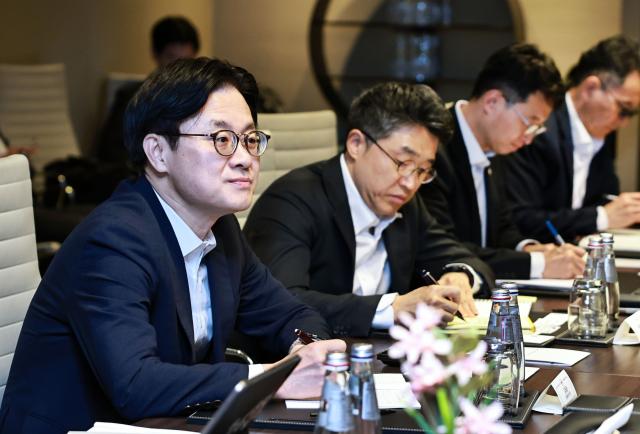
South Korea and the United Arab Emirates (UAE) have agreed to enhance cooperation in stabilizing oil supply chains and expanding nuclear energy collaboration. The two nations discussed joint oil stockpiling and strategies for entering third-country nuclear markets.
On June 16, Minister of Trade, Industry and Energy Kim Jeong-kwan visited the UAE to assess the current status of oil supply cooperation and discuss ways to strengthen collaboration in the nuclear and plant sectors.
This visit aimed to ensure the stability of energy supply chains in response to geopolitical uncertainties in the Middle East. Following visits to Saudi Arabia and Qatar, Kim's trip to the UAE marked the completion of his itinerary in three Middle Eastern countries.
During his meeting with executives from the Abu Dhabi National Oil Company (ADNOC), Kim reviewed the delivery of 24 million barrels of oil that the UAE committed to supply to South Korea in March. Both sides agreed to continue discussions on cooperation for stable oil supply and joint stockpiling.
They also exchanged views on energy infrastructure projects, including the expansion of pipelines and underground oil storage facilities that the UAE is pursuing. Kim requested the UAE's support and interest in allowing South Korean companies to participate in related plant projects.
Nuclear energy cooperation was also a key agenda item. Kim met with officials from the UAE's Ministry of Energy and the Emirates Nuclear Energy Corporation (ENEC) to review the operational cooperation status of the Barakah Nuclear Power Plant. They discussed nuclear fuel supply, maintenance collaboration, and advanced operational strategies utilizing artificial intelligence (AI) and digital transformation (DT).
Additionally, they explored joint entry into third-country nuclear markets based on their experience with the Barakah plant. The two sides exchanged opinions on identifying promising countries, establishing cooperation frameworks, and financial and investment collaboration.
In light of recent drone attacks on transmission facilities near the Barakah plant, both countries agreed to enhance information and technology exchange regarding nuclear protection systems. They had previously discussed the recovery status of transmission facilities and safety measures for South Korean workers in the region via video conference.
"The UAE has been a key partner in supporting South Korea's resource and energy supply chains amid uncertain Middle Eastern circumstances," Kim said. "We will further expand strategic cooperation, including oil supply collaboration, nuclear operations and maintenance, and joint entry into third countries."
On June 16, Minister of Trade, Industry and Energy Kim Jeong-kwan visited the UAE to assess the current status of oil supply cooperation and discuss ways to strengthen collaboration in the nuclear and plant sectors.
This visit aimed to ensure the stability of energy supply chains in response to geopolitical uncertainties in the Middle East. Following visits to Saudi Arabia and Qatar, Kim's trip to the UAE marked the completion of his itinerary in three Middle Eastern countries.
During his meeting with executives from the Abu Dhabi National Oil Company (ADNOC), Kim reviewed the delivery of 24 million barrels of oil that the UAE committed to supply to South Korea in March. Both sides agreed to continue discussions on cooperation for stable oil supply and joint stockpiling.
They also exchanged views on energy infrastructure projects, including the expansion of pipelines and underground oil storage facilities that the UAE is pursuing. Kim requested the UAE's support and interest in allowing South Korean companies to participate in related plant projects.
Nuclear energy cooperation was also a key agenda item. Kim met with officials from the UAE's Ministry of Energy and the Emirates Nuclear Energy Corporation (ENEC) to review the operational cooperation status of the Barakah Nuclear Power Plant. They discussed nuclear fuel supply, maintenance collaboration, and advanced operational strategies utilizing artificial intelligence (AI) and digital transformation (DT).
Additionally, they explored joint entry into third-country nuclear markets based on their experience with the Barakah plant. The two sides exchanged opinions on identifying promising countries, establishing cooperation frameworks, and financial and investment collaboration.
In light of recent drone attacks on transmission facilities near the Barakah plant, both countries agreed to enhance information and technology exchange regarding nuclear protection systems. They had previously discussed the recovery status of transmission facilities and safety measures for South Korean workers in the region via video conference.
"The UAE has been a key partner in supporting South Korea's resource and energy supply chains amid uncertain Middle Eastern circumstances," Kim said. "We will further expand strategic cooperation, including oil supply collaboration, nuclear operations and maintenance, and joint entry into third countries."
* This article has been translated by AI.
Copyright ⓒ Aju Press All rights reserved.