
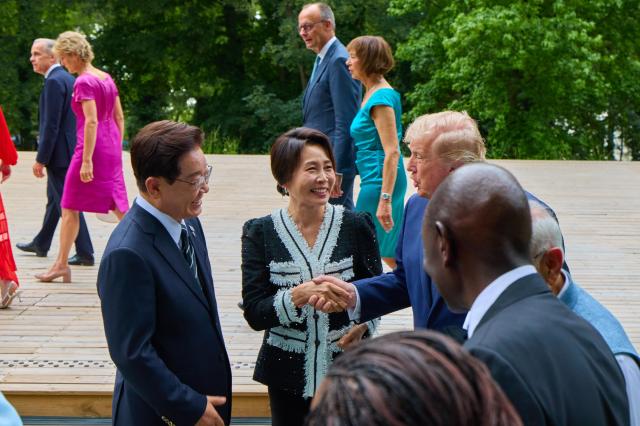
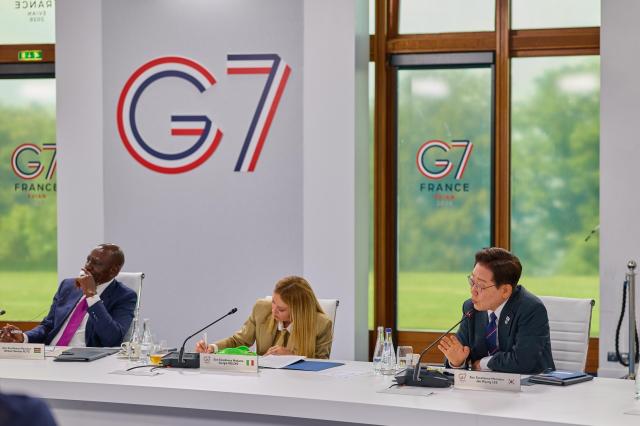
Speaking at the first expanded session of the summit in Évian-les-Bains, Lee said many developing countries remain unable to fully benefit from the opportunities created by the rapid rise of AI.
"The AI revolution is both a new challenge and an opportunity for growth for humanity, yet many developing countries do not have sufficient access to these opportunities," Lee said, according to Cheong Wa Dae.
The session, held under the theme of "Forging New Partnerships and Rebuilding International Solidarity," brought together leaders of G7 member states, invited partner countries, World Bank President Ajay Banga and African Development Bank President Sidi Ould Tah.
They discussed ways to respond to growing needs driven by climate change, global conflicts, food and health crises and rising debt burdens, while addressing constraints on public financing.
Lee argued that traditional aid-centered development models should evolve toward partnerships that mobilize private capital alongside official development assistance.
"As development aid budgets for least-developed countries are shrinking, private investment should help open new paths to growth," Lee said.
He cited a program by the Korea International Cooperation Agency (KOICA) in Indonesia, where support for 12 local startups in agriculture, energy and environmental sectors helped attract $50 million in private investment from an initial US$1 million grant.
Lee also promoted South Korea's vision of a "Global AI Basic Society," aimed at ensuring that the benefits of AI development are shared widely across countries.
"The outcomes of AI technological development should be shared by all countries so that they can grow together," he said.
Lee said South Korea would continue contributing to international development efforts based on its experience of transforming from an aid recipient into a donor nation.
Following the session, summit participants adopted three documents on reciprocal international partnerships, cancer prevention and treatment, and Ebola response. South Korea expressed support for all three initiatives.
Earlier in the day, Lee held bilateral talks with Canadian Prime Minister Mark Carney, where the two leaders agreed to strengthen cooperation in defense, security, energy and critical minerals.
Lee said South Korea, a major defense exporter, was prepared to contribute to strengthening Canada's security capabilities based on mutual trust. Carney responded that Canada places importance on building closer ties with South Korea and agreed to continue discussions on expanding cooperation.
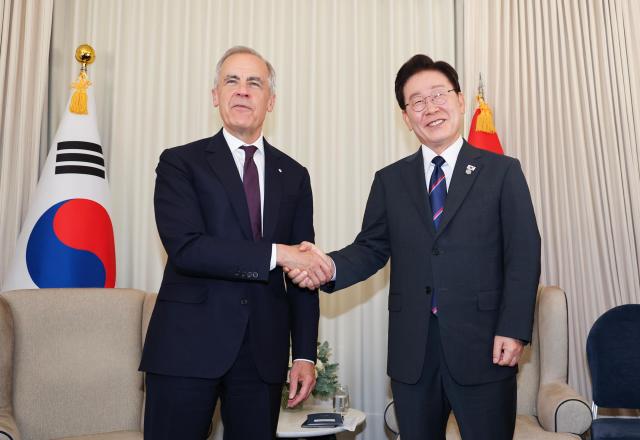
The two leaders also agreed to expand cooperation on energy supply chains, including crude oil, liquefied natural gas and critical minerals, while exploring practical ways to contribute to regional and global peace and prosperity.
Lee noted the longstanding ties between the two countries dating back to Canada's participation in the 1950-53 Korean War and said the two nations have become partners that can support one another in addressing shared challenges.
Copyright ⓒ Aju Press All rights reserved.
