
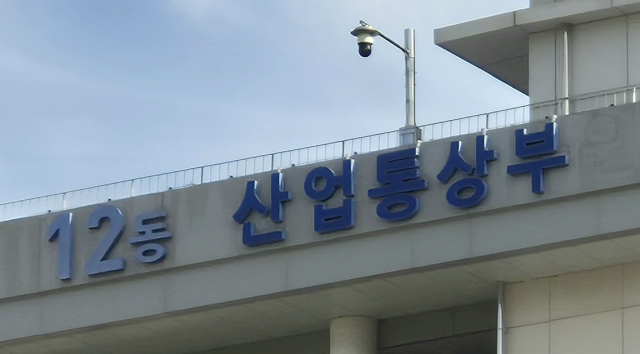
On June 18, the Ministry of Trade, Industry and Energy held the M.AX conference focused on "Real-World AI: Embedded AI." Experts from academia and industry discussed strategies for integrating AI into key sectors such as future vehicles, autonomous ships, and AI semiconductors.
While AI has traditionally developed around intangible technologies in the digital realm, embedded AI, which combines AI with products to make autonomous decisions and actions, is now emerging as a core technology. Major global tech companies are also entering the competition for embedded AI.
For instance, Tesla is advancing the development of its humanoid robot, Optimus, while NVIDIA is expanding its AI platform for autonomous driving and robotics. China is also nurturing smart electric vehicles and humanoid robots as part of its next-generation strategic industries, indicating that competition will intensify in the future.
Experts suggest that, unlike past smartphone competition which focused on hardware, the future competition in automobiles, ships, and robotics will hinge on who can first implement "moving AI." This presents an opportunity for South Korea, a manufacturing powerhouse, to combine AI technology competition with manufacturing competitiveness.
However, the government believes that the integration of AI technology is not yet mature. It emphasizes the need for active exchanges, joint research and development, and commercialization between manufacturing and AI companies to accelerate the transition to product AI (AX). To this end, the Ministry is focusing its efforts on the M.AX Alliance, which includes over 1,500 manufacturing firms, AI companies, academia, and research institutions, to secure core technologies and foster an ecosystem.
The AI robotics division is supporting the development of AI robots and humanoids. The AI future vehicle division is responding to paradigm shifts in autonomous driving technology, while the autonomous ship division is working to secure comprehensive technologies for fully autonomous navigation. The AI semiconductor division is focused on developing customized AI semiconductors.
At the conference, experts from key fields of embedded AI, including AI semiconductors, autonomous vehicles, and autonomous ships, participated. Kim Yong-seok, a professor at Gachon University and head of the AI semiconductor division, stated, "It is urgent to achieve technological independence for domestic on-device AI semiconductors, which play a crucial brain role in embedding AI into core products," and proposed building a related ecosystem.
Jeon Byeong-wook, head of the Korea Automotive Technology Institute, noted that autonomous driving technology will evolve beyond end-to-end (E2E) learning to understand and reason about the physical world. He emphasized the need to build an industrial ecosystem encompassing world models, data infrastructure, and AI inference-specific semiconductors, centered around the M.AX Alliance in the long term.
Im Do-hyung, CEO of Avikus, a startup specializing in autonomous ship solutions, introduced trends in domestic and international autonomous navigation technology and urged the creation of a policy environment that encourages domestic companies to actively participate in government-led autonomous navigation technology development, verification, and international standard development.
Kim Seong-yeol, head of the Ministry's Growth Division, concluded the event by stating, "Integrating AI into our core products to enhance them is a national task that will determine the survival of the manufacturing sector," and emphasized that achieving a major transformation in manufacturing through AI (M.AX) requires the intelligentization of manufacturing processes and embedded AI to work synergistically.
* This article has been translated by AI.
Copyright ⓒ Aju Press All rights reserved.