
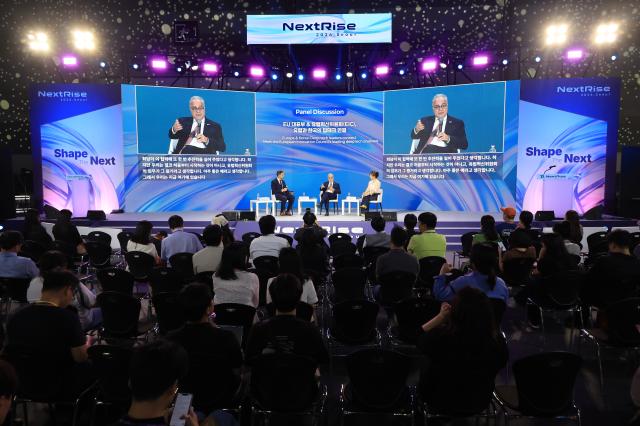
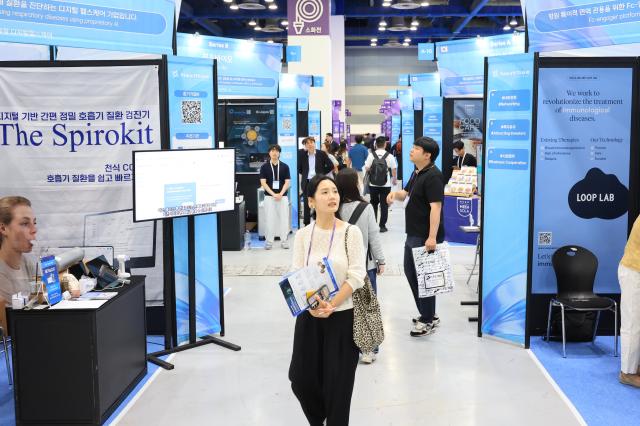
The two-day event at COEX, co-hosted by the Korea International Trade Association, Korea Development Bank, Korea Venture Business Association and Korea Venture Capital Association, is one of Asia's largest startup fairs.
This year's program spans artificial intelligence, big data, fintech, biotechnology, energy, defense, robotics and quantum computing.
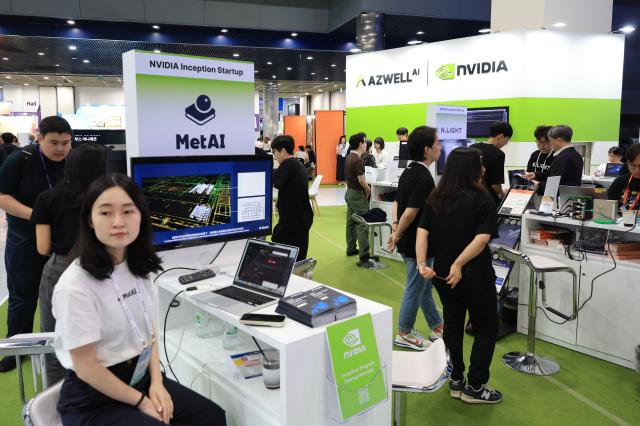
The event drew speakers from major global technology, investment and innovation organizations, including OpenAI, Google Cloud, NVIDIA, Perplexity, Anthropic, MIT, 500 Global and the European Innovation Council.
For Korea's startup ecosystem, the gathering is more than an exhibition.
It is where domestic startups seek overseas partners, foreign startups court Korean corporations and investors, and policymakers test new models of cross-border technology cooperation.
One session highlighted a growing convergence between Europe and South Korea.
Titled "Europe & Korea: Deep Tech Leaders Connect – Meet the European Innovation Council's Leading Deep Tech Scaleups," the discussion focused on cooperation in artificial intelligence, semiconductors, quantum computing, biotechnology and climate technologies.
The session came a week after the EU-Republic of Korea Summit in Brussels, where both sides pledged to support the international expansion and collaboration of deep-tech startups.
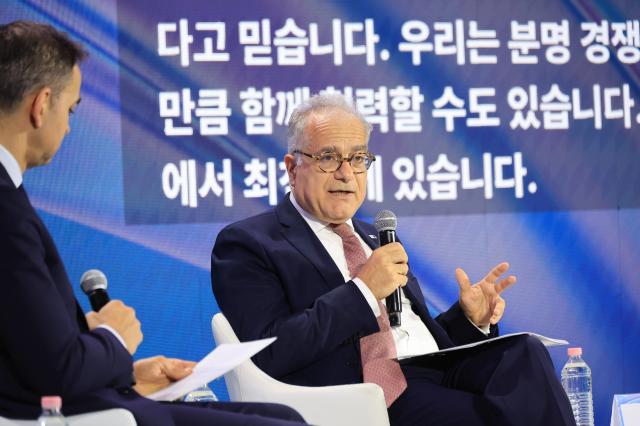
"We want to work together to support the international expansion and collaboration of EU and Korean deep-tech startups," said Ugo Astuto, Ambassador of the European Union to South Korea.
Astuto said Europe and Korea should view each other not as competitors but as partners with complementary strengths.
"Europe is at the cutting edge in several sectors of research," he said. "Korea is particularly strong in transforming research into industrial output and scaling innovation."
The panel also featured Manuel Mendigutia, senior adviser and global business lead at the European Innovation Council, and Naia Jang, chief executive of Korean startup accelerator Groove Round.
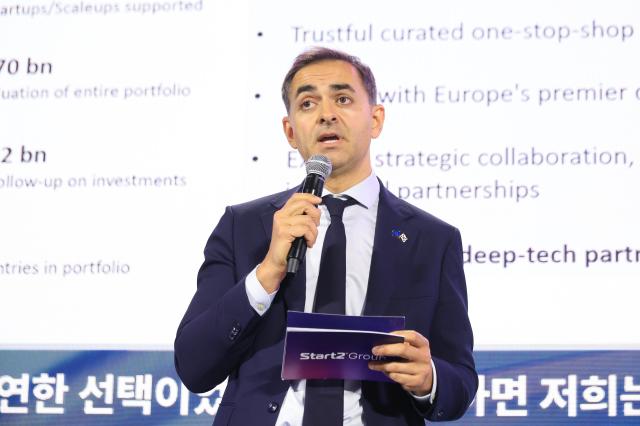
The EIC brought 10 portfolio companies to NextRise 2026 as part of its global expansion efforts, seeking partnerships with Korean corporations, investors and institutions.
For European startups, speakers said, Korea represents more than a sales destination.
Its large conglomerates, fast-moving consumers and industrial base make it an attractive testing ground for commercializing advanced technologies.
Jang said Korea's speed remains one of its biggest advantages.
"The Korean market is very fast at accepting new technology," she said. "Even if there is really good technology, if there is no market to accept it and bring it into industrial sites, the technology will remain technology itself."
At the same time, she said Korean startups are increasingly compelled to look abroad because of the domestic market's limitations.
"Korean startups honestly don't have a choice anymore," Jang said. "We have to go to the global market because the Korean market has limitations."
Europe remains an attractive destination, she said, but practical barriers persist.
"We like Europe, and we like going to Europe," she said. "But for business, we don't have a lot of practical information. We don't have a lot of experience working together."
Jang said events such as NextRise can help close that gap by directly connecting entrepreneurs, investors, corporations and public institutions.
She also noted that Korean companies have become increasingly open to foreign startups.
"We don't care about the nationality of startups," she said. "As long as we can communicate well and the technology is good, Korean companies and institutions are very welcoming."
Astuto said future cooperation should extend beyond startups themselves and include investors, corporations, universities, research institutes and governments.
"Innovation rarely happens in isolation," he said.
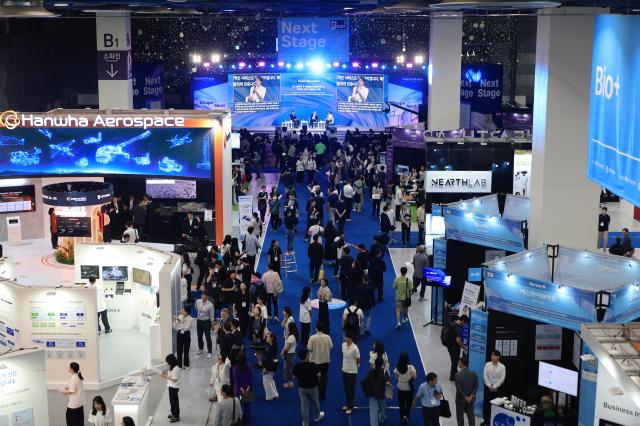
They are no longer simply venues to showcase new products. Increasingly, they have become platforms where countries compete to build long-term technology alliances.
For Europe, Korea offers speed, industrial execution and a receptive market. For Korean startups, Europe offers research depth, market diversity and global networks.
The challenge now is turning those conversations into commercial partnerships once the conference lights go out.
Copyright ⓒ Aju Press All rights reserved.
