
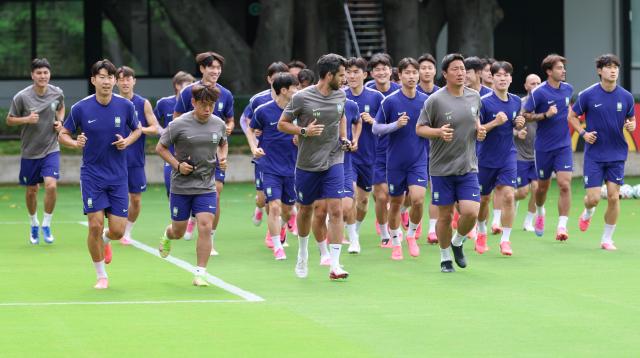
As the South Korean national football team prepares for its match against Mexico, the evolution of South Korean football is evident. The core of the team now consists of players competing in European leagues, with experience in England, France, Germany, and the Netherlands. While the World Cup is often remembered for its wins and losses, today's South Korean football carries a narrative beyond mere results.
During the 2002 FIFA World Cup, South Korea astonished the world with its tenacity and teamwork, achieving a historic fourth-place finish that remains a shining moment in the nation's sports history. However, the significance of South Korean football in 2026 is different. The current team is made up of players who have grown in a highly competitive global environment, with younger athletes challenging themselves on international stages at earlier ages. A structure has emerged where talent nurtured domestically is validated in the global market.
This transformation mirrors the growth trajectory of the South Korean economy. South Korea is not a nation that developed based on vast territory or abundant resources. The competitiveness of its semiconductor, automotive, shipbuilding, battery, and cultural content industries in the global market has ultimately stemmed from talent and technology. The approach of developing skills domestically and competing internationally is a shared success formula for both South Korean industry and football.
In this context, the World Cup can be seen as a microcosm of national competitiveness. Individual talent alone does not determine success. True competitiveness is achieved when youth systems, coaching, schools, communities, and professional stages are interconnected. The same applies to industry; no single company's efforts can lead the global market without accumulated education, research and development, investment, and experience.
There are numerous examples of countries that were once considered ahead of South Korea but have lost their presence on the international stage. In football, failures in generational transitions have been a factor, while in industry, falling behind in technological innovation has played a role. The key is not just achieving success but maintaining it. The ability to sustain today's competitiveness will determine a nation's future.
South Korea also faces challenges in this regard. The decline in school-age populations and regional disappearances is not merely a demographic issue. In areas lacking sports facilities, it becomes difficult to produce national team players, and in societies with weakened research foundations, expectations for new technologies diminish. The same applies to culture and the arts. Ultimately, national competitiveness arises from an environment that fosters talent. It is concerning that our society is becoming more accustomed to stability over challenge and short-term results over investment.
National team players do not emerge overnight. Their experiences, failures, and countless hours of training and competition culminate in their World Cup appearances. Researchers, entrepreneurs, and creators active in the global market undergo similar processes. Talent is merely a starting point. A society that provides opportunities for that talent to grow ultimately possesses stronger competitiveness.
The outcome of the match against Mexico is important, but it will not determine South Korea's future. More crucial is preserving the environment that has shaped today's national team. The World Cup serves as a stage that showcases how a nation has grown. The reasons South Korea has strengthened its presence in the world and what it needs to maintain that position are fundamentally similar: investing in people and expanding opportunities for competition. This is the true competitiveness that the World Cup reveals about South Korea.
* This article has been translated by AI.
Copyright ⓒ Aju Press All rights reserved.