
Artificial intelligence (AI) is transforming not only the coding practices of developers but also the workflows of professionals in various fields. Those without formal coding expertise can now create necessary tools by engaging with AI, provided they have a clear understanding of the issues at hand.
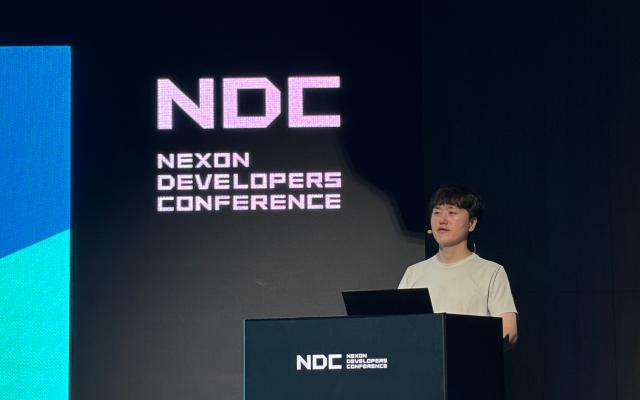
On June 18, Kim Ki-jin, Director at Nexon Korea, spoke at the Nexon Developers Conference (NDC) 2026 in Seongnam, presenting on the topic "Creating an Interactive Map for Open World Game Development Using Vibe Coding." As a game planner and level designer with minimal coding experience, Kim shared his journey of utilizing AI to develop practical work tools. Vibe coding refers to the process where AI generates and modifies code based on natural language descriptions.
Kim described himself as a beginner, stating, "I have only done basic coding like 'Hello World.'" His motivation to explore vibe coding stemmed from the limitations he encountered during the development of large-scale open world games. Previously, he relied on tools like PowerPoint, Notion, and online image editors to organize maps and planning information, but as the volume of information grew, management became increasingly challenging. He faced significant difficulties with image editing, document updates, handling large files, and managing team access permissions.
During this process, Kim noted, "I first recognized the potential of vibe coding through Google AI Studio." He emphasized that the key to vibe coding lies not in the tools or skills but in how clearly one can define the desired functions and objectives.
He stressed the importance of understanding 'why' something should be created rather than focusing solely on 'how' to create it. Even in an era where AI writes code, the responsibility for deciding what to create and how far to improve it remains with humans.
Kim developed a web-based world map editor that spans 10 kilometers in both width and height. This tool allows for quick visualization of expansive game maps and facilitates the sharing of planning information about towns, dungeons, and hunting grounds with team members, all without needing to run the game engine directly.
While he successfully created tools through vibe coding, Kim acknowledged that there were several challenges along the way. He emphasized that the essence of vibe coding is 'iteration.' "It’s unrealistic to expect perfect results from the start; discovering problems, explaining desired directions, and verifying them again is crucial," he said. After sharing the completed tool with his team, he encountered issues such as low image quality and improper integration of others' work.
He remarked, "Having a better AI model or more tokens doesn’t guarantee good results. What’s more important is defining what you want to create and establishing criteria for how complete it should be."
In response to questions about token management during the vibe coding process, Kim stated, "It’s more important to reduce trial and error than to cut costs." He mentioned spending about $100 monthly on ChatGPT, noting that while this might surprise some, the actual utility in work makes the expense less daunting. He suggested that shortening responses or reducing lengthy explanations can also be effective strategies for managing tokens.
Kim emphasized that designing questions effectively is key to minimizing trial and error in token management. He explained that constantly changing direction without a clear idea of what to create leads to wasted tokens and time. Therefore, he advised, "Before making requests to AI, it’s crucial to clearly define the desired outcomes, functions, and evaluation criteria." He also expressed the view that prioritizing the quality of the final product and work efficiency is more important than merely cutting costs, asserting, "Tokens should be spent, not saved."
* This article has been translated by AI.
Copyright ⓒ Aju Press All rights reserved.