
The discussions regarding the minimum wage for 2027 have entered a phase focused on the specific amount, following the Minimum Wage Commission's rejection of a proposal for differentiated rates by industry. As a result, a single minimum wage will apply across all sectors next year.
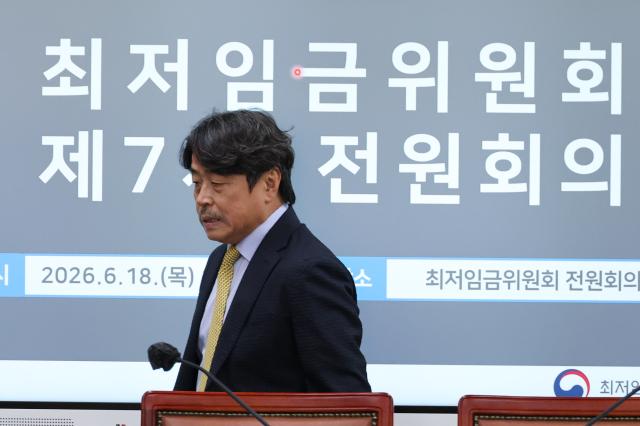
On June 19, relevant authorities reported that the Minimum Wage Commission held its 7th plenary meeting at the Government Sejong Center the previous day, where it voted on whether to apply differentiated minimum wages by industry. The proposal was rejected with 11 votes in favor, 14 against, and 1 invalid vote. Consequently, the minimum wage for 2027 will be set as a single amount, similar to this year.
The differentiation of minimum wage by industry has been a major point of contention between labor and management. Business representatives have consistently argued for differentiated rates, citing the inability of certain vulnerable sectors, such as hospitality and food services, to meet the current minimum wage. Conversely, labor representatives strongly oppose this, arguing that such differentiation could lead to stigmatization and discrimination against low-wage workers.
Earlier, on June 11, the commission had also voted against applying minimum wage to contracted workers. With both the differentiation proposal and the application to contracted workers rejected, the focus now shifts to determining the minimum wage level itself.
Labor representatives have already proposed an initial demand of 12,000 won per hour for next year, which is a 16.3% increase from this year's minimum wage of 10,320 won. This translates to a monthly salary of approximately 2,508,000 won.
They argue that a double-digit increase is necessary due to high inflation, stagnant real wages, and the cost of living burden on low-wage workers. They emphasize that the minimum wage should reflect inflation and living costs, as it is designed to alleviate wage polarization in the labor market and ensure a basic standard of living for low-income workers.
While business representatives have not yet officially presented their initial demand for next year's minimum wage, they are likely to advocate for freezing the wage. In recent years, employer representatives have consistently proposed freezing the minimum wage during negotiations, citing sluggish domestic demand, labor cost burdens, and the financial limitations of small businesses.
With the rejection of the differentiated application, they are expected to argue for a minimal increase in the minimum wage, emphasizing that raising a single minimum wage could impose significant burdens on small businesses, particularly in sectors like hospitality, convenience stores, and restaurants, where the rate of workers earning below the minimum wage is notably high.
Given the anticipated significant gap between the initial demands of labor and management, meeting the legal deadline for deliberations may prove challenging this year. According to the Minimum Wage Act, the commission must decide and submit the minimum wage proposal within 90 days of receiving a request from the Minister of Employment and Labor. This year's deadline is June 29.
However, only two plenary meetings are scheduled before the legal deadline. Considering that neither side has submitted their initial demands yet, and that there will be subsequent rounds of amendments and mediation by public representatives, discussions are likely to extend into early to mid-July.
Typically, minimum wage discussions involve both sides submitting initial demands followed by several rounds of amendments to narrow the gap. If consensus is not reached by the end, public representatives may propose a mediation period or present a unified proposal for a vote.
This year, significant disparities are expected to remain between labor and management. Labor advocates argue that a minimum wage of 12,000 won is essential to secure the livelihoods of low-wage workers, while business representatives are likely to emphasize the need for a freeze due to economic downturns and the burdens faced by small businesses.
* This article has been translated by AI.
Copyright ⓒ Aju Press All rights reserved.