
The era of token securities (STO) is on the horizon. While there is still a long way to go before full institutionalization, market expectations are high. Real estate is currently seen as the most promising investment target for STOs. A new investment model is emerging where multiple investors can co-own prime commercial real estate and share rental income and asset appreciation. PIECO is one of the companies preparing for the upcoming STO era.
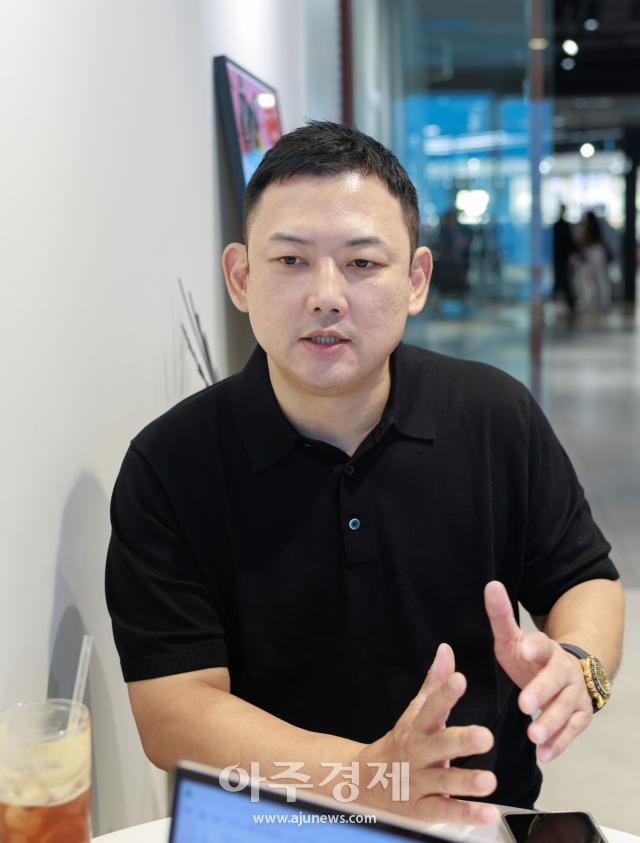
In an interview with Aju Economy on June 22, Kim Hang-joo, CEO of PIECO, stated, "STO will become a new way to own real estate," adding that "PIECO's core strategy is not just to tokenize real estate but to connect prime commercial real estate assets in Korea with the global market."
PIECO is a real estate STO platform that connects physical real estate assets with global investors. The company aims to link cash-flow-generating commercial properties, such as buildings, hotels, tourist accommodations, and franchises related to K-beauty and K-food, through token securities.
Leveraging his experience from founding the real estate P2P financing platform Together Funding and the art STO platform Together Art, Kim has entered the fractional investment market in real estate. He noted, "While operating Together Funding, I raised nearly 1 trillion won in investments, and through Together Art, I realized that many investors are highly interested in tangible asset investments. With nearly 20 years of experience in the real estate industry, I feel particularly confident in this sector compared to others."
Kim's focus on real estate STO stems from the belief that real estate is a tangible asset that is easier for investors to understand than art. He explained, "Both art and real estate are examples of assets that are difficult for average investors to own directly. While it's challenging for an average investor to assess the value of a high-priced artwork, real estate offers more reference points, such as transaction prices, surrounding market values, rental income, and appraisals."
PIECO is particularly interested in commercial real estate rather than residential properties. The company is focusing on spaces where consumer spending and investment can occur, such as hotels, lodging facilities, Airbnb, and franchises. Kim pointed out, "Recently, areas like Gangnam, Jongno, and Myeongdong have seen a surge in foreign tourists due to the K-culture wave, leading to a shortage of accommodations. We are also exploring lodging assets that would attract global investors by collaborating with top Airbnb hosts."
The company is also conceptualizing a participatory STO model using franchise businesses. In this model, investors would hold shares in stores and participate in consumption and promotional activities, sharing profits. Kim explained, "For example, if an investor owns a beer franchise through an STO, they can use the store they invested in. From the brand's perspective, numerous investors can naturally act as marketers." He described this as a participatory structure where consumers become both investors and marketers.
However, Kim emphasized that investor trust is essential for the growth of the real estate STO market. He remarked, "In the past, investors were anxious about the cryptocurrency market, but it grew rapidly once it entered the institutional framework. For STOs to gain investor trust and expand the market, systems such as collaboration with securities firms, separation of investor funds, and internal controls must be established."
PIECO is currently preparing to meet business requirements ahead of the institutionalization of STOs. The proposed amendments to the Capital Markets Act and the Electronic Securities Act, which would institutionalize the issuance of non-monetary trust income securities, are still pending in the National Assembly. Kim stated, "Once STO institutionalization is achieved, we will be able to operate real estate STO businesses within the law, rather than in a regulatory sandbox. Meeting the necessary requirements to operate within the institutional framework is our top priority." He also mentioned that discussions are ongoing with essential partners, including securities firms.
Kim identified 'securing prime assets' as a key competitive advantage in the market. He stressed, "The success of the real estate STO business ultimately depends on how many good assets we can secure, as investors need to be able to invest in attractive assets at appealing prices." He explained that since commercial real estate STOs require operators to secure assets first, financial strength is crucial. "When prime properties or urgent sales hit the market, they need to be acquired quickly, which requires sufficient funding capabilities," he added. He also revealed that PIECO recently signed a memorandum of understanding with a financial group in Singapore to secure prime assets.
PIECO's ultimate goal is to provide young investors with a new investment experience. Kim expressed, "I want investors in their 20s to 40s to experience a way of investing that goes beyond just looking at numbers, where they can stay in the hotels they invested in, consume at the places they invested in, and share information with other investors in the community. I aim to create a platform that allows investors to participate in a fun way."
Finally, Kim emphasized, "We will create a new investment ecosystem where global investors can grow alongside Korea's K-culture."
* This article has been translated by AI.
Copyright ⓒ Aju Press All rights reserved.