
South Korea's Hanwha Ocean and Germany's ThyssenKrupp Marine Systems, or TKMS, are entering the final stretch of the race to win a contract to deliver 12 submarines to replace Canada's aging Victoria-class fleet.
The contest increasingly presents Ottawa with two distinct propositions.
Hanwha is offering a variant of its operational KSS-III submarine, backed by a faster delivery schedule designed to prevent a gap in Canada's undersea capabilities. TKMS, meanwhile, is proposing its Type 212CD platform while emphasizing deeper integration with European NATO allies.
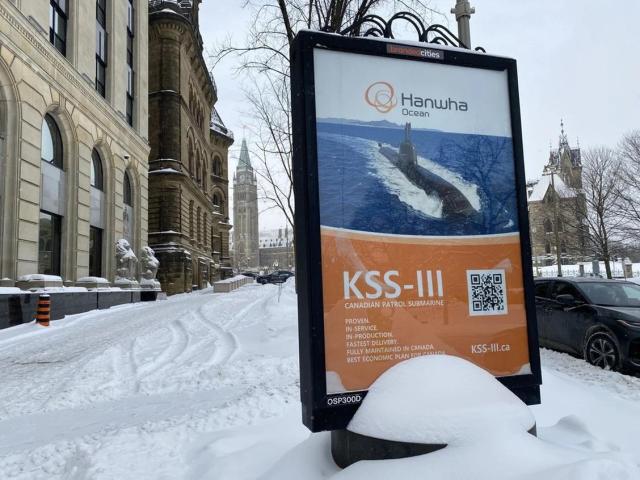
Canada's four Victoria-class submarines are expected to begin retiring around 2035, the same year Ottawa hopes to receive its first replacement vessel. Hanwha says it can deliver four submarines by then.
Germany and Norway have proposed giving Canada priority access to some Type 212CD submarines already ordered for their own navies, allowing TKMS to advance delivery of four vessels to 2036. That would still leave the German proposal roughly a year behind Hanwha's schedule.
The strategic calculus has drawn renewed attention ahead of the NATO summit in Ankara on July 7 and 8, as Canada seeks to expand its role in Arctic and North Atlantic security.
Highlighting allied interoperability, TKMS has been urging Canada to join Germany and Norway in operating a combined fleet of as many as 24 Type 212CD submarines across the Arctic and North Atlantic.
Such an arrangement would allow the three NATO members to share spare parts, training, maintenance and logistics, potentially reducing long-term operating costs while strengthening allied undersea operations in the region.
Defense analysts say choosing the Type 212CD would also send a broader political signal about Canada's strategic alignment with Europe.
Canada's recent participation in the European Union's Security Action for Europe, or SAFE, program has emerged as another potential variable in the competition. The Council of the European Union formally concluded the agreement with Canada on June 15, just weeks before Ottawa is expected to select a preferred bidder.
The €150 billion euro initiative is designed to support joint defense procurement and strengthen Europe's defense industrial base. Canada became the first non-European country to join the program, giving Canadian companies greater access to European defense projects and supply chains.
The agreement does not oblige Ottawa to purchase a European submarine, but it bolsters TKMS' argument that its proposal aligns with Canada's broader push to deepen industrial and defense cooperation with Europe.
Hanwha has sought to counter those political advantages with a real-world demonstration of its platform.
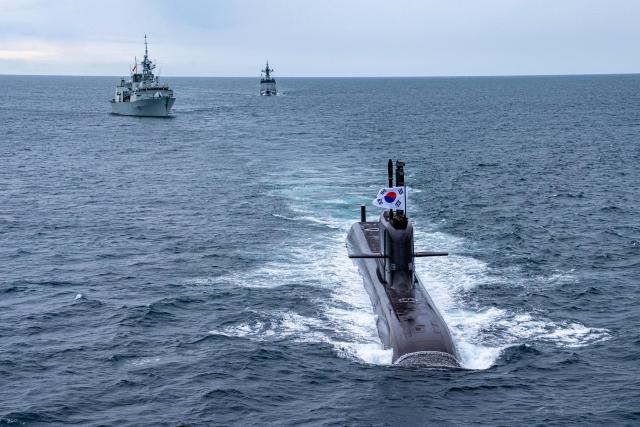
The submarine later conducted joint exercises with the Royal Canadian Navy off Canada's west coast in early June, giving Canadian sailors a firsthand opportunity to evaluate its operational capabilities.
As the competition enters its final phase, familiarity and interoperability may ultimately prove decisive.
Moon Geun-sik, a special professor at Hanyang University and a submarine expert, said the two bids appeared largely comparable in industrial and economic terms.
Canada, however, may place greater emphasis on NATO relations and its expanding defense partnership with Europe, he said.
"The government is looking closely at NATO, while the EU is also offering support through SAFE," Moon said. "Canada appears to be agonizing over the decision."
Moon added that Ottawa, after initially considering an announcement by the end of June, could postpone its decision until after the NATO summit, although Canada has not officially revised its timetable.
"If political considerations carry greater weight, that would put Korea at a disadvantage," Moon said. "I think there is a possibility that Canada will make a political decision."
For Hanwha, that political equation remains the biggest uncertainty as the competition enters its final stage.

Copyright ⓒ Aju Press All rights reserved.
