South Korea's June 3 local elections, marked by irregularities and disruptions, is an uncomfortable reminder that even mature democracies can be fragile and that public trust, once strained, is difficult to rebuild.
In South Korea, a country long regarded as one of Asia's most resilient democracies, elections have been a source of national pride. Its transition, after a hard-fought democratic struggle against authoritarian military rule, into competitive, well-administered elections was widely seen as proof that democracy could not only take root in East Asia but endure.
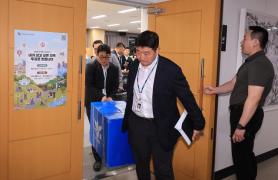
That is precisely why even procedural disruptions, such as a shortage of ballot papers at several polling stations in southern Seoul that left some voters unable to vote or caused delays, carry deeper implications. They raise not only administrative questions but also broader doubts about the reliability of election management and public confidence in state institutions built over decades.
But South Korea is not the only country to have faced such issues. In advanced democracies such as Germany, parts of the 2021 federal election in Berlin were later rerun after election-day disruptions, including ballot shortages, incorrect ballots, and long delays, which later led to a change of administration.
Across Asia, too, electoral systems vary widely in how strongly they are trusted. Even Japan, often seen as a model of smooth and orderly elections, has faced concerns in recent years over declining voter turnout and shrinking political diversity.
The tendency beyond Asia is even more familiar. In the U.S., the world's most closely watched electoral system, disputes over voting procedures and the legitimacy of election outcomes have become a regular feature of political debate.
European democracies, though institutionally strong, are not immune to similar concerns, particularly as polarization grows. But the core issue is not necessarily the collapse of electoral systems, but rather a growing struggle over whether the outcomes they produce are accepted as legitimate.
Legitimacy in elections is not only about the presence or absence of voting, but about the credibility of the process. Still, democracies are vulnerable not only to fraud or interference, but also to the slow, less visible erosion of trust. Once voters begin to suspect that procedures are inconsistent or outcomes are shaped by anything other than collective choice, the legitimacy of the entire system becomes harder to defend, regardless of what formal investigations later will reveal.
Election agencies, governing institutions, and political parties must not only ensure that rules are followed but also that the public believes they are being followed. In an era of rapid information flow and diverse interpretations amid political polarization, that task has become significantly more difficult.
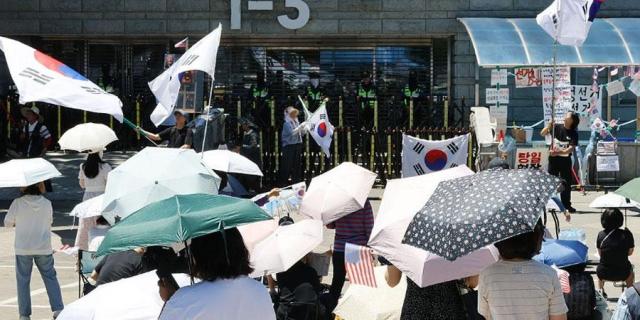
South Korea, with relatively high voter participation and a long record of credible elections, now faces new challenges, as a large group of voters has continued weeks of protests in Jamsil over questions about their right to vote and the transparency of the election process, though they have increasingly taken on a political turn.
Elections remain one of the clearest expressions of a democratic system. Yet they are also, increasingly, among the most scrutinized and contested. The recent disruptions in South Korea's local elections do not mean democracy is failing. Instead, they reflect ongoing struggles to maintain public confidence in democratic systems that are expected to be both flawless and intensely competitive at the same time.
Copyright ⓒ Aju Press All rights reserved.