
Changwon is an essential part of South Korea's industrial history. The Changwon National Industrial Complex has been the heart of the country's manufacturing sector, serving as a hub for machinery, shipbuilding, defense, and nuclear power industries.
However, as global manufacturing competition intensifies and China accelerates its advancements, Changwon faces dual challenges of stagnation and population decline.
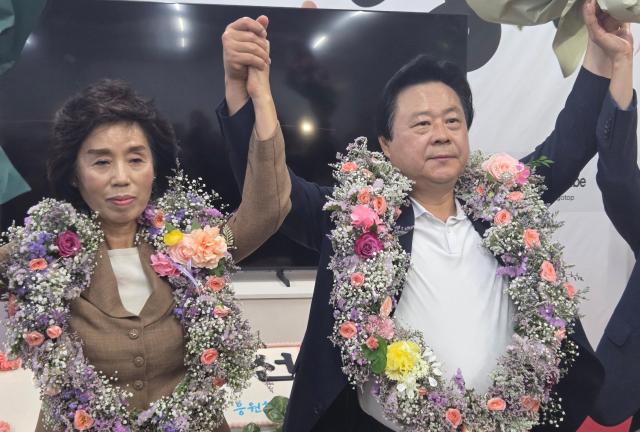
Kang Ki-yoon, the newly elected mayor of Changwon, has declared his intention to turn this crisis into an opportunity. His key promises include creating 100,000 jobs and establishing a clean energy capital. Central to this vision are the solar RE100 industrial complex, hydrogen hub, offshore wind farms, and the development of defense and nuclear industries.
While these initiatives may appear to focus on energy and industrial policy, they are fundamentally strategies for a transformative shift in manufacturing for the AI era. The plan is to leverage Changwon's manufacturing foundation by integrating AI, robotics, and smart factories to re-establish it as the center of industrial innovation in South Korea.
The question is clear.
Can Changwon lead the revival of South Korea's industrial capital in the AI era?
The Heart of Manufacturing Begins to Beat Again with AI
Changwon has long been a symbol of South Korea's manufacturing prowess. The machinery, machine tools, shipbuilding materials, and power generation equipment industries have thrived here. However, relying solely on past successes no longer guarantees a prosperous future.
AI is fundamentally changing the competitive landscape of manufacturing. Where production facilities and manpower once defined competitiveness, data, algorithms, automation, and robotics now take precedence. AI plays a crucial role in reducing defect rates, enhancing productivity, and optimizing the entire design and production process.
The promise of creating 100,000 jobs emphasized by Mayor Kang is not merely about expanding employment. It signifies a commitment to building a city that attracts innovative companies and fosters the growth of future industries. He stated, "The best welfare a mayor can provide to citizens is jobs."
For Changwon to thrive in the AI era, it must go beyond merely preserving its existing manufacturing base. It must transform its manufacturing sector into an AI-driven industry.
AI Defense Revolution: A New Opportunity for Changwon
Changwon's most potent asset is its defense industry.
Key defense companies, including Hanwha Aerospace and Hyundai Rotem, are based in Changwon. A significant portion of South Korea's K-defense, including K9 self-propelled howitzers, armored vehicles, and aircraft engines, is produced here.
AI is the technology that is rapidly transforming the defense industry. Unmanned combat systems, autonomous military vehicles, AI target recognition, drone warfare, and digital battlefield management systems are already becoming a reality.
Mayor Kang has proposed the establishment of a second national industrial complex and the attraction of defense industry companies as key pledges. This is not merely about expanding industrial zones; it embodies the potential to develop Changwon into an AI-based advanced defense industry city.
As the world enters an AI defense competition, Changwon has the potential to become the center of South Korea's AI defense revolution.
Nuclear Power and Energy: A New Goldmine in the AI Era
Many people associate AI primarily with semiconductors.
However, the true core of the AI era is power.
AI data centers, robotic factories, and smart factories require vast amounts of electricity. Ultimately, a city that can reliably supply power will secure its competitive edge in future industries.
Mayor Kang has presented the vision of Changwon as a clean energy capital. He plans to gradually establish a solar RE100 industrial complex, a hydrogen hub at Jinhae New Port, and offshore wind farms, aiming for a total investment of 14 trillion won and the creation of 100,000 jobs. He also emphasizes the development of small modular reactor (SMR) industries, where Doosan Enerbility has strengths.
This is not just an environmental policy.
It is a strategy to supply the energy needed for AI industries and to seize the future energy market.
The winner in the AI competition is likely to be the winner in the energy competition.
Robots and Smart Factories: Transforming the Future of Changwon
The factory is where AI is first making an impact.
Changwon is South Korea's largest machinery city, with optimal conditions for the growth of industrial robots, smart factories, and automation equipment.
The structural modernization of Bongam Industrial Complex and the establishment of a second national industrial complex, both promoted by Mayor Kang, are connected to this transformation. It is crucial to create an advanced manufacturing ecosystem that utilizes AI and robotics, rather than simply increasing the number of factories.
While Germany has pursued manufacturing innovation through Industry 4.0, Changwon has the opportunity to create a new model through the AI manufacturing revolution.
The future of Changwon lies not in building more factories but in creating smarter factories.
Changwon Must Evolve from an Industrial City to an AI Industrial CityThe essence of Mayor Kang's promises is clear.
Fostering clean energy industries.
Strengthening defense and nuclear power industries.
Establishing a second national industrial complex.
Attracting innovative companies.
And creating 100,000 jobs.
The unifying keyword is AI.
Manufacturing without AI will lose competitiveness, defense without AI has no future, and the energy industry without AI will face growth limitations.
For Changwon to revive as South Korea's industrial capital, it must integrate AI into its manufacturing, defense, and energy sectors.
The real challenge for Mayor Kang lies here.
Once a symbol of South Korea's industrialization, Changwon now stands at a new turning point.
While it grew through steel, machinery, and shipbuilding in the past, it must now advance through AI-driven manufacturing, AI defense, and AI energy industries.
The clean energy capital vision, the promise of 100,000 jobs, the establishment of a second national industrial complex, and the strengthening of defense and nuclear industries all point toward a single goal: transforming South Korea's top industrial city into its leading AI industrial city.
The true victor in the AI era may not be a city with only semiconductors.
A city that innovates manufacturing through AI could emerge as the true winner.
Can Changwon demonstrate this potential?
* This article has been translated by AI.
Copyright ⓒ Aju Press All rights reserved.