
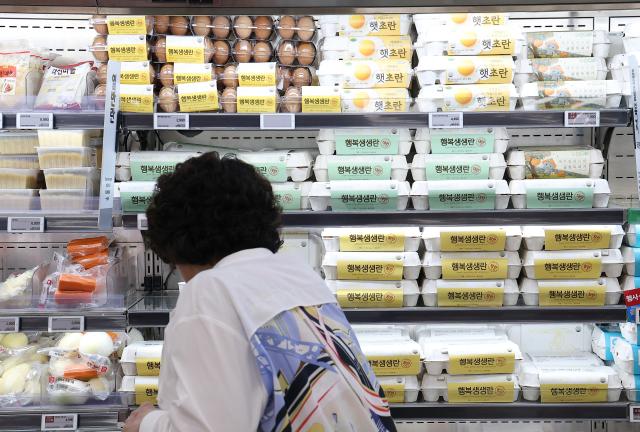
According to the Livestock Products Quality Assessment Institute and the Ministry of Agriculture, Food and Rural Affairs, the daily production of eggs this month is 47.05 million, a 3.3% decrease from the previous year. As of June 22, the farm price for a tray of eggs (30 eggs) was 6,321 won, while the average consumer price was 7,495 won, reflecting increases of 12% and 6.81%, respectively, compared to last year.
The rise in egg prices has been attributed to the spread of highly pathogenic avian influenza (AI) last winter, which led to the culling of approximately 11.34 million hens, or about 14% of the total laying hen population.
However, the supply situation for eggs is rapidly improving. The number of chicks raised from January to May increased by 12.8% compared to the previous year, resulting in a laying hen population of 78.79 million in June, a 0.4% increase from last year. Daily egg production is projected to reach around 49 million next month, surpassing average levels.
An agricultural official stated, "Typically, it takes about six months for chicks to start laying eggs. With the expected increase in supply starting next month, prices are anticipated to gradually decline."
To stabilize egg prices, the Ministry of Agriculture is also implementing discount promotions and increasing the import and supply of fresh eggs. Since June 11, discounts of up to 40% have been offered on all types of eggs. Additionally, the Korea Agro-Fisheries & Food Trade Corporation has imported and supplied a total of 10.11 million fresh eggs, including 6.74 million from the United States and 3.37 million from Thailand.
Some concerns have been raised about potential hoarding as the government promotes discounts. Given that eggs have a shelf life of only 45 days, there are worries that excessive stockpiling could compromise consumer safety.
Another industry representative noted, "The government is maintaining a stable supply base through increased egg production, expanded fresh egg imports, and support for heatwave responses. Consumers should take advantage of discount promotions but purchase only what they need to help stabilize supply and alleviate price pressures."
* This article has been translated by AI.
Copyright ⓒ Aju Press All rights reserved.