
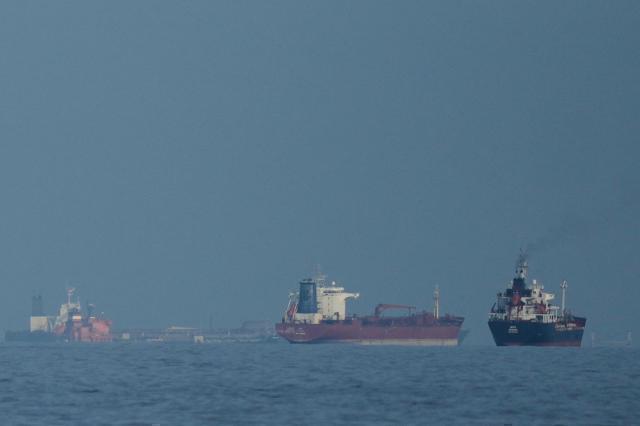
Following the signing of a memorandum of understanding (MOU) between the United States and Iran, the number of vessels transiting the Hormuz Strait has increased. However, it remains uncertain whether the same conditions will persist after the 60-day free passage period ends. Iran and Oman have agreed to discuss costs related to vessel traffic management, while the U.S. has firmly stated that "no tolls or fees can be imposed in international waters." The reopening of the strait has evolved into a new negotiation point concerning management authority and fee imposition.
According to reports from the Associated Press on June 23, vessel traffic through the Hormuz Strait has shown signs of recovery since the MOU was signed. Maritime data firm Kpler noted that 131 vessels passed through the strait from June 20 to June 23, with 39 vessels transiting on June 23 alone. However, this is significantly lower than the pre-war levels of 100 to 130 vessels per day.
The full normalization of shipping operations has not yet occurred due to ongoing safety concerns. The AP reported that the central shipping lane of the strait is still obstructed by mines. Currently, vessels are using northern routes through Iranian waters and southern routes through Omani waters. Some vessels have been detected operating with their tracking devices turned off. Iran has stated that it will remove mines and military obstacles within 30 days as per the MOU.
The key issue arises after the 60-day free usage period. While the MOU stipulates that Iran will not charge tolls for the next 60 days, a clear fee structure has not been established for the period thereafter. Following a meeting in Muscat, Iran and Oman issued a joint statement announcing the formation of a working group to discuss costs related to strait management.
Both countries have officially referred to "service costs" related to navigation management rather than tolls. However, the U.S. and the shipping industry view this discussion as potentially leading to charges for vessels. During the war, Iran had used the blockade of the strait to exert pressure on the U.S. and Gulf nations, and last month it established the Persian Gulf Navigation Authority to oversee vessel registration and traffic management.
The U.S. quickly drew a line in the sand. U.S. Secretary of State Marco Rubio, on a tour of Gulf nations, arrived in the United Arab Emirates (UAE) and stated, "The Hormuz Strait is an international waterway," emphasizing that no country can impose tolls or fees there.
However, President Donald Trump's comments reflected a divergence from the U.S. principle. The AP reported that Trump suggested that if a final agreement is not reached, it could be the U.S., not Iran, that charges for passage through Hormuz. He mentioned the costs associated with U.S. protection of Middle Eastern nations, but the U.S. government did not specify how such charges would be implemented.
Maritime experts believe that imposing tolls on all vessels passing through the Hormuz Strait could violate international maritime law. The United Nations Convention on the Law of the Sea recognizes the right of vessels to pass through straits without obstruction.
James Kraska, a professor at the U.S. Naval War College, told the AP, "While fees can be charged for port usage or requested navigational assistance, one cannot demand payment for mere passage."
Normalization of shipping is expected to take time. The presence of mines, the need to restore shipping lanes, and insurance costs are likely to delay a return to pre-war levels of oil and liquefied natural gas (LNG) transport. The International Maritime Organization (IMO) has also begun assisting the movement of 11,000 vessels and crew members stranded in the Gulf, indicating that passage through the strait has not yet fully normalized.
Ultimately, the issues surrounding the Hormuz Strait have shifted from simple reopening to questions of who will manage it and under what pretext fees can be charged. While free passage will be maintained for 60 days, if a final agreement is not reached during this period, the potential clash between Iran's service fee plans and the U.S. principle of international waterways is likely to resurface. The shipping industry believes that until the conditions for passage are clarified, it will be difficult for strait logistics to recover to pre-war levels.
* This article has been translated by AI.
Copyright ⓒ Aju Press All rights reserved.