
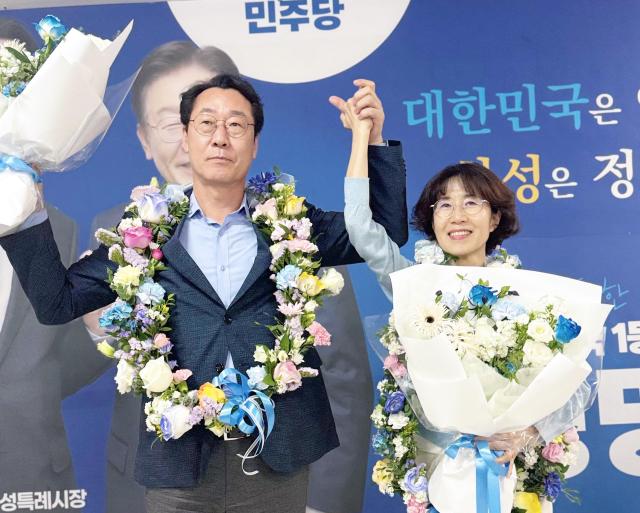
Hwaseong is emerging as one of the most dynamically growing cities in South Korea. With a population surpassing 1 million, it has become a special city, evolving into the country’s largest industrial hub, home to Samsung Electronics' semiconductor operations and the Hyundai-Kia automotive industry belt, as well as advanced manufacturing and logistics sectors. However, the vision of Hwaseong's newly elected mayor, Jeong Myeong-geun, extends beyond being a mere manufacturing city.
During his campaign, he declared, "I will make Hwaseong the AI capital of South Korea," outlining key pledges that include the introduction of AI public servants, the establishment of AI data centers, the construction of an AI innovation campus, and the creation of a global AI industrial ecosystem. He also presented a blueprint to connect future cars, drones, and aerospace industries to develop an AI-based future industrial hub.
The question is clear.
Can Hwaseong truly become the capital of South Korea's AI industry and the future mobility revolution?
South Korea's Largest Manufacturing City Meets AI
Hwaseong's competitiveness has already been proven.
It hosts Samsung Electronics' semiconductor facilities and is densely populated with automotive, electronics, and materials industries, boasting a stronger foundation in advanced manufacturing than any other city in the country. However, Mayor Jeong believes that relying solely on existing manufacturing competitiveness cannot guarantee a prosperous future.
Thus, he proposes AI as a new engine for urban growth. Attracting AI data centers, establishing an AI innovation campus, and drawing global tech giants are central to his vision. Mayor Jeong emphasizes that Hwaseong is the optimal location for AI industries, given its transportation network and advanced manufacturing base.
In the AI era, competitiveness does not stem merely from having numerous factories. It hinges on how much data is collected and utilized, how many AI talents are nurtured, and how many innovative companies are attracted.
Hwaseong already has a robust manufacturing foundation. Now, the task of integrating AI into that foundation is beginning.
AI Public Servant 'Corybot' Transforming Administration
Among Mayor Jeong's AI pledges, the most eye-catching is the AI public servant 'Corybot.'
Corybot is an AI administrative assistant that provides 24-hour customer service and administrative guidance. The plan aims to reduce repetitive tasks and enhance citizen services, thereby increasing administrative efficiency. Mayor Jeong has stated that he intends to develop this into a nationally leading AI administrative model.
One of the first areas to change in the AI era is administration.
Simple customer service, document processing, and data analysis can already be performed faster by AI than by humans. Ultimately, future competitiveness will depend on how well AI is utilized.
If Sejong aims to be the AI government capital, Hwaseong can be seen as aspiring to be the AI administrative capital.
It aims to create a city where citizens can first experience AI.
Future Cars and Autonomous Driving: Hwaseong's Strongest Assets
When discussing Hwaseong's future, the automotive industry cannot be overlooked.
The region is home to a dense ecosystem of Hyundai and Kia automotive industries and advanced component manufacturing, with conditions suitable for expansion into autonomous driving and future mobility sectors.
The automotive industry is also where AI is making the most significant changes.
Cars are no longer just machines powered by engines; they are transforming into mobile computers equipped with AI. Autonomous vehicles, smart logistics, robot taxis, and urban air mobility (UAM) all rely on AI.
Mayor Jeong has announced plans to establish a testing ground for drones and future air mobility, as well as to foster downstream aerospace industries. This signifies a shift for Hwaseong from a mere manufacturing city to a future mobility testing city.
As the AI mobility revolution becomes a reality, Hwaseong's value is likely to increase significantly.
Conditions for Hwaseong as an AI Capital
Mayor Jeong has declared his intention to make Hwaseong the AI capital of South Korea.
However, an AI capital cannot be built on slogans alone.
It requires talent, companies, a research and development ecosystem, and capital to work in tandem.
Hwaseong already possesses considerable strengths.
It is home to the global semiconductor giant Samsung Electronics, has the largest industrial belt in the metropolitan area, and is experiencing a steady influx of young people. It is also one of the fastest-growing cities in the country.
However, challenges remain.
It is not densely populated with research institutions like Daejeon, nor does it have a concentration of AI startups like Pangyo.
Ultimately, Hwaseong's success will depend on how quickly it can connect its manufacturing base to the AI industry.
If it can integrate semiconductors, automobiles, robotics, and aerospace into a single AI ecosystem, Hwaseong could emerge as the central city of South Korea's AI industry.
A Challenge Towards Becoming a Global AI City
Mayor Jeong has announced plans to expand the Global AI EXPO launched last year to make Hwaseong a city of AI industry that attracts global attention. He envisions that "the future of AI can be found in Hwaseong."
This is not merely about hosting exhibitions.
It signifies the creation of a platform where AI companies, investors, and researchers can gather.
Just as Silicon Valley grew by attracting innovative companies and Shenzhen became a global city by combining manufacturing and technological innovation, Hwaseong aims to build its own AI industrial ecosystem.
In the AI era, competition among cities will also change.
It will not be the cities with the most factories that win, but those that attract innovation.
This is why Mayor Jeong emphasizes AI.
Mayor Jeong's AI vision can be summarized in four key points.
First, administrative innovation through the AI public servant Corybot.
Second, the establishment of AI data centers and an AI innovation campus.
Third, the nurturing of future cars, drones, and aerospace industries.
Fourth, the growth of Hwaseong into South Korea's AI capital.
In the era of national transformation towards AI, Hwaseong occupies a very special position.
It can integrate AI with a strong industrial base in semiconductors, automobiles, and advanced manufacturing.
The winners in the AI era are likely to be cities that possess both technology and industry.
Hwaseong is currently rising to that challenge.
: Jeong Myeong-geun, Mayor of Hwaseong: A political figure with expertise in administration and policy, he is set to lead Hwaseong's governance for the second consecutive term. Following the city's elevation to a special city, he is redesigning Hwaseong's growth strategy around AI and future industries. In the 2026 local elections, he presented key pledges including the introduction of AI public servants, the establishment of AI data centers, the construction of an AI innovation campus, the creation of a global AI industrial ecosystem, and the development of an aerospace industry cluster. He aims to transform Hwaseong from a manufacturing-centric city to one focused on AI and future mobility.* This article has been translated by AI.
Copyright ⓒ Aju Press All rights reserved.