
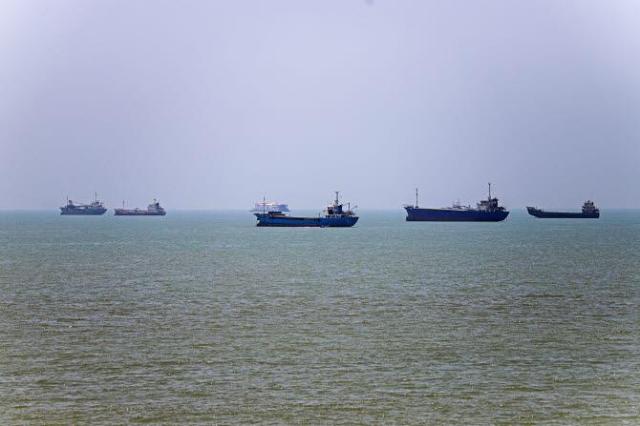
As negotiations between the United States and Iran continue, concerns are rising over global oil supply instability, particularly with summer demand on the horizon. Following the outbreak of conflict in the Middle East, oil shipments through the Strait of Hormuz have plummeted, leading to a daily average decrease of 3.8 million barrels in global oil stocks. Experts warn that if the Strait of Hormuz does not return to normal operations, supply instability in the international oil market could worsen in July and August.
According to the International Energy Agency (IEA) on June 24, oil shipments through the Strait of Hormuz, which averaged around 20 million barrels per day before the conflict, fell to an average of 2.7 million barrels per day from March to May. This has resulted in an estimated cumulative supply loss of over 1.3 billion barrels from Middle Eastern oil producers.
The IEA has characterized this situation as the "largest oil supply disruption in history," noting that it is effectively the first time the Strait of Hormuz, a critical route for major energy exports including Middle Eastern crude oil, liquefied petroleum gas (LPG), and naphtha, has been blocked. The Asia-Pacific region, which heavily relies on Middle Eastern oil and petroleum products, has faced significant supply pressures since the onset of the crisis.
Despite the severe impact on oil supply, the effects have not fully transferred to the oil market. The global release of strategic reserves and alternative export routes from Middle Eastern countries have played a significant role in mitigating the crisis. Additionally, non-Middle Eastern oil exports have also shown an upward trend.
The IEA estimates that global oil stocks have decreased by an average of 3.8 million barrels per day since the conflict began. This rapid depletion of reserves has helped fill the supply gap. IEA member countries also agreed to release a historic 400 million barrels of emergency reserves at the onset of the crisis.
Middle Eastern oil producers have reduced their dependence on the Strait of Hormuz by utilizing alternative export routes. Saudi Arabia has increased exports through its east-west pipeline to the Red Sea port of Yanbu. The United Arab Emirates (UAE) has maintained exports through pipelines and storage facilities from Habshan to Fujairah, as well as alternative routes.
Increased supply from non-Middle Eastern countries, including the United States, has also provided some relief to the market. The IEA noted that export increases from the U.S., Kazakhstan, Brazil, and Venezuela have partially filled the shortfall in the Asian market. Notably, U.S. crude oil and petroleum product exports rose by 25% last month compared to a year earlier.
Demand contraction has also alleviated market pressures. The IEA projects that global oil demand in the second quarter of this year will decline by nearly 5 million barrels per day compared to the same period last year. On an annual basis, a decrease of 1.1 million barrels per day is expected, marking a significant shift from earlier forecasts in February, which anticipated an increase of 850,000 barrels per day.
However, the current stability is not structurally sound. The release of strategic reserves is merely a short-term measure, lacking sustainability. Alternative exports and increased non-Middle Eastern supply face logistical and infrastructural limitations, making the complete reopening of the Strait of Hormuz essential for the normalization of the oil market.
With the summer peak season approaching in the Northern Hemisphere, demand for jet fuel and gasoline is expected to rise in July and August, while global stocks are depleting at a record pace. The IEA warned that if the Strait of Hormuz does not fully reopen, the international oil market risks entering a "red zone" in July and August.
South Korea is also facing challenges. The country's energy supply heavily depends on imports of crude oil, LPG, and naphtha, with a significant reliance on Middle Eastern sources. If logistical disruptions in the Strait of Hormuz persist, it could have a cascading effect on refinery costs, petroleum product prices, and the supply of petrochemical feedstocks.
Analysts suggest that the government's cautious approach to releasing strategic reserves is aimed at managing supply during the summer months. With international stock declines coinciding with increased summer demand, the burden of energy supply management could intensify in the second half of the year.
* This article has been translated by AI.
Copyright ⓒ Aju Press All rights reserved.