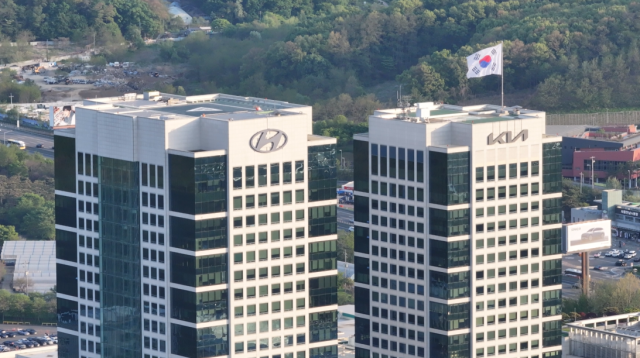
SEOUL, July 22 (AJP) - Hyundai Motor is expected to post a double-digit decline in second-quarter operating profit, as weaker vehicle sales combine with continued U.S. tariff costs and rising material and warranty expenses to squeeze margins despite favorable currency effects and a richer hybrid mix.
According to consensus estimates compiled by FnGuide, the automaker’s operating profit is forecast at 2.99 trillion won ($2.03 billion), down about 17 percent from 3.60 trillion won a year earlier. Revenue is expected to edge up 0.7 percent to 48.6 trillion won.
The company is set to report its results 2 p.m. Thursday. Hyundai Motor shares finished 4.76 percent higher at 418,000 won.
The outlook weakened as the quarter progressed. Hyundai Motor’s second-quarter operating profit consensus fell 5.8 percent over the month through July 13, according to Kyobo Securities.
The downgrade reflects a combination of lower production and rising costs. A supplier fire disrupted output in South Korea, while higher raw material prices, increased warranty expenses and lower factory utilization added pressure.
The won’s weakening toward the end of the quarter cut both ways. It raised the won value of overseas sales but also increased foreign-currency-denominated warranty liabilities, adding to costs.
Hana Securities is among the more cautious, projecting operating profit of 2.90 trillion won on revenue of 48.3 trillion won. Hanwha Investment & Securities expects operating profit of 3.04 trillion won and revenue of 48.5 trillion won.
U.S. tariffs remain a major drag on profitability.
Under a 15 percent tariff assumption, Hanwha estimates Hyundai Motor’s tariff-related expenses at about 998 billion won for the quarter, equivalent to roughly one-third of the company’s projected operating profit. The burden remains substantial even though the brokerage expects it to ease from its estimate of 1.82 trillion won a year earlier.
Unlike the first quarter, when costs were the dominant drag on earnings, weaker volume is expected to play a larger role in the second quarter.
Hyundai Motor’s global wholesale sales are estimated at about 990,000 to 1 million vehicles, down 6 to 7 percent from a year earlier, compared with a 2.5 percent decline in the first quarter. Production disruptions in South Korea and India, an aging domestic model lineup and intensifying competition overseas weighed on deliveries.
Regional performance was mixed. U.S. wholesale sales rose 2 percent to 265,208 vehicles, supported by demand for models including the Palisade. European sales fell 9.8 percent to 145,549 vehicles, while domestic sales dropped 15.9 percent to 158,515. Production began returning to normal in June after the supplier disruption affected output in April and May.
A more favorable product mix and exchange rate helped prevent a steeper decline. Hana Securities estimates Hyundai Motor’s average selling price rose about 4 percent from a year earlier, as the share of hybrid vehicles increased by 3.2 percentage points and the average won-dollar exchange rate climbed 7 percent.
Those gains partly offset higher sales incentives and weaker overall volume.
Brokerages expect earnings momentum to improve in the second half as production normalizes and new or updated models, including the Avante, Tucson, Santa Fe and Ioniq 3, support sales and product mix.
Higher raw material costs and sales incentives, however, are expected to remain a burden on margins.

Copyright ⓒ Aju Press All rights reserved.