
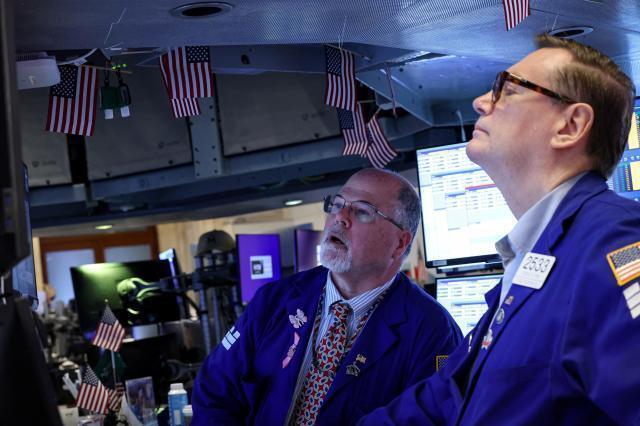
U.S. stock markets closed mixed as weakness in technology stocks and falling oil prices created a divergent trend. Concerns over the overvaluation of artificial intelligence (AI) stocks led to declines in the S&P 500 and Nasdaq indices, while gains in airline and travel stocks boosted the Dow.
On June 24, the Dow Jones Industrial Average rose by 182.06 points (0.35%) to close at 51,848.90. The S&P 500 index fell by 7.24 points (0.10%) to finish at 7,358.22, and the Nasdaq composite dropped 110.40 points (0.43%) to end at 25,476.64.
The market was influenced by the performance of large technology and semiconductor stocks. Ongoing concerns about corporate valuations due to increased AI investments and fears of rising expenditures among major tech companies contributed to the overall weakness in the tech sector. Reuters reported, "The expansion of debt-based investments by mega tech firms and worries about potential further interest rate hikes by the Federal Reserve have intensified this week's tech stock corrections."
Conversely, the decline in international oil prices benefited certain sectors. With expectations of increased shipping through the Strait of Hormuz, oil prices fell to levels seen before the outbreak of conflict in Iran. President Donald Trump stated, "Iran has indicated it will not demand tolls for passage through the Strait of Hormuz."
The drop in oil prices led to gains in airline and travel stocks. The S&P 500 airline index rose by 5.2%, and travel-related companies like Expedia and Booking Holdings also saw increases. Among the 11 sectors in the S&P 500, six posted gains, with industrials and consumer discretionary leading the way.
Semiconductor stocks had mixed results. Micron Technology fell by 0.3% during regular trading but surged in after-hours trading following a strong earnings report and an optimistic outlook for the next quarter, citing demand for AI server memory and a shortage of high-bandwidth memory (HBM) as factors for improved performance.
Among individual stocks, Cerebras Systems plummeted by 19.6%. The company indicated that its profit margin forecast for the year would be lower than in the first quarter during its first earnings report since going public, compounded by the announcement of OpenAI's own inference chip, 'Hollapeno.'
Homebuilding stocks performed well. Following President Trump's cancellation of plans to sign a bipartisan bill aimed at increasing housing supply, Hovnanian Enterprises rose by 11.3%, PulteGroup by 7.2%, and Toll Brothers by 6.7%.
Rental car company Hertz saw a significant drop of 40.7%. The company projected that its second-quarter adjusted EBITDA would be near the lower end of its previous forecast range and announced plans to issue $100 million in common stock.
In the bond market, Treasury yields fell. The Associated Press reported, "The decline in oil prices eased inflation concerns, leading to lower U.S. Treasury yields." The market is also focused on the possibility of additional interest rate hikes by the Federal Reserve by the end of the year. According to CME Group's FedWatch, investors are increasingly betting on the likelihood of two rate hikes by year-end, up from the previous expectation of one.
Investors are closely watching the Personal Consumption Expenditures (PCE) price index set to be released on June 25. The PCE price index is the inflation measure preferred by the Federal Reserve and could provide clues about the future direction of monetary policy.
* This article has been translated by AI.
Copyright ⓒ Aju Press All rights reserved.