
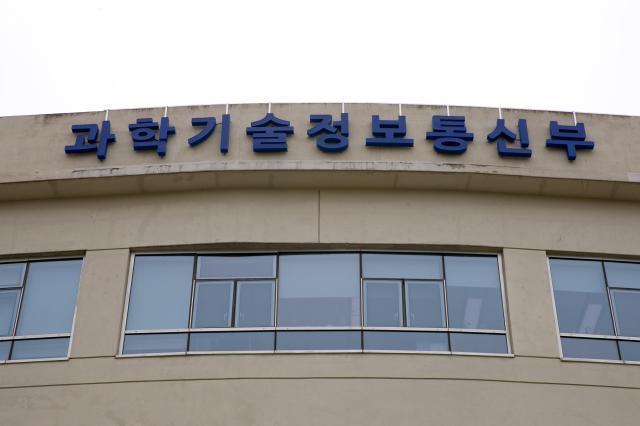
The Ministry of Science and ICT will fully implement the Artificial Intelligence (AI) Basic Law starting in July, along with new measures to protect telecommunications users, including notifications about optimal mobile plans. During this period, the focus of frequency policy will shift from new auctions to reallocating existing 3G and LTE bands.
According to the Ministry on June 30, the government published a booklet titled "Changes Starting in the Second Half of 2026" outlining these initiatives.
One of the most significant changes is the implementation of the revised AI Basic Law on July 21. This law supports the development of AI through research and data infrastructure while mandating transparency and safety in AI applications, as well as setting responsibilities for high-impact AI systems. Some provisions, such as the restructuring of the National AI Strategy Committee and support for specialized personnel, were enacted on January 22, while regulations promoting the use of AI in the public sector will also take effect this July.
The enforcement decree includes provisions to classify vulnerable groups in AI, expanding the definition to include women returning to work, job seekers, employees of small businesses outside the capital region, and agricultural workers, in addition to the elderly, disabled, and low-income individuals. It also establishes criteria for prioritizing AI products and services in public procurement and allows universities and companies to establish and operate AI research institutes with the Minister of Science and ICT's approval. However, the Ministry plans to prioritize guidance over penalties during the initial implementation phase, with a grace period of at least one year for fines, during which expert consulting and financial support will be provided.
User protection measures in telecommunications will also be strengthened. Starting in October, SK Telecom, KT, and LG Uplus will analyze subscribers' actual usage patterns and notify them via text or email if a more advantageous plan is available. In July, LG Uplus will introduce a basic plan that allows users to continue basic internet activities like web browsing and messaging even after their data is exhausted, followed by SK Telecom and KT. The three telecom companies will gradually increase the voice and text allowances for senior citizen plans, and from November, they will revamp their customer service system to incorporate AI support and provide step-by-step updates on issue resolution.
Additionally, 697 AI Digital Learning Centers will continue to provide basic training in AI and digital skills, and a nationwide AI competition will be held from July to December, targeting various groups including the general public, students, researchers, and seniors with disabilities. The evaluation process for broadcasting and telecommunications equipment will be simplified, and exemptions for export radio jamming devices will be pursued.
In terms of frequency policy, the focus will be on reallocation rather than new auctions. Reallocation allows existing users to pay a fee to continue using the same band, differing from the competitive bidding process of new auctions. A total of 370 megahertz of 3G and LTE bands, including 800 MHz, 900 MHz, 1.8 GHz, 2.1 GHz, and 2.6 GHz, will be subject to reallocation, with SK Telecom holding 155 MHz, KT 115 MHz, and LG Uplus 100 MHz.
To encourage the transition to standalone 5G networks, the Ministry will reduce the value of LTE frequencies by 15% compared to previous allocations and require the provision of 5G services as a condition for reallocation. Consequently, the reallocation fee is estimated to be around 3.1 trillion won, which could decrease to as low as 290 billion won if operators build over 10,000 or 20,000 indoor 5G base stations. To prepare for the commercialization of 6G, the usage period for the 1.8 GHz (20 MHz) and 2.6 GHz (100 MHz) bands will be set at three years, allowing for a review of the possibility of new auctions at the next reallocation point.
* This article has been translated by AI.
Copyright ⓒ Aju Press All rights reserved.