
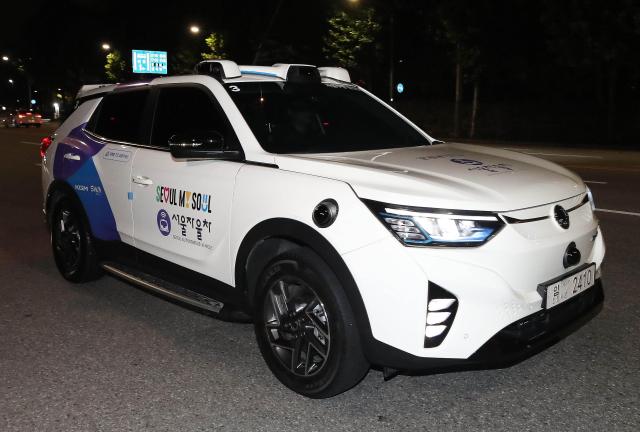
SEOUL, June 30 (AJP) - Seoul metropolitan government announced Tuesday that it will become the first city in South Korea to put a Level 4 autonomous taxi on the road, with the self-driving service set to launch in November in the Sangam neighborhood of Mapo District.
The plan is part of a list of policy changes and public services the city has scheduled for the second half of 2026.
The robotaxi will be available through a regular taxi-hailing app, allowing passengers to call the vehicle the same way they book any other taxi.
Unlike earlier autonomous taxis tested in Seoul, which required a driver ready to take over at any moment, the new vehicles are designed to make driving decisions on their own under specific conditions, without direct human control. Level 3 systems, by comparison, still require a driver to remain ready to intervene at all times; Level 4 represents the step beyond that.
The service will not start as a fully unmanned operation, however. A safety attendant will sit in the front passenger seat during the initial stage while the city monitors how the system performs on public roads.
Once running, it will be the first Level 4 robotaxi service in the country, the city said.
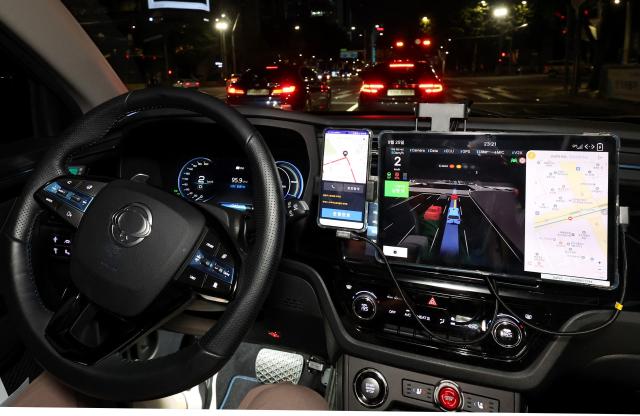
Sangam has served as Seoul's main proving ground for autonomous driving since 2019, when the city built a 5G-connected test bed along its roads. It has hosted paid autonomous taxi and shuttle services since 2021.
The November launch marks the next step for a district the city has used for years to test self-driving technology before wider rollout.
The robotaxi launch comes alongside several other transport and road safety changes planned across the city in the second half.
By November, Seoul plans to complete road work in central Seoul, including narrower car lanes and wider sidewalks around Sogong-ro and Sejong-daero. The city also plans to remove a traffic island near Exit 8 of City Hall Station.
Seoul is also rolling out new flood-safety tools this year. A navigation alert service warning drivers of flooded underpasses began in June, and AI-powered cameras designed to detect people entering streams closed off during heavy rain are scheduled to start operating in July.

Copyright ⓒ Aju Press All rights reserved.
