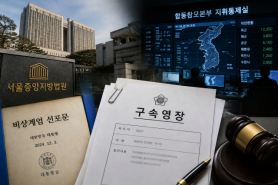
The debate over civilian control of the military is one of democracy's greatest achievements. But invoking civilian control to justify political or bureaucratic interference in military affairs is something entirely different.
South Korea's Ministry of National Defense has increasingly expanded its involvement in operational military matters that traditionally fall within the authority of the Joint Chiefs of Staff (JCS).
What is presented as an exercise in democratic civilian oversight increasingly resembles an encroachment on military command authority and professional judgment.
This distinction is not merely semantic. It goes to the heart of constitutional government and military effectiveness.
Political scientist Samuel Huntington drew perhaps the clearest distinction in "The Soldier and the State."
He argued that objective civilian control is achieved not by politicizing the military but by strengthening its professionalism while keeping it firmly subordinate to elected civilian leaders.
Civilian authorities establish national strategy and political objectives, while military professionals retain autonomy over operational and technical decisions.
The opposite model—subjective civilian control—occurs when political leaders or civilian bureaucracies directly intervene in military organization, personnel and operations, making the armed forces increasingly dependent on political considerations rather than professional military judgment.
Unfortunately, South Korea appears to be drifting toward this latter model.
The most troubling example is the growing routine intervention in areas legally reserved for the chairman of the Joint Chiefs of Staff.
Article 9 of the Armed Forces Organization Act clearly assigns operational command and supervision of combat units to the JCS chairman. The defense minister exercises military administration and policy. He issues directives through the chairman but is not himself an operational commander responsible for tactical deployments or battlefield decisions.
The distinction exists for good reason.
The United States offers one of the clearest examples of effective civilian control. The Pentagon formulates defense policy, budgets and administration, but operational command rests with the unified Combatant Commands through the military chain of command. Civilian leadership determines national objectives while military professionals execute operations.
Policy and operations remain institutionally separate, allowing both democratic accountability and military professionalism to flourish.
South Korea's Defense Ministry increasingly blurs that distinction.
Rather than functioning primarily as a policy-making institution, it now oversees numerous subordinate military organizations while becoming deeply involved in issues that demand operational expertise—from adjustments to the Civilian Control Line to debates over the future of the Drone Operations Command.
Such matters require professional military assessment rather than administrative preference.
It is comparable to officials at a national sports federation directing a national team's game tactics or deciding when coaches should substitute players. Administrative authority does not automatically confer operational expertise.
The problem extends beyond individual cases.
Recent years have seen the ministry play an increasingly active role in issues ranging from implementation of the Sept. 19 inter-Korean military agreement and adjustments to combined exercises with the United States, to proposals for restructuring the military academies, personnel screening, outsourcing logistics functions, civilian contracting of base security, and even debates over major weapons acquisition programs such as nuclear-powered submarines.
Many of these issues inevitably involve political judgment. Yet when military expertise becomes secondary to administrative or political priorities, the armed forces risk losing the institutional professionalism upon which combat effectiveness depends.
The consequences are not theoretical.
Carl von Clausewitz argued that successful warfare requires harmony between political purpose and military rationality. Political leadership defines why a nation fights; military professionals determine how it should fight. One cannot effectively replace the other.
When political or bureaucratic institutions begin overriding military expertise in operational matters, the balance that Clausewitz described begins to erode.
Professional armed forces cannot thrive if promotion, organizational reform and operational decisions become increasingly influenced by political calculations or bureaucratic convenience. Such an environment rewards conformity over competence and risks discouraging officers from exercising independent professional judgment.
South Korea faces one of the world's most demanding security environments. It confronts a nuclear-armed adversary across a heavily fortified border while simultaneously expanding its role as a major global defense exporter. This is precisely the moment when military professionalism should be strengthened—not diluted.
The Defense Ministry should focus on its proper role of strategic planning, defense policy and resource management while respecting the institutional authority of the Joint Chiefs of Staff in operational matters. Streamlining the ministry's expanding portfolio of directly controlled organizations and restoring clearer lines between military administration and military command would reinforce—not weaken—civilian control.
True civilian control does not require civilians to make military decisions.
It requires civilian leaders to set national objectives while allowing professional soldiers to apply their expertise within a clearly defined chain of command.
Democracy is best protected not when civilian institutions manage every military decision, but when each institution faithfully performs the role assigned to it by law.
*About the author
Chunsik Choi is a retired South Korean military officer who previously served in logistics planning at the Joint Chiefs of Staff, commanded an infantry regiment, headed logistics planning for a field army, and led the Defense Ministry's Disaster Control System Development Task Force. He completed senior military studies in Germany and attended the Asia-Pacific Center for Security Studies.
The views expressed in this article are those of the author and do not necessarily reflect the editorial position of Aju Media Group or AJP.
Copyright ⓒ Aju Press All rights reserved.