
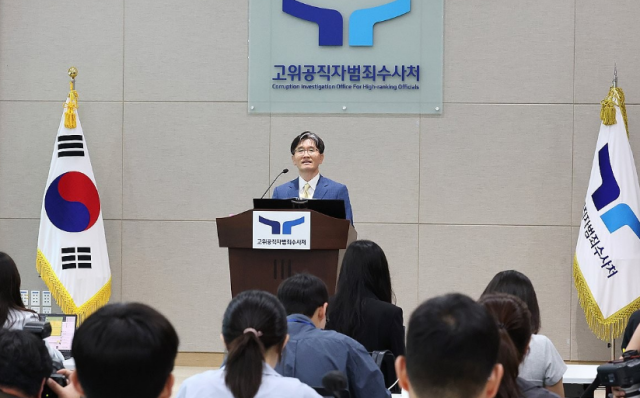
The Corruption Investigation Agency (CIO) has submitted concerns to the government regarding the proposed regulations for the Serious Crimes Investigation Agency (SCIA), citing potential threats to its independence and the fairness and confidentiality of investigations.
CIO prosecutor Noh Heung-seob stated during a regular briefing on June 30 that the agency submitted a formal request for amendments to Article 12 of the regulations to the SCIA establishment support team at the Ministry of the Interior and Safety the previous day.
The contested provision requires other investigative agencies to notify the head of the SCIA of any serious crimes they become aware of during their investigations. The CIO argues that if this provision is enacted, information regarding high-ranking officials' criminal cases under investigation by the CIO would be routinely transmitted to the SCIA, which is under the jurisdiction of the Minister of the Interior and Safety, thereby undermining the independence guaranteed by the Corruption Investigation Agency Act.
Noh emphasized, "Through the SCIA's chain of command, the President, Prime Minister, Director of the National Intelligence Service, and Minister of the Interior and Safety could become aware of their own criminal information. This contradicts the law's intent to ensure the CIO operates independently from the President and the executive branch."
The CIO also expressed concerns that the fairness and confidentiality of investigations could be compromised. Most cases investigated by the CIO overlap with those subject to SCIA investigation, except for cases of abuse of authority, meaning nearly all cases would need to be reported to the SCIA.
Additionally, the CIO pointed out that the proposed regulations do not align with the intent of its priority investigation rights. Currently, the CIO has the authority to request the transfer of cases to other investigative agencies, but under the proposed regulations, the SCIA would be the first to become aware of cases, potentially diluting the purpose of the system. The CIO added that a structure where both agencies notify each other could lead to duplicate investigations and confusion between the agencies.
The CIO argued that if the SCIA needs to confirm cases under CIO investigation, it could exercise the 'notification request rights' outlined in the proposed regulations, and therefore, cases investigated by the CIO should be excluded from the notification requirement. It also suggested that crimes committed by SCIA personnel should be excluded from notification to maintain the fairness and confidentiality of investigations.
* This article has been translated by AI.
Copyright ⓒ Aju Press All rights reserved.