
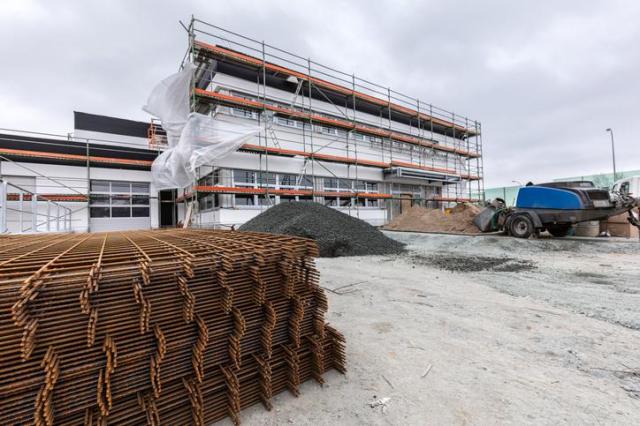
Last month, improvements were noted in construction performance and consumer sentiment; however, these gains have not translated into an overall betterment of the construction industry. Additionally, despite a positive shift in the petroleum refining sector, it has yet to recover to typical levels, indicating that the effects of the ongoing Middle East conflict continue to impact the real economy.
According to the National Data Agency's report on industrial activity trends for May 2026, construction performance increased by 3.8% from the previous month, driven by growth in both building (5.1%) and civil engineering (0.2%) projects.
However, a closer look reveals a decline in residential construction, with non-residential projects leading the overall increase. Year-on-year comparisons show decreases in civil engineering (-6.1%) and building (-0.4%), resulting in a total decline of 1.9%.
Lee Do-won, an economic trends advisor at the data agency, noted, "The increase in non-residential construction in Yongin and Pyeongtaek is attributed to early operations at semiconductor factories and increased railway contracts. However, it is cautious to view this as a recovery in the construction sector overall." This suggests that the rise in construction performance may not reflect a broader recovery in the industry.
Similar discrepancies were observed in the manufacturing sector. The petroleum refining industry reported a 9.8% increase from the previous month, but this figure represents a 14.7% decline compared to the same month last year, indicating that it has not returned to normal levels.
Particularly concerning is the semiconductor sector, which has historically driven export growth but reported a 10.0% decrease in production from the previous month, negatively affecting overall manufacturing output. Other sectors, including pharmaceuticals (-17.5%) and metal processing (-8.2%), also hindered manufacturing production indices.
The manufacturing capacity index fell by 0.1% from the previous month, while the utilization rate dropped by 3.0%. The average manufacturing utilization rate now stands at 71.1%, down 2.2 percentage points from the previous month.
Vehicle fuel, which played a significant role in the recent uptick in retail sales, also reflects this trend. The introduction of a maximum price for petroleum products and vehicle restrictions in April led to decreased fuel consumption that month, creating a base effect that contributed to increased figures in May.
Sales of cosmetics and clothing have also seen temporary increases. The advisor explained, "The rise in clothing sales related to summer apparel appears to be influenced by seasonal factors, while the increase in retail sales of cosmetics can be attributed to a rise in foreign tourists."
Notably, the coincident composite index, which reflects the current state of the economy, fell by 0.3 points from the previous month, marking a decline for the first time in three months. A data agency official stated, "This represents the largest drop since October of last year, when it fell by -0.4 points, likely due to the impacts of the Middle East conflict in April and May."
* This article has been translated by AI.
Copyright ⓒ Aju Press All rights reserved.