
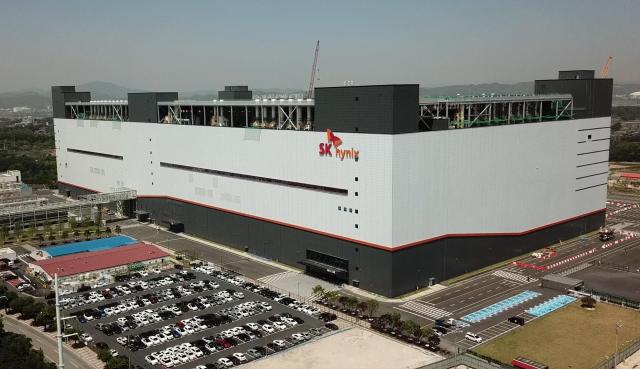
The controversy surrounding SK Hynix's exclusion from the support network of the Semiconductor Special Law is intensifying. Kwak No-jung, CEO of SK Hynix, publicly requested President Lee Jae-myung to include the Yongin semiconductor cluster and the Cheongju production base in the support framework of the special law. However, President Lee emphasized a policy of comprehensive support for new production bases in local areas while showing reluctance regarding support for Yongin and Cheongju. This situation effectively sidelines SK Hynix's core AI memory hub, which is already undergoing significant investment, due to its classification as a general industrial complex and existing base.
On July 1, industry sources reported that Kwak raised the need for Semiconductor Special Law support for the Yongin semiconductor cluster and the Cheongju production base during the 'Korea's Great Leap: Three Mega Projects National Report Meeting' held at the Blue House the previous day. Kwak stated, "The Yongin semiconductor cluster is classified as a general industrial complex, making it difficult to receive special law support, and Cheongju is also not eligible for support. Expanding support to include Yongin and Cheongju would greatly benefit not only Hynix but also investments from partner companies."
The Yongin Wonsam semiconductor cluster is seen as a future base for SK Hynix. The company plans to invest approximately 600 trillion won to build four fabs and accommodate over 50 domestic and international materials, parts, and equipment partners. Launched in 2019 as a privately-led general industrial complex, this project differs fundamentally from the national industrial complex where Samsung Electronics is establishing its Yongin Namsa and Idong facilities. The concern is that this difference may lead to disparities in support for infrastructure such as power, water, and roads.
The Semiconductor Special Law, officially known as the 'National Advanced Strategic Industry Act,' was not originally intended for regional distribution. Established in 2022, the law aims to designate specialized zones to secure a competitive edge in national strategic industries like semiconductors, facilitating rapid processing of permits, infrastructure support, and regulatory easing to bolster corporate investment. If the law's purpose is to support core assets of strategic industries, the exclusion of Yongin and Cheongju—key to expanding production capacity for high-bandwidth memory (HBM) and AI memory—raises fairness concerns.
Cheongju's situation is particularly nuanced. Not located in the metropolitan area, Cheongju already plays a role in SK Hynix's NAND and AI memory production. If further investments occur, it would constitute local semiconductor investment, yet it is not included in the support target for specialized semiconductor zones. Industry insiders suggest that there could be backlash questioning why new bases in Honam are receiving full support while additional investments in Cheongju are subject to separate review.
President Lee's response also left room for controversy. He stated he would "consider the Yongin issue" and affirmed that administrative support would be provided. However, he indicated that discussions would be held regarding the scale and feasibility of financial support. Conversely, he made it clear that the government would provide comprehensive support for new production bases in local areas. This could be interpreted as a message that while the government will take responsibility for newly constructed factories in other regions, it will make a separate judgment regarding the already planned facilities in Yongin and Cheongju.
For SK Hynix, this is a disappointing development. The Wonsam project in Yongin has only recently begun construction, and Cheongju is not in the metropolitan area. If the government continues to prioritize the Semiconductor Special Law for new regional investments, it could undermine the original intent of strengthening the competitiveness of strategic industries.
This controversy is also intertwined with the perceived disparity in support between Samsung and SK Hynix. The Yongin Namsa and Idong national industrial complex, which involves Samsung Electronics, is being promoted as a national industrial complex, providing a clear justification for government-led infrastructure support. In contrast, the SK Hynix Yongin Wonsam cluster is constrained by its classification as a general industrial complex. Even though both are core semiconductor hubs, the structure of government support varies based on the initial approach to the industrial complex.
Experts argue that the criteria for applying the special law should be examined closely from an industrial strategy perspective rather than a regional one. While new investments in the Honam region and balanced regional development are necessary, delaying support for Yongin and Cheongju—already established as key players in the global AI memory supply chain—could disrupt the prioritization of semiconductor support policies.
An industry insider remarked, "The Semiconductor Special Law is not about selectively supporting regions but about rapidly developing national strategic industries. If Yongin and Cheongju are sidelined due to their classification as general industrial complexes or existing bases, SK Hynix will inevitably perceive this as reverse discrimination."
* This article has been translated by AI.
Copyright ⓒ Aju Press All rights reserved.