
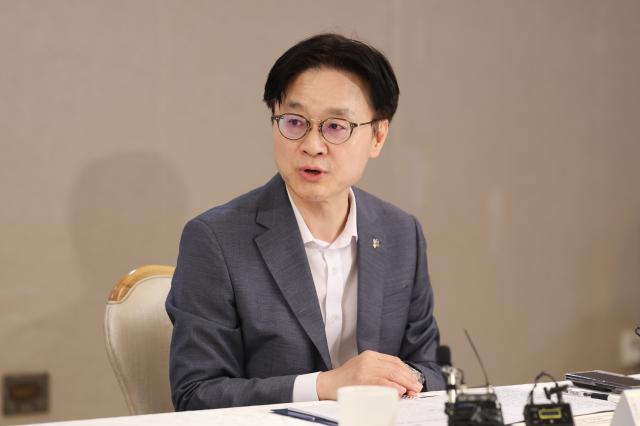
On July 1, Minister of Trade, Industry and Energy Kim Jeong-kwan stated that the reduction rate of Korea's tariff-rate quota (TRQ) under the European Union's new steel measures is relatively limited at 19.7% compared to other major countries. He emphasized the need to strengthen the connection between the steel industry and demand sectors while supporting fundamental improvements in the industry.
During an emergency meeting with the steel industry at the Korea Trade Insurance Corporation, Minister Kim noted that the EU's total steel TRQ volume will decrease from 33.82 million tons to 18.35 million tons, a reduction of about 46%. However, Korea's allocated volume will drop from 2.58 million tons to 2.07 million tons, reflecting a 19.7% decrease. He suggested that this outcome may have been influenced by ongoing discussions emphasizing the importance of steel trade in the context of Korea-EU trade and supply chain cooperation.
Despite the limited reduction, he acknowledged that the impact on exports to the EU, a key market, is unavoidable. He expressed concerns about the potential effects on the supply chains of local production bases established by Korean companies. If existing EU volumes shift to other markets, it could intensify global competition and burden the industry's profitability.
The government discussed support measures during the meeting. Industry representatives shared insights on the impacts of the EU's actions on specific items, as well as anticipated challenges in export contracts, customs, and logistics. They called for swift government support to alleviate confusion and burdens during the initial implementation phase of the new regulations.
To minimize confusion and corporate burdens, Minister Kim announced the activation of a trade response task force in collaboration with relevant organizations such as the Korea Iron and Steel Association, the Korea International Trade Association, and the Korea Trade-Investment Promotion Agency (KOTRA). He pledged to provide support for regulatory guidance, shipping and customs responses, and local consultation, while actively negotiating with the EU to minimize corporate damage.
He also highlighted plans to strengthen the connection between the steel industry and demand sectors, stating that supply chain cooperation would be expanded, particularly in key industries such as shipbuilding, energy, and defense. He committed to enhancing domestic demand connections to alleviate the burdens faced by the industry due to deteriorating export conditions.
Furthermore, he expressed support for establishing stable cooperative relationships through voluntary win-win agreements between the shipbuilding and steel industries. He emphasized the need to improve regulations to increase the use of high-quality steel materials in the renewable energy sector, where significant new demand is expected, and to create a cooperation platform between the defense and steel industries to support the supply of high-value-added steel products.
The minister also announced plans to strengthen responses to unfair trade practices. He stated that measures would be taken to prevent circumvention of imports from third countries and enhance the effectiveness of anti-dumping measures through the institutionalization and monitoring of information submission from steel-producing countries. He assured that the management of bonded factories would be strictly enforced to proactively address concerns about circumvention dumping.
He added that by strengthening inter-industry connections and blocking unfair imports, the government aims to create domestic demand exceeding the TRQ reduction of 510,000 tons, providing robust support for the Korean steel industry.
Regarding the improvement of the steel industry's structure, he noted that the EU measures are rooted in the structural issue of global oversupply. He stressed the importance of transitioning the steel industry to low-carbon and high-value-added production, as well as enhancing productivity through innovations. He mentioned support for the development of hydrogen reduction steelmaking and special steel technologies.
Minister Kim also promised to establish measures for stabilizing the supply and enhancing the quality of scrap steel, a key raw material for electric furnaces. He committed to accelerating the transition to artificial intelligence in manufacturing to improve productivity and working conditions.
He concluded by stating that steel is a strategic asset that safeguards South Korea's security and underpins the competitiveness of its manufacturing sector. Given the challenging external conditions, he emphasized the need for close cooperation between the government and industry to ensure that the steel sector remains at the center of the manufacturing industry's resurgence.
* This article has been translated by AI.
Copyright ⓒ Aju Press All rights reserved.