
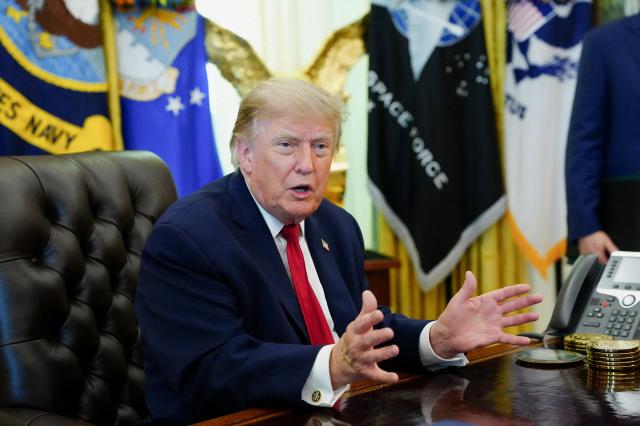
The Wall Street Journal reported on June 30, citing U.S. officials familiar with the discussions, that Trump has had multiple conversations with Defense Secretary Pete Hegseth and Chairman of the Joint Chiefs of Staff Dan Cain regarding potential airstrikes against Iran. However, he has opted to pursue diplomatic negotiations for now.
The discussions centered on whether to halt negotiations with Iran and resume large-scale airstrikes. Trump reportedly concluded that another full-scale attack could derail diplomacy and negatively impact the ultimate goal of dismantling Iran's nuclear program.
Trump has also indicated to his aides that he will not cease negotiations even if the August 18 deadline for the nuclear agreement passes, suggesting he is willing to give talks more time. However, he plans to maintain the current stance of responding with targeted airstrikes if Iran violates the memorandum of understanding (MOU).
The U.S. and Iran have agreed to conduct follow-up negotiations over 60 days, but they have yet to narrow their differences on nuclear activity restrictions and the issue of shipping through the Strait of Hormuz. Iran has proposed imposing service fees worth billions of dollars on vessels passing through the Strait, while the U.S. insists that free passage should be guaranteed as it was before the conflict.
Disagreements over the nuclear program persist. Trump claims that Iran has already agreed to stringent limitations on its nuclear activities, while Iran maintains that it cannot accept excessive restrictions on its nuclear program.
Meanwhile, Trump's special envoy team, including Steve Witkoff and Jared Kushner, has arrived in Doha, Qatar, for a new round of negotiations. The two sides are continuing indirect talks through mediators, with technical experts expected to meet later this week. However, Mohammad Bagher Ghalibaf, the head of the Iranian negotiating team, denied that any ongoing negotiations are taking place, stating, "Our negotiations with the U.S. were only conducted until the signing of the MOU, and there are no current negotiations."
Efforts to ease tensions are also ongoing. The U.S. is establishing a crisis communication line between the Iranian Revolutionary Guard Corps (IRGC) and U.S. Central Command (CENTCOM), with White House officials confirming that this conflict prevention channel has already been utilized by both sides.
However, as the diplomatic deadlock continues, military options remain on the table. The Journal reported that Hegseth and Cain have presented Trump with plans to resume large-scale airstrikes against Iranian military facilities. Trump has publicly stated that while negotiations are progressing, he retains military options should talks fail.
Additionally, Vice President JD Vance appeared on the political podcast Michael Knowles Show, criticizing hardliners who advocate for bombing Iran without understanding the purpose behind such actions. He noted, "Trump has made it clear that he is prepared to drop bombs, but only when it aligns with a specific objective."
Experts suggest that the U.S. may adopt a strategy of intermediate pressure between resuming full-scale war and pursuing diplomatic negotiations. Susan Maloney, deputy director of the Brookings Institution, analyzed that the U.S. could continue to apply pressure by delaying access to the billions of dollars in frozen funds Iran demands or by increasing the costs of Iran's attempts to control the Strait of Hormuz.
She stated, "This intermediate strategy has its limitations, but a combination of predictable U.S. retaliation and linking economic incentives to compliance could persuade Tehran not to take reckless actions."
* This article has been translated by AI.
Copyright ⓒ Aju Press All rights reserved.