
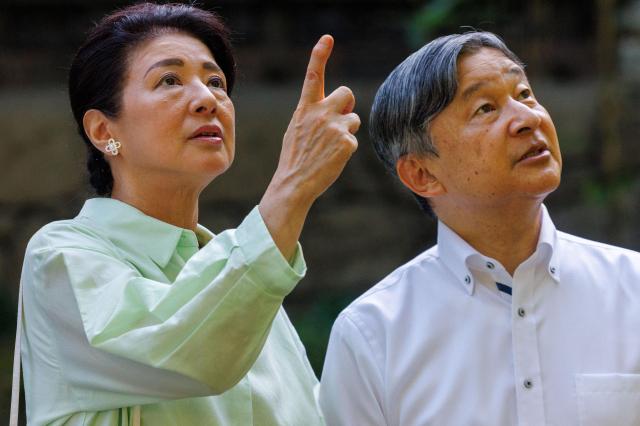
Debate over the future of Japan's imperial succession has intensified. On June 30, the Japanese government submitted a bill to the National Diet to amend the Imperial House Law, which governs the structure of the royal family and succession. The proposal includes provisions to reinstate male heirs from former imperial families who left the royal fold after World War II and grant succession rights to their sons. This move has drawn criticism as it appears to reinforce the existing male-centric succession system, despite growing public support for recognizing female emperors.
The current Imperial House Law narrowly defines who can ascend to the throne. Women are excluded from becoming emperors, and men can only inherit the throne if they are directly descended from male ancestors, such as fathers, grandfathers, or great-grandfathers. This is referred to in Japan as "male-line descent."
According to reports from Yomiuri Shimbun, Asahi Shimbun, and Nihon Keizai Shimbun, the proposed amendments focus on two main points. First, it would allow female royals to retain their royal status after marrying commoners. Under the current system, female royals lose their titles upon marriage. With 11 of the 16 current royal family members being women, this change is significant, as losing female royals would further reduce the number of individuals fulfilling royal duties.
Second, the proposal aims to adopt male heirs from 11 former imperial houses that left the royal family after World War II. Eligible candidates would be men over 15 years old without spouses or children. While the adopted males would not have succession rights themselves, their sons would be eligible to inherit the throne.
The controversy centers on the provision granting succession rights to the sons of adopted males. Lawmakers have framed the discussion around the need to maintain the number of royals. However, the Vice Speaker of the House of Councillors noted that the legislative consensus focused primarily on maintaining royal numbers without reaching a conclusion on a stable succession method. The proposal does not address whether to recognize female emperors or allow succession through female lines, leaving these questions unresolved. Critics argue that the bill, which began as a means to secure royal numbers, has effectively delved into the succession issue.
The opposition has expressed strong objections, claiming the government proposal strays from the legislative consensus. Masayo Tanabu, secretary-general of the Constitutional Democratic Party, criticized the inclusion of provisions that diverge from the established legislative agreement. Even the Komeito Party, which supports the adoption proposal, has stated that discussions cannot proceed without a consensus from the legislature.
Another contentious issue is how to address the husbands and children of female royals who remain in the royal family. While the amendment allows female royals to stay within the family after marriage, it does not recognize their husbands and children as royals. The government has explained that under current law, these individuals would not be considered part of the royal family. This structure keeps female royals within the family while their families remain commoners.
This aspect is closely related to the ongoing discussions about recognizing female emperors. If the children of female royals were granted royal status, it could lead to discussions about female-line succession. Japanese media report that public support for recognizing female emperors is around 70%, yet this amendment does not address the issue.
The government and ruling party plan to process the amendment by July 17. However, opposition resistance and the ruling party's firm handling of parliamentary proceedings have made the bill's passage uncertain. What began as a legislative effort to address the declining number of royals has reignited Japan's long-standing debate over imperial succession.
* This article has been translated by AI.
Copyright ⓒ Aju Press All rights reserved.