
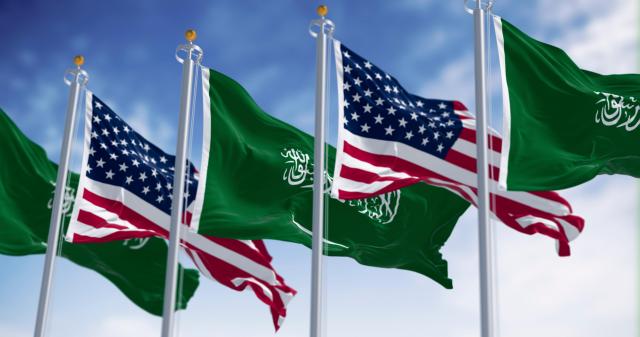
Tensions have escalated between the United States and Saudi Arabia over military operations in the Strait of Hormuz, leading to a significant rift in their relationship.
The Wall Street Journal reported on June 30, citing U.S. and Arab officials, that security tensions between the U.S. and Saudi Arabia have reached their most severe level in recent years due to the Hormuz military operations.
According to the report, the U.S. initiated a military operation called "Project Freedom" this spring to ensure the safety of vessels passing through the Strait of Hormuz. The operation was set to involve over 100 U.S. military aircraft and naval vessels. However, the operation was ultimately halted after Saudi Arabia refused to provide access to its military bases and airspace, which had been announced by President Donald Trump.
The U.S. strongly opposed Saudi Arabia's decision. The White House reportedly warned that if Saudi Arabia did not change its stance, it could withhold the supply of interceptor missiles necessary to defend against Iranian missile and drone attacks. Although Saudi Arabia later lifted restrictions on its bases and airspace, the relationship between the two countries suffered significant damage, according to the Wall Street Journal.
This conflict highlights the differing approaches the U.S. and Saudi Arabia have taken regarding their response to Iran. Saudi Arabia has warned the U.S. that any attempts to overthrow the Iranian regime could lead to a blockade of the Strait of Hormuz, a spike in global oil prices, and increased instability in the Middle East. The kingdom has also publicly stated that it would not allow its bases and airspace to be used for attacks against Iran.
In contrast, the U.S. has conducted military actions against Iran in coordination with Israel. Following these actions, Iran retaliated with missile and drone strikes targeting densely populated areas, energy facilities, and airports in the Gulf region.
As the conflict dragged on, Saudi Arabia shifted its focus toward de-escalation. Concerned that further retaliation from Iran and threats from the Houthi rebels in Yemen could impact its oil exports, Saudi Arabia increased its engagement with Iran. The kingdom has also reportedly urged the U.S. to lift its blockade against Iran and return to diplomatic negotiations.
The deterioration in relations has also been reflected on the diplomatic stage. Secretary of State Marco Rubio recently visited Gulf nations, including the UAE, Kuwait, and Bahrain, but did not stop in Saudi Arabia. The Saudi side interpreted this as a deliberate diplomatic snub, according to the Wall Street Journal.
Crown Prince Mohammed bin Salman of Saudi Arabia is also said to have declined an invitation to the G7 summit in France as a protest against the U.S. approach to the conflict.
The Wall Street Journal reported that the U.S. government is currently considering reducing its military presence in Saudi Arabia and reallocating forces to countries like Israel and Jordan, which have been more cooperative during the war. However, discussions are still in the early stages, and no final decisions have been made.
* This article has been translated by AI.
Copyright ⓒ Aju Press All rights reserved.