
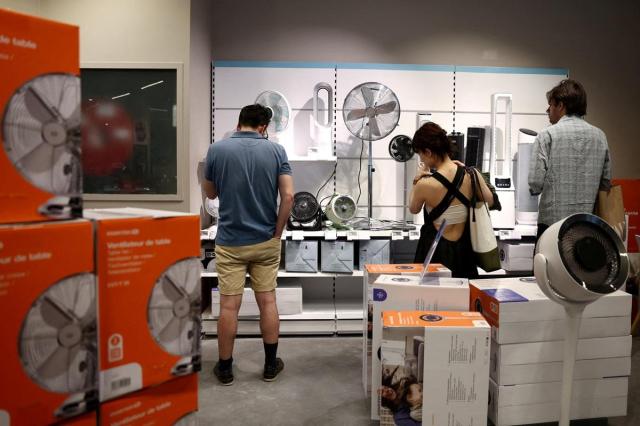
A record heatwave sweeping across Europe has ignited a political debate over the necessity of air conditioning. The clash is between longstanding policies aimed at limiting the spread of cooling devices to combat climate change and the urgent need to protect citizens from extreme heat.
According to the Wall Street Journal on June 30, "As temperatures in Europe rise rapidly, resistance to air conditioning among Europeans is colliding with reality."
Historically, Europe has had one of the lowest rates of air conditioning adoption among major global regions. Concerns about damaging the aesthetics of historic buildings, excessive noise, and the perception that increasing energy consumption from cooling devices undermines climate change efforts have contributed to this reluctance.
However, the ongoing extreme heat is challenging these perceptions. The heatwave is causing significant damage to healthcare systems and industrial activities, leading to a growing recognition of the need for expanded cooling facilities.
ING Bank in the Netherlands analyzed that the economic impact of the heatwave, which began last month, is comparable to the effects of lockdown measures during the COVID-19 pandemic. Schools without air conditioning have closed, disrupting parents' work, while businesses and factories have scaled back operations, and train services have faced disruptions. Many hospitals and care facilities are also lacking adequate cooling, exacerbating the impact of the heat.
France and the United Kingdom are among the countries with strict regulations on air conditioning installation. In London, new buildings must prioritize designs that reduce indoor temperatures through natural ventilation, shading, and enhanced insulation before installing air conditioning.
Yet, as the heatwave persists, arguments for air conditioning as a practical response are gaining traction. The Intergovernmental Panel on Climate Change (IPCC) has identified air conditioning as the most effective means of addressing heatwaves, while mechanical ventilation is deemed moderately effective and urban greening efforts are considered relatively less effective.
Political opinions are sharply divided. French far-right politician Marine Le Pen stated on social media, "It is shameful to make newborns, patients, and the elderly endure such heat. Heatwaves take lives," urging for expanded access to air conditioning. London Mayor Sadiq Khan has also expressed the need for increased cooling facilities in public buildings like schools and hospitals.
Conversely, French Climate Minister Mona Kbarbou argued, "Installing air conditioning does not prevent wildfires or protect crops," emphasizing that it cannot be a fundamental solution to the climate crisis. Paris Deputy Mayor Audrey Pulvar added, "Our goal is not to turn our cities into buildings covered in air conditioning that emit noise, heat, and greenhouse gases," opposing the indiscriminate spread of air conditioning.
As Europe grapples with the clash between eco-friendly policies aimed at addressing climate change and the pressing realities of worsening heatwaves, the debate over air conditioning is expected to continue for the foreseeable future.
* This article has been translated by AI.
Copyright ⓒ Aju Press All rights reserved.