
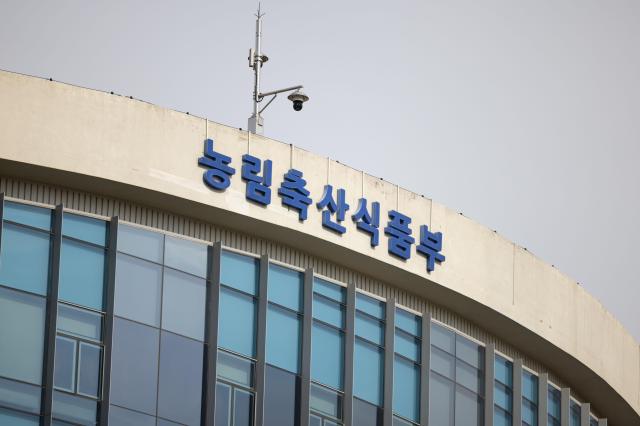
Ministry of Agriculture, Food and Rural Affairs in Sejong City. [Photo by Yoo Dae-gil]
This year, Gwanseon-eup in Jangheung County, South Jeolla Province, has been selected for the Rural Center Revitalization project. Over the next five years, up to 15 billion won will be invested to establish a complex center that integrates administrative, cultural, and welfare services.
On July 2, the Ministry of Agriculture, Food and Rural Affairs announced 15 new support sites for the 2027 General Agricultural and Rural Development Project. The newly confirmed sites include one area for Rural Center Revitalization, eight areas in the first phase of basic living infrastructure development, and six areas in the second phase.
The General Agricultural and Rural Development Project aims to enhance basic living infrastructure in rural centers (towns and villages) and connect services to surrounding villages, thereby improving the quality of life for residents. The ministry finalized the selection of sites after receiving applications from local governments nationwide in May and conducting evaluations by expert committees.
The selected areas will receive substantial budget support over the next five years starting next year. The funding for each project includes a maximum of 15 billion won for Rural Center Revitalization, 6 billion won for the first phase of basic living infrastructure development, and 2 billion won for the second phase.
Gwanseon-eup in Jangheung County, which has a senior population ratio of 49.5%, has been identified as needing urgent expansion of basic infrastructure for residents. The county plans to create a complex center that combines existing administrative and cultural welfare centers to provide one-stop administrative, cultural, and welfare services, along with health promotion programs tailored to different life stages.
The first phase of the basic living infrastructure development project, which supports both infrastructure and software programs, has selected eight areas, including Namjong-myeon in Gwangju and Saengguk-myeon in Eumseong County, Chungcheongbuk-do. These regions will focus on creating living SOC complex centers for resident safety and welfare, expanding cultural spaces for youth and workers, and establishing care systems for the elderly.
After completing the first phase, the second phase will concentrate on expanding services in six areas, including Gaegun-myeon in Yangpyeong County and Mureungdowon-myeon in Yeongwol County, Gangwon Province. Key projects in these areas will include improving transportation conditions and enhancing lifelong education.
Seo Jeong-ho, head of the Rural Regeneration Support Team at the Ministry of Agriculture, Food and Rural Affairs, stated, "The General Agricultural and Rural Development Project is a key initiative to build essential living infrastructure in rural areas, improving living conditions and closely linking services to surrounding villages. We will ensure effective management of the projects so that rural residents can truly feel an improvement in their quality of life."
On July 2, the Ministry of Agriculture, Food and Rural Affairs announced 15 new support sites for the 2027 General Agricultural and Rural Development Project. The newly confirmed sites include one area for Rural Center Revitalization, eight areas in the first phase of basic living infrastructure development, and six areas in the second phase.
The General Agricultural and Rural Development Project aims to enhance basic living infrastructure in rural centers (towns and villages) and connect services to surrounding villages, thereby improving the quality of life for residents. The ministry finalized the selection of sites after receiving applications from local governments nationwide in May and conducting evaluations by expert committees.
The selected areas will receive substantial budget support over the next five years starting next year. The funding for each project includes a maximum of 15 billion won for Rural Center Revitalization, 6 billion won for the first phase of basic living infrastructure development, and 2 billion won for the second phase.
Gwanseon-eup in Jangheung County, which has a senior population ratio of 49.5%, has been identified as needing urgent expansion of basic infrastructure for residents. The county plans to create a complex center that combines existing administrative and cultural welfare centers to provide one-stop administrative, cultural, and welfare services, along with health promotion programs tailored to different life stages.
The first phase of the basic living infrastructure development project, which supports both infrastructure and software programs, has selected eight areas, including Namjong-myeon in Gwangju and Saengguk-myeon in Eumseong County, Chungcheongbuk-do. These regions will focus on creating living SOC complex centers for resident safety and welfare, expanding cultural spaces for youth and workers, and establishing care systems for the elderly.
After completing the first phase, the second phase will concentrate on expanding services in six areas, including Gaegun-myeon in Yangpyeong County and Mureungdowon-myeon in Yeongwol County, Gangwon Province. Key projects in these areas will include improving transportation conditions and enhancing lifelong education.
Seo Jeong-ho, head of the Rural Regeneration Support Team at the Ministry of Agriculture, Food and Rural Affairs, stated, "The General Agricultural and Rural Development Project is a key initiative to build essential living infrastructure in rural areas, improving living conditions and closely linking services to surrounding villages. We will ensure effective management of the projects so that rural residents can truly feel an improvement in their quality of life."
* This article has been translated by AI.
Copyright ⓒ Aju Press All rights reserved.