
The company also outlined a blueprint to cultivate the area as a global hub for advanced industries, focusing on future core component clusters, AI-driven manufacturing innovations, aerospace, and energy infrastructure.
On July 3, Hyundai Motor Group signed a memorandum of understanding (MOU) with government agencies and local governments from Busan, Daegu, Ulsan, Gyeongbuk, and Gyeongnam during the 'National Report Meeting on Advanced Industry Development in Yeongnam.'
The investment will be directed toward establishing Yeongnam as a key center for AI-based future manufacturing and advanced mobility industries.
The group plans to build an AI manufacturing hub, create future core component clusters, establish AI-based smart factories, and focus on the future aerospace and energy sectors.
Ulsan will be transformed into a core base for AI-driven future mobility. Hyundai plans to establish the AI manufacturing hub around its electric vehicle (EV) plant in Ulsan, which is set to begin operations in the fourth quarter of this year, and will advance the development of AI-based autonomous vehicle technology with Level 4 capabilities or higher.
In the hydrogen sector, Hyundai will establish a hydrogen fuel cell plant in Ulsan to produce next-generation hydrogen fuel cells and polymer electrolyte membrane (PEM) electrolyzers, which the group aims to develop as key export items.
The production bases for essential electrification components will also be concentrated in the Yeongnam region. By 2030, Hyundai Mobis will set up a battery system assembly line in Ulsan, a motor and controller production line in Daegu, and a thermal management system production line for electric vehicles in Changwon, Gyeongnam.
Investment in the future aerospace sector will also be expanded. Hyundai will collaborate with the U.S. advanced air mobility (AAM) company Supernal to jointly develop next-generation aircraft in the Yeongnam region and will work on domestic production of key space technologies, including rocket engines and lunar exploration rovers.
In the energy sector, Hyundai plans to enhance energy independence and develop next-generation export industries through the establishment of energy infrastructure, including small modular reactors (SMRs), offshore wind farms, and electrolyzer plants.
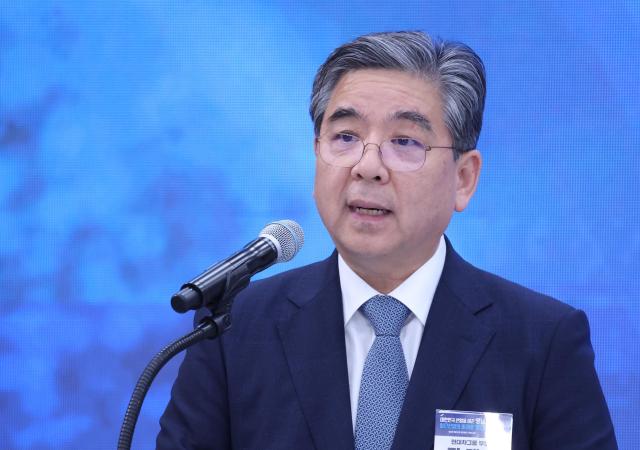
Jang Jae-hoon, Vice Chairman of Hyundai Motor Group, stated, "We will cultivate the Yeongnam region, the birthplace of Hyundai Motor Group, into a core hub for AI-based advanced autonomous mobility and key component manufacturing, as well as new business areas, contributing to strengthening South Korea's industrial competitiveness."
* This article has been translated by AI.
Copyright ⓒ Aju Press All rights reserved.