SEOUL, July 13 (AJP) - South Korea issued its first top-tier heat warning Sunday as temperatures neared 39 degrees Celsius in the southeastern cities of Pohang and Gyeongsan, joining countries across Europe and North America confronting summers that are becoming longer, hotter and increasingly dangerous.
The Korea Meteorological Administration activated the newly created Heat Wave Emergency Warning after apparent temperatures were forecast to exceed 38 degrees following days above 35 degrees.
The alert, introduced this year above the country’s existing advisory and warning system, reflects an acknowledgement that conventional heat warnings are no longer sufficient for conditions authorities describe as potentially life-threatening.

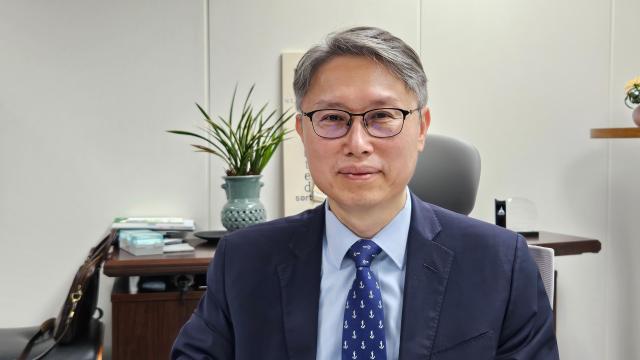
To Kyun Jong-ho, South Korea’s ambassador for climate change, the extreme weather offers a glimpse of the future governments have spent decades promising to prevent, even as the international system built to confront global warming becomes more divided.
“The international direction is clear,” Kyun said in an interview with AJP at the Foreign Ministry in Seoul. “The world is moving toward reducing carbon emissions and protecting the planet. If that is the direction, South Korea should secure the technology and move ahead of others.”
The intensifying heat arrives as international climate leadership weakens. The United States has stepped away from major climate processes, Europe is preoccupied with economic and immigration pressures, and negotiations between developed and developing countries have grown increasingly confrontational.
“There is now a vacuum in leadership,” Kyun said. “I had hoped the European Union would take a stronger role, but the E.U. is also facing difficult economic conditions.”
The consequences have been especially visible across Europe, where repeated heat waves have pushed temperatures above 40 degrees, fueled wildfires and contributed to heat-related and excess deaths. Climate researchers say fossil-fuel emissions have made such events substantially hotter and more dangerous.
Yet Kyun argued that another geopolitical crisis — conflict in the Middle East and anxiety over energy supplies — could paradoxically accelerate the transition away from fossil fuels.
“The energy security issue became extremely serious after the Middle East crisis,” he said. “Paradoxically, it reminded countries that they must reduce their dependence on fossil fuels.”
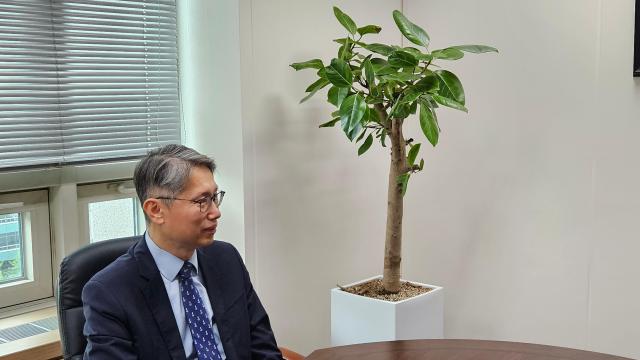
For South Korea, which imports most of the energy it consumes, climate policy and energy security are becoming inseparable. Kyun described the country’s future as an “electric society” built on expanded renewable generation.
“In the end, renewable energy has to be emphasized if we want energy independence,” he said. “The direction we need to take is electrification and the expansion of renewable energy.”
He said the government’s goal of putting 4.2 million electric vehicles and 300,000 hydrogen-powered vehicles on the road by 2030 was not excessively ambitious, given the strength of South Korea’s automobile and battery industries.
“We have an extremely competitive supply chain,” he said, pointing to Hyundai Motor, Kia and the country’s domestic manufacturing capacity. “The direction is right, and it is difficult to say that the target is overly high when compared to other advanced economies.”
A bridge between ministries — and nations
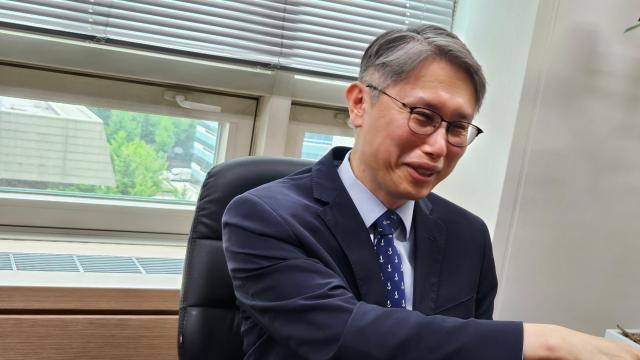
The climate change ambassador is a senior Foreign Ministry post rather than a traditional overseas ambassadorship. The envoy represents South Korea in United Nations climate negotiations, talks on plastic pollution and other environmental diplomacy.
The position emerged as governments were building the framework that eventually produced the Paris Agreement. At home, it also served as an intermediary between ministries whose mandates often pull in opposite directions.
“The Environment Ministry exists to protect the environment, while the Industry Ministry exists to promote industry, so different perspectives are natural,” Kyun said
Copyright ⓒ Aju Press All rights reserved.