
DS Investment & Securities said in a report that a ceasefire memorandum between Washington and Tehran had effectively collapsed after just three weeks, with both sides returning to high-intensity missile, drone and air attacks.
“Both sides have no clear definition of ‘victory’ and no viable exit strategy,” analyst Kang Tae-ho said in the report. “Missile-based airstrikes and exchanges are therefore likely to continue for the time being.”
Iran has stepped up attacks on countries hosting major U.S. military assets, including Bahrain, Kuwait and Jordan. The conflict escalated further after an Iranian missile and drone attack on a U.S. base in Jordan left two American service members dead and another missing.
Tehran has said the U.S. violations rendered the memorandum ineffective and vowed to continue its attacks. Washington, for its part, is expected to intensify strikes against the leadership, command facilities and assets of Iran’s Islamic Revolutionary Guard Corps following the deaths of U.S. troops.
However, DS Securities said a broader U.S. escalation would carry significant political and economic risks. The report estimated that the direct and indirect costs of the war had already exceeded $100 billion, while about 70 percent of Americans support ending the conflict.
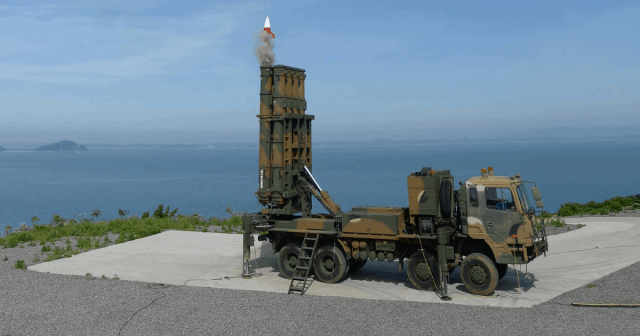
The prolonged conflict is also drawing greater attention to South Korea’s defense industry, particularly its missile defense systems, as Gulf countries look to replenish interceptor stockpiles and bolster defenses against sustained Iranian attacks.
Iran has expanded its attacks beyond military installations to critical civilian infrastructure, including power generation and desalination facilities in Kuwait. The report also said Patriot interceptor missile stocks are running low, weakening the ability of countries targeted by Iranian ballistic missiles to maintain high interception rates.
“The depletion of interceptor stocks is creating replacement demand for air defense systems and a favorable environment for discussions on the introduction of the Cheongung-II and L-SAM,” Kang said.
The report identified potential opportunities for additional Cheongung-II purchases in Saudi Arabia, while pointing to possible L-SAM demand in Saudi Arabia, the United Arab Emirates and Iraq. Kuwait and Qatar were also cited as potential markets for the Cheongung-II system.
South Korean defense companies could benefit from their ability to offer layered air defense systems covering both medium- and long-range threats, the report suggested.
DS Securities selected LIG Defense & Aerospace and Hanwha Aerospace as its top defense-sector picks, reflecting expectations that the prolonged conflict and shrinking interceptor inventories will support further export momentum for South Korean missile defense systems.

Copyright ⓒ Aju Press All rights reserved.
