
In just over five weeks, two loitering munitions plunged into the sea after launch from a Navy warship, six of 17 demonstrations faltered at a Defense Ministry technology showcase, and a small target drone fell from the sky during a nationally televised Armed Forces Day event attended by President Lee Jae Myung.
The incidents involved different systems and circumstances. The latest involved a modified civilian target drone, rather than a domestically developed military aircraft. They offer no evidence of a single defect running through South Korean drone technology.
But the succession of public mishaps has exposed an uncomfortable gap between the country’s manufacturing confidence and its preparations for unmanned warfare. Developers need repeated opportunities to discover how their machines behave when conditions depart from the script.
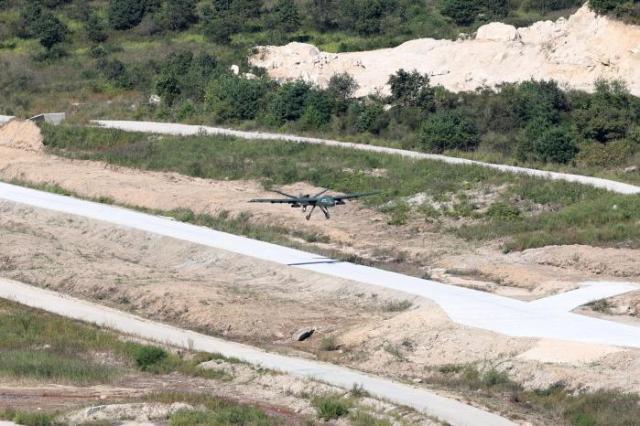
That gap came into focus at the Defense Ministry’s September exhibition in Pocheon, north of Seoul. Officials described the event as the first opportunity for many participating private developers to operate at a military training ground, beyond their own facilities and more controlled testing environments.
Some systems that had performed normally in rehearsals faltered during the main event. Participating companies pointed to possible radio-frequency interference as more drones operated and crowds gathered, although the ministry has not confirmed that as the cause.
A drone that flies successfully on its own must also function amid competing signals, disrupted navigation, difficult weather and other aircraft. Those demands become harder to anticipate when developers have limited access to the environments in which soldiers will operate their equipment.
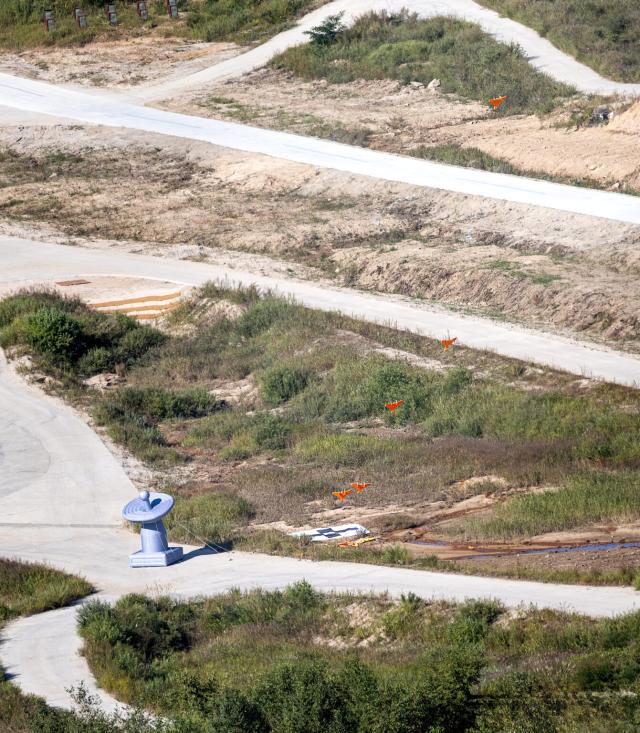
Ryu said South Korea has plenty of companies developing drones and unmanned aircraft, including major defense contractors. What it lacks is the accumulated experience of countries that have operated such systems extensively in combat.
The recent failures show how seemingly small vulnerabilities can undo sophisticated machinery.
On Aug. 25, two loitering munitions — attack drones designed to remain airborne before striking a target — crashed after launch from the Navy’s ROKS Marado.
The Agency for Defense Development’s preliminary assessment traced the failure to a misaligned launcher door. The problem had not appeared during previous ground operations. An aircraft that had worked on land came to grief at the point where it was supposed to begin proving itself at sea.
“Launching drones from a ship is fundamentally different from doing so on land, given factors such as weather conditions and the limited space aboard a vessel,” defense industry expert Chae Woo-seok said at the time.
At Pocheon on Sept. 16, six of 17 demonstration missions were unsuccessful. Multiple unmanned systems operated alongside a large audience, creating a more crowded radio-frequency environment than developers had encountered during rehearsals.
Ryu cited that difference as one reason repeated field trials matter. A successful rehearsal establishes that a system can work under a particular set of conditions. Military users need to know how far those conditions can change before it stops working.
The Armed Forces Day incident presented another problem.
The target drones had been modified to use fiber-optic cables for control, reducing their exposure to radio interference. According to the military, one fell after its cable broke.
Another was deliberately brought down after weather conditions carried it outside the designated safe area. Two others were successfully intercepted by the Cheongwang laser air-defense weapon being demonstrated.
The episode cannot be treated as a failure of a Korean military drone or, by itself, of the laser weapon. It nevertheless added to scrutiny of the preparation and operating arrangements behind the military’s public displays.
South Korea is hardly short of places to fly and inspect drones.
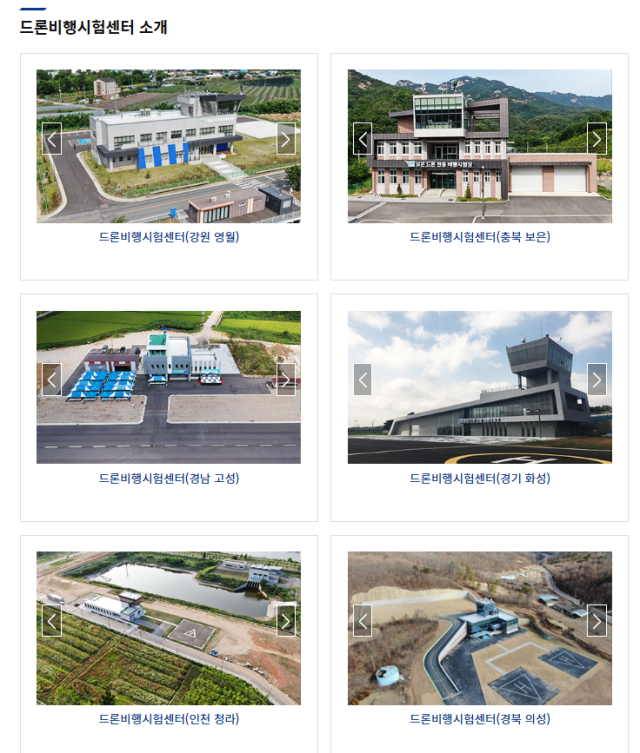
Yeongwol can assess equipment operation and thrust at temperatures from minus 40 to 80 degrees Celsius. Goseong tests controllability in winds reaching 15 meters per second. Boeun examines electromagnetic resilience, while Hwaseong tests structural loads and Incheon measures flight precision.
These facilities help establish whether an aircraft meets individual performance requirements. The operational challenge is to find out what happens when several stresses arrive together.
Public descriptions of civilian facilities do not establish how routinely developers can combine disrupted navigation, competing communications signals, simultaneous drone operations, weapons integration and launches from military platforms in a single exercise.
Access to military training grounds therefore becomes an important part of turning a promising prototype into equipment troops can depend on.
The Defense Ministry has begun expanding that access.
In June, it announced plans to open military training grounds more widely to private drone and counter-drone developers and increase the number of dedicated testing units to nine. The initiative was intended to give companies more opportunities to demonstrate their technologies, collect operational data and refine equipment with military users.
At the September exhibition, the ministry formally expanded the network. The nine units will operate private-sector technologies and conduct combat experiments in different environments. The program is to extend progressively from the Army to the Navy, Air Force and Marine Corps.
The value of that arrangement will emerge through repeated use: a failure identified, a design modified, another flight attempted under different conditions. A showcase can reveal a weakness in seconds. Working out its cause and establishing that it has been corrected can take much longer.
Ukraine has acquired that experience through war. Drones repeatedly encounter electronic interference, interception and other combat stresses, while military users feed their experience back into development and purchasing decisions. Ukraine’s Defense Ministry has explicitly tied drone procurement to frontline performance data and introduced mechanisms for troops to rate equipment used in combat.
North Korean troops fighting alongside Russian forces have also gained exposure to a battlefield shaped by drones, adding urgency to South Korea’s preparations.
For Seoul, trials and training must supply much of the operational knowledge that others are accumulating in combat. That requires developers and soldiers to work together often enough for problems to surface, be understood and be corrected before equipment is fielded.
South Korea’s factories can turn out the hardware. The harder job is to put it through enough punishment on the training ground that soldiers do not discover its limits on the battlefield.

Copyright ⓒ Aju Press All rights reserved.
