
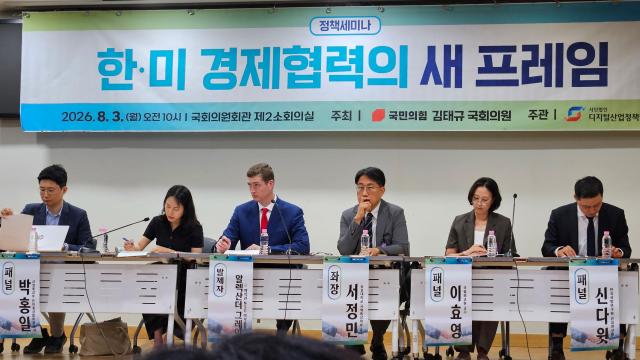
SEOUL, August 03 (AJP) - South Korea's AI ambitions align with Washington's push to redefine the alliance beyond traditional security, as the two countries seek deeper cooperation in artificial intelligence, advanced manufacturing and economic security, a former White House national security official under President Donald Trump said Monday.
"Economic security is national security," Alexander B. Gray told a National Assembly forum in Seoul. "South Korea's ambition to become one of the world's leading AI powers could provide tremendous value to the United States."
Gray, who served as deputy assistant to the president and chief of staff of the White House National Security Council during Trump's first administration, said artificial intelligence, quantum computing, sixth-generation telecommunications and research security should become the next pillars of the bilateral relationship.
He described South Korea as "a trusted U.S. partner in AI," citing its world-leading semiconductor industry, advanced manufacturing base and robust technology ecosystem. Closer cooperation in emerging technologies and resilient supply chains would strengthen both countries as geopolitical competition intensifies across the Indo-Pacific, he said.
Speaking at the forum, titled "A New Framework for Korea-U.S. Economic Cooperation," Gray argued that the alliance should evolve beyond its military foundations into a broader economic-security partnership spanning AI, critical technologies, trade, advanced manufacturing and supply-chain resilience.
The remarks come as Seoul and Washington seek to broaden their alliance while managing frictions over tariffs, visa rules and proposed digital regulations affecting U.S. technology companies. Gray said those differences should be managed through "reciprocity," arguing that both countries must see tangible economic and strategic benefits from deeper cooperation.
Tariff negotiations, he said, could create a more predictable environment for Korean companies investing in or exporting to the United States, while American industry would benefit from Korean strengths in shipbuilding and advanced manufacturing.
Rep. Park Choong-kwon, a member of the National Assembly's Foreign Affairs and Unification Committee, said the longstanding formula of relying on the United States for security and China for economic growth had become obsolete as economic and national security increasingly converge.
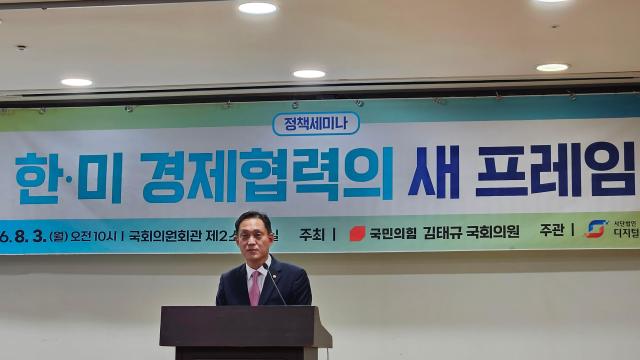
Forum host Rep. Kim Tae Kyu echoed that view, saying the bilateral relationship should expand into an economic-security alliance encompassing industry, technology and supply chains rather than remain centered primarily on military cooperation.
Lee Hyo-young, an international trade professor at the Korea National Diplomatic Academy, said the relationship has entered a new phase since the Korea-U.S. Free Trade Agreement took effect in 2012, evolving from a conventional trade partnership into one focused on critical technologies, supply-chain security and strategic industries.
She said growing geopolitical rivalry and economic-security policies in both countries were creating new opportunities for cooperation while also increasing the need for closer policy coordination.
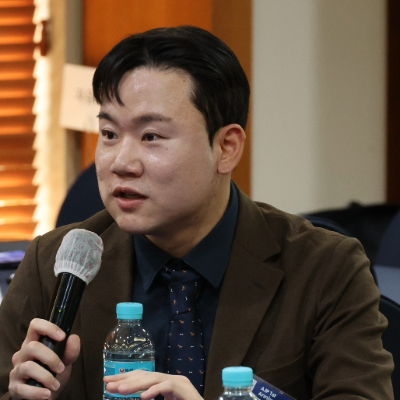
Park Hong Il, director of the Korea-U.S. Trade Cooperation Division at the Ministry of Trade, Industry and Energy, said South Korea's manufacturing strengths make it an increasingly valuable partner as Washington seeks to strengthen strategic supply chains and preserve the international role of the U.S. dollar.
He said bilateral investment commitments—potentially reaching $500 billion when related public and private projects are combined—could further integrate the two countries' industrial ecosystems and deliver practical benefits to both economies.
Participants broadly agreed that investment pledges alone would not be enough. They called for more predictable tariff policies, workable visa arrangements, closer consultation on digital regulation and deeper cooperation to protect critical technologies and build resilient supply chains.
Copyright ⓒ Aju Press All rights reserved.
