SEOUL, August 06 (AJP) - A prolonged and deadly heat wave is tightening its grip on South Korea, with 21 suspected heat-related deaths and 2,441 patients reported nationwide between May 15 and Aug. 4.
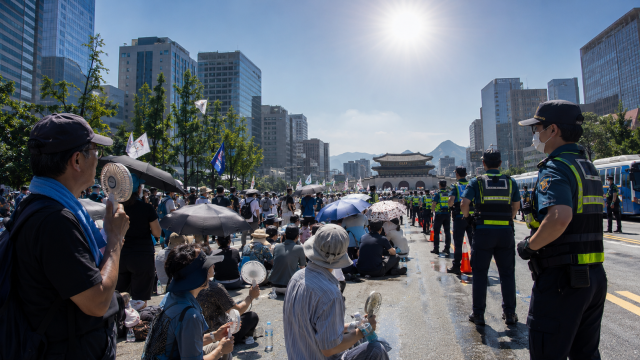
Despite the escalating health risks, rallies, news conferences and demonstrations have continued across central Seoul, leaving participants and police officers responsible for managing the events exposed to intense sunlight and high temperatures.
A total of 9,477 rallies and demonstrations were held in Seoul during the first six months of the year, according to police data. The monthly figure reached 1,774 in March and 1,757 in April, the two highest totals during the period. The tally for July has not yet been released.
Several demonstrations have proceeded in recent days as daytime temperatures in the capital hovered around 38 C. Members of Solidarity Against Disability Discrimination held a subway-boarding protest at Hyehwa Station on Monday, while a coalition opposing proposed changes to local education funding held a news conference outside Cheong Wa Dae on Tuesday.
The Korea Meteorological Administration announced the first “extreme heat warning” for Seoul and parts of Gyeonggi Province earlier this week. The new warning, introduced this summer, is designed for particularly dangerous conditions in which the daily maximum apparent temperature is expected to reach at least 38 C or the actual temperature is forecast to reach at least 39 C.
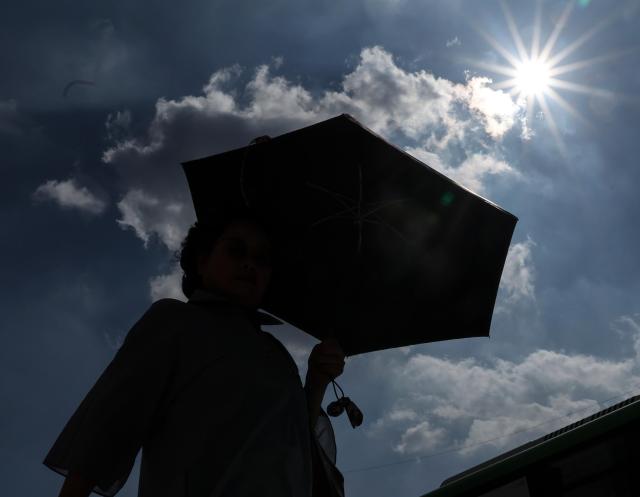
Organizations holding rallies have also introduced measures intended to reduce heat-related risks. Some have shortened events or advised participants to bring water, hats and parasols.
The Korean Confederation of Trade Unions has circulated internal guidelines calling for rest areas, designated safety personnel and a limit of about one hour for outdoor rallies during periods of extreme heat.
The continued demonstrations come as health authorities warn that prolonged exposure can be dangerous even for people who are not performing strenuous physical activity.
Of the 2,441 heat-related patients recorded this season, 825, or 33.8 percent, were aged 65 or older. Thirteen of the country’s 21 suspected heat-related deaths involved people aged 80 or above, according to data from the Korea Disease Control and Prevention Agency cited by the Ministry of Health and Welfare.
The KMA said the current extreme heat would probably reach its peak Friday, with afternoon temperatures ranging from 31 C to 39 C nationwide. Seoul is forecast to record a morning low of 27 C and an afternoon high of 39 C, while highs of 38 C are expected in Incheon and Gwangju.
Temperatures are expected to decline slightly over the weekend as the atmospheric pressure pattern changes and clouds reduce the amount of direct sunlight. However, the heat wave is not expected to end, with daytime highs still likely to exceed seasonal averages and apparent temperatures potentially approaching 35 C again next week.
Copyright ⓒ Aju Press All rights reserved.