

South Korea's largest internet platform said second-quarter revenue rose 16.2 percent from a year earlier to 3.389 trillion won ($2.45 billion), powered by its core platform business and fast-growing global consumer-to-consumer operations.
Operating profit, however, was virtually flat at 520.3 billion won, down 0.2 percent from a year earlier, as heavy spending on artificial intelligence infrastructure, content and data offset the revenue growth.
Its operating margin slipped to 15.4 percent from 17.9 percent, while operating expenses stretched 19.8 percent.
Naver asks investors to read the widening cost burden not simply as margin erosion, but as the price of building another profit engine.
The company is developing an "AI factory" with Nvidia and Brookfield, betting that large-scale computing capacity can eventually become a standalone business rather than remain an expensive piece of infrastructure supporting its existing platform.
The buildout is scheduled in stages, beginning with 55 megawatts of capacity in the first half of 2027, expanding to 100 MW by the end of that year and 200 MW in 2028.
Chief Executive Officer Choi Soo-yeon has argued that increasingly inexpensive AI models will not diminish computing demand. Instead, cheaper models should broaden AI adoption and create more demand for computing power.
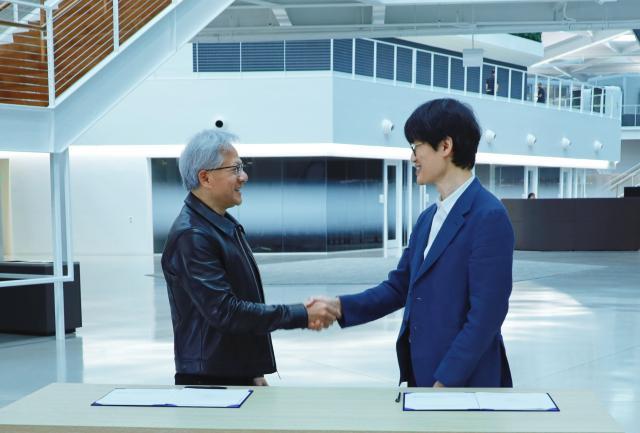
The financing structure is central to that bet. Nvidia is investing roughly $1 billion directly in Naver, while Brookfield is in talks to commit as much as $9 billion to a special-purpose vehicle that would own the graphics processing units and data centers.
Naver would retain full ownership of the operating company selling computing capacity to customers, while the hardware itself would sit on the SPV's balance sheet.
That arrangement is designed to keep the most capital-intensive assets away from Naver's own books while allowing the company to retain the revenue and operating margin from selling computing services.
Executives have indicated margins could begin at relatively low levels and eventually approach 20 percent as utilization rises and the business matures, although the company has stressed that profitability will depend on customer demand, contract structures, chip prices and technological shifts.
Naver says it has several ways to limit those risks.
The company itself is already one of Korea's largest users of AI computing capacity, allowing internal demand to be combined with external customers to stabilize utilization. Nvidia's equity investment is expected to improve access to GPUs, while customer contracts will be staggered rather than concentrated around a single duration.
The greater uncertainty is technological.
If inference workloads increasingly migrate from Nvidia GPUs to customized AI accelerators, the economics of the business could change quickly. Naver has said it plans to adjust pricing and contract structures as computing technology evolves.
The company is also trying to ring-fence the new AI business from existing operations.
Naver has said the AI factory and commerce businesses are managed separately and that GPUs currently powering its platform services will not be transferred into the new SPV. Depreciation currently weighing on platform margins therefore comes from existing infrastructure, while the AI cloud operation is intended to begin with a more asset-light structure.
Its commerce business remained resilient in the second quarter.
Smart Store transaction value increased 15.5 percent from a year earlier, while N Delivery volume surged 76 percent in June. Delivery coverage exceeded 20 percent and is expected to reach 25 percent by year-end.
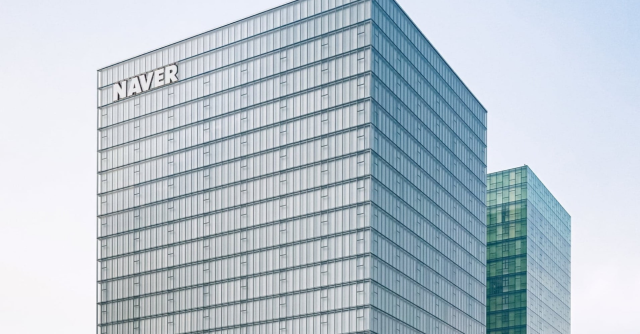
But cost pressure remains substantial.
Partner expenses rose 22 percent, reflecting revenue-linked fees, World Cup broadcasting rights and the rollout of Npay Connect. Marketing costs climbed 25.4 percent, while development and operating expenses increased 15.2 percent.
Naver has warned that margins could deteriorate further in the second half as Npay Connect expands, although it expects this year to mark the peak of the current investment cycle.
Against that backdrop, the company has moved aggressively to reassure shareholders.
Chief Financial Officer Kim Hee-cheol said during Friday's earnings call that Naver on Aug. 3 retired 4.9 million treasury shares, equivalent to 3.1 percent of total shares outstanding, worth roughly 1 trillion won.
Kim said Naver would continue considering additional measures to enhance shareholder value under its shareholder-return policy.The gesture failed to prevent a selloff. Naver shares fell 7.5 percent to 209,000 won Friday as investors focused on stagnant earnings and the near-term burden of AI investment rather than the longer-term promise of the new business.
There are, however, early signs that AI is beginning to improve economics elsewhere on the platform.
Naver's AI tab surpassed 10 million monthly active users by early August. Advertising attached to AI Briefing has generated click-through rates and cost-per-click levels more than 30 percent higher than conventional search advertising, while purchase conversion has been about three times higher.
The AI factory itself will not generate revenue before 2027.
AJP Takeaways
- AI over margins: Naver is accepting near-term profit pressure as it pours investment into AI infrastructure, betting computing services will become its next major growth engine.
- Capital-light AI strategy: By letting Brookfield finance GPUs and data centers while Naver retains the operating business, the company aims to expand AI capacity without overburdening its balance sheet.
- Shareholders not forgotten: Even as AI spending erodes margins, Naver retired 1 trillion won ($700 million) worth of treasury shares, signaling that shareholder returns remain a priority alongside long-term investment.
- Execution remains the test: The AI factory will not generate revenue until 2027, leaving investors focused on whether Naver can secure customers, maintain utilization and deliver the promised profitability while navigating rapidly evolving AI technology.
Copyright ⓒ Aju Press All rights reserved.
