SEOUL, August 10 (AJP) - Nearly one in eight South Koreans living alone resides in motels or other quarters not classified as housing, with the share approaching one in five among those in their 20s and 30s, although the country's housing supply continues to grow far faster than its population.
Nearly 975,000 one-person households lived in "non-housing living quarters" in 2025, accounting for 11.8 percent of all one-person households and nearly twice the 6.1 percent rate for households overall, according to the latest Population and Housing Census.
Among one-person households headed by people in their 20s or younger, the share reached 20.9 percent. For those in their 30s, it was 19.2 percent.
The numbers expose a contradiction at the heart of South Korea's housing market: the country keeps adding homes, but a growing number of households remain outside conventional housing.
South Korea's housing stock reached 20.18 million units in 2025, up 1.6 percent from a year earlier, while its population barely moved, rising just 0.02 percent to 51.82 million.
Households kept multiplying anyway as families became smaller. Their number rose 1.1 percent to 23.25 million, while one-person households increased 2.5 percent to 8.24 million, accounting for 36.6 percent of general households.
In other words, a nearly stagnant population increasingly requires more separate places to live.
Yet greater supply has not stopped hundreds of thousands of households from falling outside the conventional housing market.
The census counted 1.37 million households, or 6.1 percent, in non-housing living quarters, nearly double the number a decade earlier.
It includes officetels and dormitories, and an officetel can function much like a conventional apartment. Not everyone counted in the 1.37 million is therefore living in precarious conditions.
Strip out those relatively conventional forms of accommodation, however, and a harder-to-dismiss picture emerges.
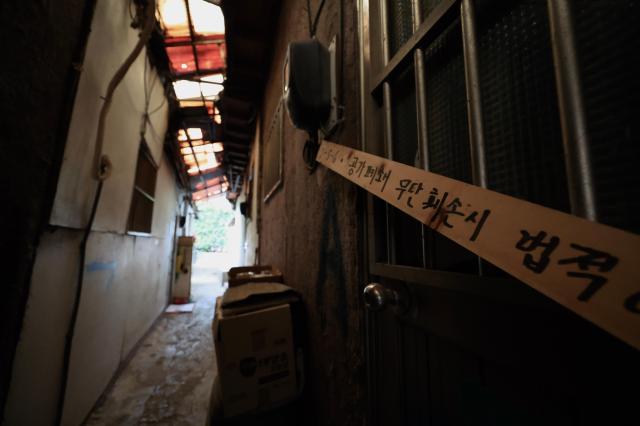
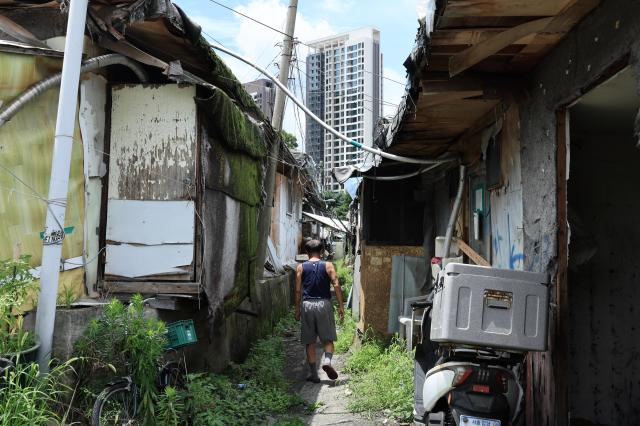
About 545,000 households were living in hotel or motel rooms, shacks, greenhouses, construction-site quarters, commercial premises and other spaces not legally classified as housing as of Nov. 1, 2025.
That was roughly 2.3 percent of the country's 23.25 million households.
The figure has risen steadily, from about 403,000 households in 2015 to 490,000 in 2020 and 545,000 last year — an increase of 35 percent over a decade.
Because officetels and dormitories are excluded from this narrower count, the increase cannot be explained simply by the growing use of small studio-style accommodation technically classified as non-housing.
It instead points to a persistent group that remains unable to enter the conventional housing market even as the country builds more homes.
The divide is particularly visible in the Seoul metropolitan area.
Gyeonggi Province, Seoul and Incheon together accounted for about 905,000 households living in non-housing quarters, roughly two-thirds of the nationwide total. Incheon recorded the highest share, at 9.6 percent.
The census figures do not mean every household outside legally defined housing is unsafe or deprived. But the narrower tally of 545,000 households is more difficult to explain away.
South Korea added more than 300,000 housing units in a single year, yet more than half a million households remained in motel rooms, shacks, greenhouses and similar spaces.
Such accommodation can also leave residents more exposed to extreme weather and other hazards that conventional housing is better equipped to withstand.
Deputy Prime Minister and Finance Minister Koo Yun-cheol visited a jjokbang district in Changsin-dong, central Seoul, on Aug. 7 and pledged support for residents vulnerable to extreme heat. Jjokbang are tiny subdivided rooms often occupied by some of the country's poorest urban residents.
AJP Takeaways
• Nearly 975,000 one-person households lived in quarters not classified as housing in 2025, or 11.8 percent of all one-person households.
• The share climbed to 20.9 percent among those in their 20s or younger and 19.2 percent among those in their 30s.
• A narrower group of about 545,000 households lived in motels, shacks, greenhouses and other precarious spaces, up 35 percent from 2015.
• South Korea's housing stock grew 1.6 percent to 20.18 million units in 2025 while its population rose just 0.02 percent.
• The numbers point to a widening gap between adding housing and making it accessible to the households that need it.

Copyright ⓒ Aju Press All rights reserved.