
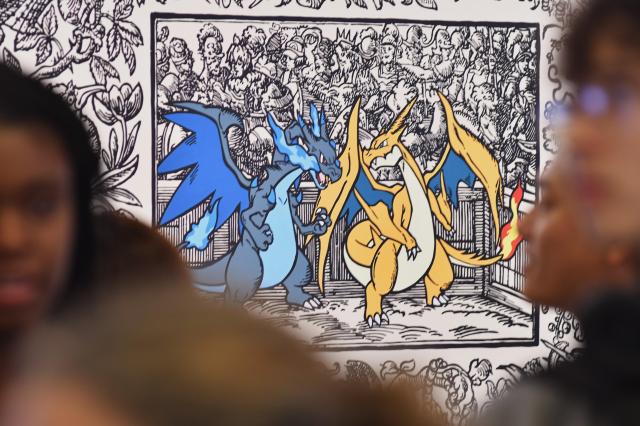
SEOUL, September 03 (AJP) - Kiaf Seoul, Korea's flagship art fair, has plenty to celebrate in its 25th edition. On Thursday morning, its audience looked ready for the occasion.
Minutes before the 11 a.m. opening, VIP guests were already gathered inside COEX. The dress was polished rather than extravagant: neat jackets, muted colors, the practiced restraint of an art-fair crowd.
Then the doors opened and the phones came out.
Visitors paused before paintings, stepped back for photographs and handed phones to companions for another shot. Couples drifted between booths. Foreign groups followed guided tours. Empty aisles disappeared quickly under the traffic.
Children were scarce. Spectators were not.
Buyers were harder to spot.
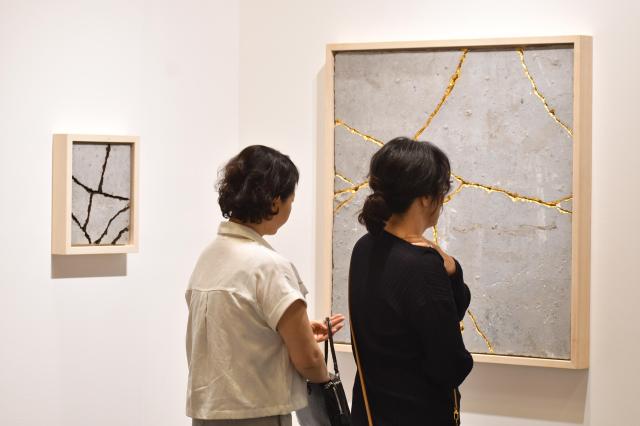
"People come to see the works, but it doesn't really lead to purchases," said a representative of one Kiaf gallery who asked not to be identified.
That gap between attention and transaction hangs over Seoul Art Week this year.
Kiaf is marking its 25th edition with 175 galleries from 18 countries and territories. Frieze Seoul, held upstairs in the same COEX complex, is in its fifth edition with 133 galleries from 30 countries and regions.
Together they have made early September one of the busiest dates on Seoul's cultural calendar. They have also brought the international art trade — and its prices — visibly into the city.
There was serious money changing hands at Frieze.
On Wednesday's opening day, Thaddaeus Ropac sold Adrian Ghenie's Figure with Funerary Stele for 1.1 million euros ($1.28 million). Antony Gormley's HOLD sold for 750,000 pounds, while White Cube reported selling Gerhard Richter's Fuji for 625,000 euros.
Such deals, however, sit at the top end of a market that has yet to regain the momentum of the pandemic-era art boom.
South Korea recorded 638.2 billion won ($448 million) in art transactions in 2025, up 3.8 percent from a year earlier, according to the Ministry of Culture, Sports and Tourism and the Korea Arts Management Service.
That was still 20.9 percent below the market's 2022 peak, while the number of works traded declined 3.1 percent.
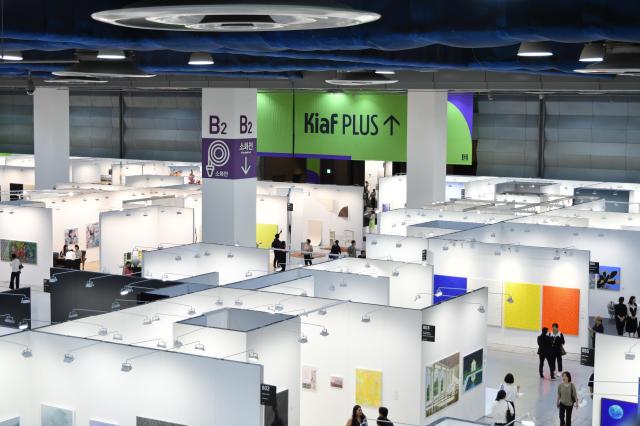
Downstairs at Kiaf, few visitors appeared preoccupied with those figures.
Conor Pace, a 42-year-old Australian living in Japan, came with his wife during a monthlong stay in Seoul. His wife had studied art, and what struck him was the sheer range available under one roof.
He enjoyed watching her move through the fair and seeing works of markedly different styles placed within a few steps of one another.
Upstairs at Frieze, the presence of blue-chip names created a different sort of traffic.
Owen Lui, a 35-year-old Chinese American from Chicago, was traveling through Asia when he realized Frieze Seoul coincided with his stay in Korea.
Already impressed by Seoul's exhibition scene, he came to see what might catch his eye.
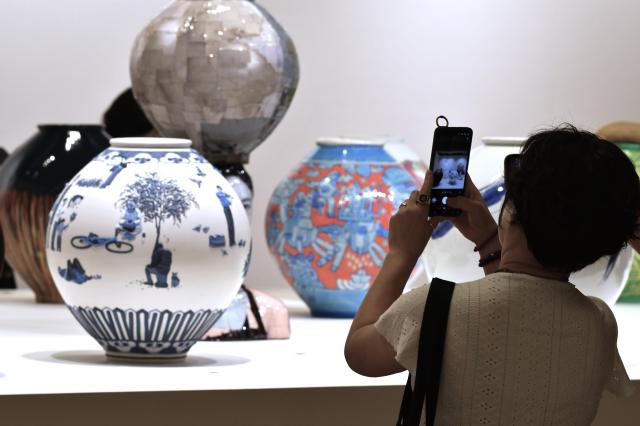
A traditional Korean vase did.
"I find them very beautiful," Lui said. "I think the Korean vase represents the heritage and elegance of one's culture."
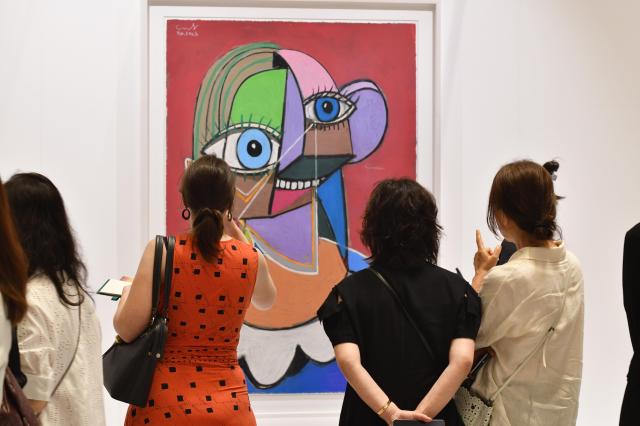
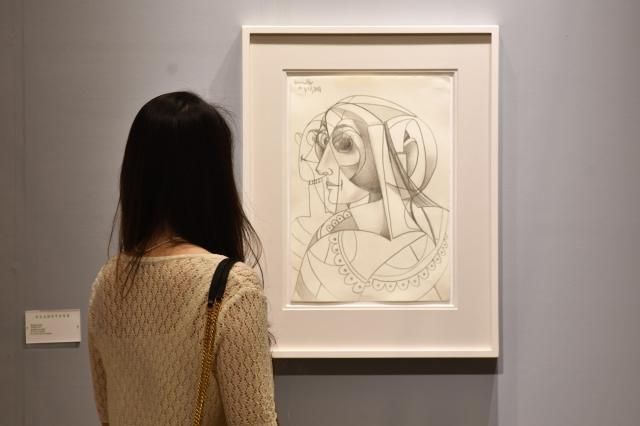
He also encountered familiar names including Pablo Picasso, Keith Haring and Chinese contemporary artist Yue Minjun.
Around the most recognizable works, phones again became part of the viewing experience.
"I have actually seen a lot of people taking selfies and photos with their friends in front of the Picasso painting," Lui said. "But I don't judge them. It's hard to get to see something this famous this close."
For Lee Yu-jin and Lee Seong-a, two office workers in their mid-20s from Gyeonggi Province, buying was never the objective.
They had received invitations and came because Kiaf and Frieze were famous enough that they wanted to see the fairs for themselves.
What surprised them was first the size of the crowd and then the informality inside. Visitors sat on bleacher-style seating between booths, talking and resting before disappearing back into the aisles.
The prices were less inviting.
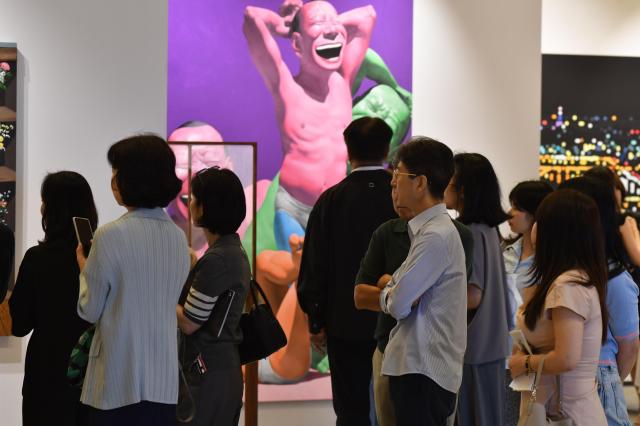
Some works looked expensive enough that the two said they would not even dare ask the price. During their visit, neither recalled seeing anyone buy a work or negotiate with a dealer.
They nevertheless wanted to return.
The attraction was discovery: artists they did not know, styles they had not encountered and the sense that the fairs offered more than could comfortably be absorbed in a single visit.
That audience matters increasingly to Korea's art market.
A recent study of 408 people who had bought art within the previous five years found that 31.3 percent were in their 20s and 30s. Nearly 62 percent had been collecting for less than five years.
It points to one of the more important shifts taking place around Seoul's fairs. The city has become adept at drawing people into the orbit of contemporary art, even when attendance does not immediately become acquisition.
By late Thursday morning, camera shutters were still clicking across COEX.
Elsewhere in the building, works priced in the hundreds of thousands — and occasionally above $1 million — were finding buyers.
But in most aisles, the transaction was more modest: a few minutes before a work, a photograph, perhaps a conversation, and then on to the next booth.
Copyright ⓒ Aju Press All rights reserved.
