
SEOUL, September 10 (AJP) - South Korean brokerages posted a second straight record quarterly profit in the April-June period as a surging stock market drove trading fees and investment gains.
Combined net profit at 61 securities firms reached 5.19 trillion won ($3.9 billion) in the second quarter, up 20.0 percent from 4.33 trillion won in the previous three months, according to preliminary data released Thursday by the Financial Supervisory Service (FSS). Earnings jumped 82.1 percent from 2.85 trillion won a year earlier.
The regulator said earnings improved at both large and mid-sized firms as brokerage commissions and proprietary trading gains increased. It added that larger firms also saw stronger earnings from asset management and investment banking.
Heavier stock trading drove the increase. Commission income rose 32.5 percent quarter on quarter to 8.87 trillion won, led by brokerage fees collected from clients buying and selling securities.
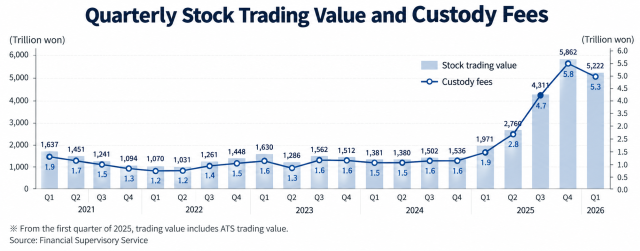
Those transaction-based fees increased 34.0 percent to 5.77 trillion won. Trading value on the main KOSPI market, including transactions through the Korea Exchange and alternative trading systems, jumped 59.9 percent to 4,438 trillion won from 2,775 trillion won in the first quarter.
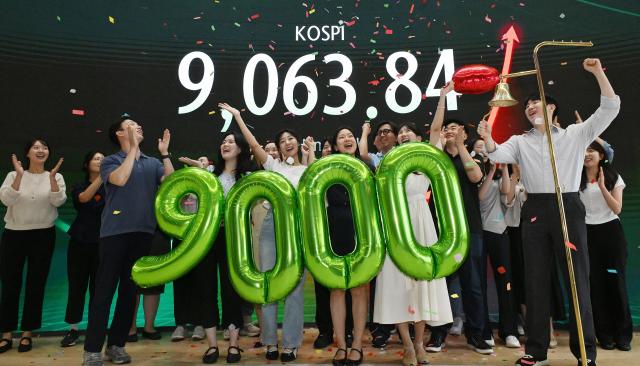
The increase came as South Korean stocks rallied sharply during the quarter. The KOSPI climbed 67.8 percent from 5,052 at the end of March to 8,476 at the end of June, boosting investor activity and firms' trading results.
Brokerages also earned more from their own investments. Their proprietary trading results, which include gains and losses from stocks and funds, bonds and derivatives, rose sharply in the second quarter. Overall proprietary trading profit increased 45.8 percent from the previous quarter to 5.98 trillion won.
Rising share prices boosted gains from stocks and funds, including exchange-traded funds. Those gains were partly offset by a 36.19 trillion won increase in derivatives-related losses, while profit from bond investments increased by 684.3 billion won.
They also earned more outside stock trading. Asset-management fees rose 56.7 percent to 1.05 trillion won as firms collected more fees for managing clients' investments. Investment-banking (IB) fees increased 27.5 percent to 1.20 trillion won as brokerages earned more from helping companies raise funds and guaranteeing some of their debt.
The growth was even stronger compared with a year earlier. Total commission income more than doubled, driven by sharp increases in fees from stock trading and asset management, according to the FSS.
Other asset-related profit increased 31.0 percent from the first quarter to 1.36 trillion won. Although the won continued to weaken against the U.S. dollar, the pace of depreciation slowed, reducing foreign-exchange losses compared with the previous quarter.
Profitability also strengthened, with the industry's average return on equity rising to 4.9 percent from 4.3 percent in the first quarter and 3.1 percent a year earlier.
Brokerages' total assets and liabilities also increased sharply during the quarter.
Total assets reached 1,256.1 trillion won at the end of June, up 14.4 percent from three months earlier, mainly due to increases in cash and deposits as well as receivables.
Liabilities rose 15.1 percent to 1,140.9 trillion won over the same period, driven largely by higher payables and customer deposits. Shareholders' equity also increased 7.7 percent to 115.1 trillion won.
Brokerages also remained financially sound. The industry's average net capital ratio rose to 1,140.5 percent at the end of June from 1,000.4 percent at the end of March. All 61 firms remained above the regulatory minimum of 100 percent.
Despite the strong results, the regulator said it would strengthen monitoring of profitability and financial soundness as prolonged geopolitical risks could increase volatility in domestic and global financial markets.
It also plans to encourage brokerages to deal with troubled assets early, continue reforms to liquidity rules and the calculation of net capital ratios, and strengthen firms' risk-management capabilities.
AJP Takeaways
- South Korea's 61 securities firms posted combined net profit of 5.19 trillion won in the second quarter of 2026, up 20.0 percent from the first quarter and 82.1 percent from the second quarter of 2025, according to the Financial Supervisory Service.
- Brokerage fees rose 34.0 percent to 5.77 trillion won as KOSPI trading value surged 59.9 percent to 4,438 trillion won in the April-June 2026 period.
- Asset-management fees increased 56.7 percent to 1.05 trillion won, while investment-banking fees rose 27.5 percent to 1.20 trillion won as brokerages earned more from managing client investments and helping companies raise funds.

Copyright ⓒ Aju Press All rights reserved.
