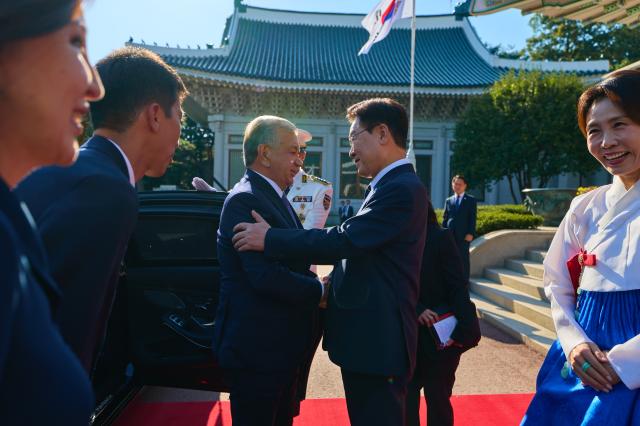
SEOUL, September 14 (AJP) - Critical minerals, high-speed rail and defense exports drove the opening round of South Korea's Central Asia summit week on Monday. President Lee Jae Myung received Uzbek President Shavkat Mirziyoyev at Cheong Wa Dae, the first of five regional leaders arriving in Seoul.
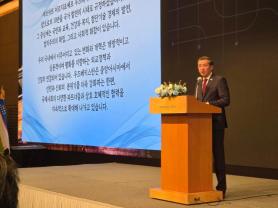
Hours earlier, the industry ministry had convened the first Korea-Central Asia industry ministers' meeting at a hotel in central Seoul. The industry chiefs of Kazakhstan, Kyrgyzstan, Tajikistan, Turkmenistan and Uzbekistan sat at one table for the first time.
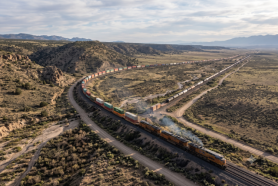
The six governments agreed to build supply chains covering the full cycle from mining and smelting through materials processing to finished goods, pairing Central Asian lithium and rare earths with South Korean processing technology, the ministry said.
Uzbekistan is one of the larger resource holders in that group. It ranks as the world's fifth-largest uranium producer, with output estimated at 4,000 tonnes in 2024 by the World Nuclear Association, and its state producer Navoiyuran reported 7,000 tonnes last year.
Korean buyers have been in that market before. Korea Electric Power Corporation agreed in 2008 to buy 2,600 tonnes of Uzbek uranium over six years for about $400 million.
Lee opened the talks by pointing to the length of the relationship. He said the two countries had built a very solid partnership since establishing diplomatic relations in 1992, and called Uzbekistan an invaluable friend and a core partner, the only country in Central Asia that holds a special strategic partnership with South Korea.
That designation dates to April 2019, when then President Moon Jae-in traveled to Tashkent and signed a joint declaration raising the relationship above the strategic partnership level the two sides had held until then. No other Central Asian capital carries the label.
"From transport infrastructure, health care and climate crisis response to critical mineral supply chains, artificial intelligence, digital and the defense industry, we will be able to widen the horizon of mutually beneficial cooperation and drive the engines of future growth together," Lee said.
The two governments signed 13 agreements and memorandums of understanding after the talks.
The Export-Import Bank of Korea and Uzbekistan's investment, industry and trade ministry agreed to jointly identify projects across the six sectors Tashkent has designated as national strategic industries. Those include critical minerals, data centers, smart cities, pharmaceuticals and biotechnology, and an industrial park reserved for Korean companies, with project and commercial financing attached.
Separate memorandums covered the introduction of eight high-speed trainsets and the creation of Uzbekistan's national genome and biobank center. The two sides also signed an expanded defense industry cooperation contract, a treaty on the transfer of sentenced persons, and a protocol revising the framework agreement on grant aid.
Further documents dealt with border enforcement against counterfeit goods, tourism, agricultural technology transfer, AI in manufacturing, medical product regulation, and digital forest restoration aimed at the desertification of the Aral Sea basin and the water disputes that cross Central Asian borders.
One of the education memorandums will add Korean as a formal subject in the national academic olympiad the Uzbek government runs, which Cheong Wa Dae expects to lift the standing of the language among students there.
Mirziyoyev answered with an economic compliment and a commercial number. He called South Korea a shining community that achieved an economic miracle in a short span of time and said Uzbekistan holds a special affection for the country.
More than 700 Korean companies operate in Uzbekistan through joint ventures, he said, with Korean investment still expanding and Korean technology shared across electronic government, education, information technology, agriculture and health care.
The Uzbek president traced the relationship considerably further back. A mural showing a Samarkand ruler receiving envoys from Goguryeo, the kingdom that controlled the northern Korean Peninsula and much of Manchuria until 668, proves that the shared history of the two countries is rooted in the Silk Road era, he said, dating the painting to the 10th century.
The work he referred to is the Afrasiab cycle, uncovered in 1965 during road construction on the mound of pre-Mongol Samarkand and now held in a museum on the site. Scholars date it to the middle of the seventh century, most often to between 648 and 651.
Its western wall shows King Varkhuman receiving delegations from Tang China, Chach, Chaghaniyan and, in the reading long favored by Korean historians, Goguryeo. Some specialists dispute that identification.
Lee devoted part of his remarks to the ethnic Korean community in Uzbekistan. "Uzbekistan is a very special country to our people, a place where as many as 200,000 Koryoin have made their lives," he said, using the term for the ethnic Koreans of the former Soviet Union.
"Our people always keep a grateful heart toward the people of Uzbekistan, who embraced our compatriots warmly in difficult times," Lee said.
Most of those families arrived in 1937, when Soviet authorities deported more than 170,000 ethnic Koreans from the Russian Far East to Central Asia in freight cars over a matter of weeks and left them on open ground in what are now Uzbekistan and Kazakhstan. Many died in the first winters, and their descendants form the largest Korean community in the region.
Lee also argued that the uncertainty running through international affairs has raised the value of relationships built on trust, and said cooperation between the two countries would strengthen peace and stability in Eurasia and on the Korean Peninsula.
Mirziyoyev responded in kind on the security question. Uzbekistan will continue to support the South Korean government's efforts to consolidate peace and security on the peninsula without wavering, he said, adding that the two countries have kept friendly relations through political ups and downs in both capitals.
He also said he is watching Lee's drive to turn South Korea into a hub leading the fourth industrial revolution, and described the president as a leader with experience and a practical eye.
The Uzbek president arrived on a state visit and was welcomed at Cheong Wa Dae with a formal ceremony in the afternoon, followed by a state dinner for about 50 guests from both countries.
Lee meets the presidents of Turkmenistan and Kazakhstan on Tuesday and those of Tajikistan and Kyrgyzstan on Wednesday. He chairs the first Korea-Central Asia Summit later that day, where the six governments are to adopt a Seoul Declaration on the direction of their cooperation and raise a consultative channel that has run at the ministerial level to the level of heads of state.
AJP Takeaways
- Lee Jae Myung and Shavkat Mirziyoyev signed 13 agreements and memorandums at Cheong Wa Dae on Monday covering critical minerals, eight high-speed trainsets, expanded defense industry cooperation and a prisoner transfer treaty, opening three days of back-to-back summits with five Central Asian leaders.
- Kazakhstan, Kyrgyzstan, Tajikistan, Turkmenistan and Uzbekistan sent their industry ministers to the first Korea-Central Asia ministerial meeting in Seoul the same day, where the six governments agreed to link Central Asian lithium and rare earths to South Korean smelting and materials processing across the full supply chain.
- The World Nuclear Association ranks Uzbekistan as the world's fifth-largest uranium producer at roughly 4,000 tonnes in 2024, and Korea Electric Power Corporation contracted for 2,600 tonnes of Uzbek uranium in 2008 for about $400 million. Neither figure appeared in the summit materials and both were verified by AJP against World Nuclear Association data.
Copyright ⓒ Aju Press All rights reserved.